
Burma Banknotes
Rare Burma paper money, from British Burma and Japanese occupation issues to independent Burma and modern Myanmar banknotes
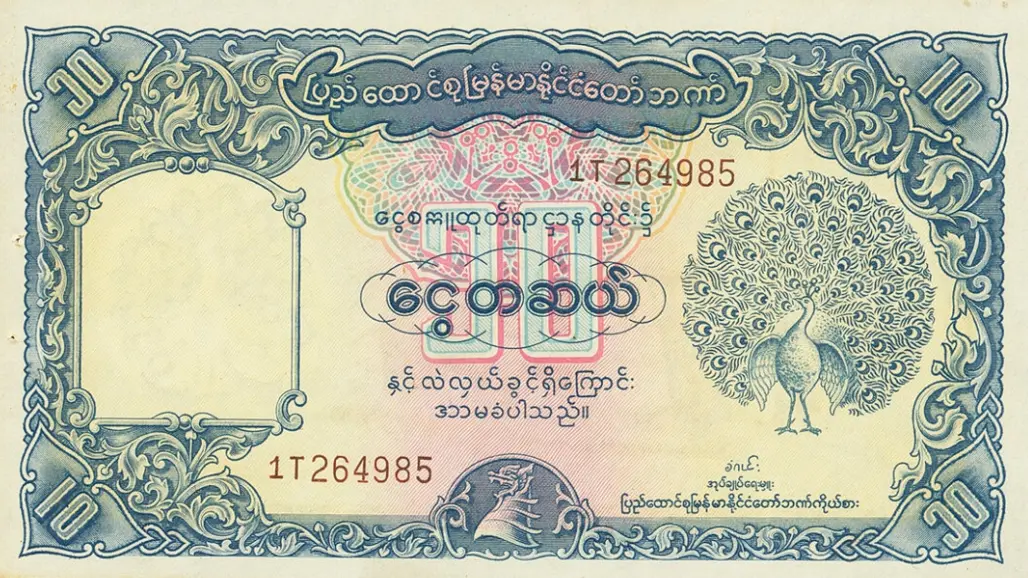
Burma banknotes form one of the most historically varied areas of Asian paper money collecting. Their story spans British colonial rule, Japanese wartime occupation, independence, socialist-era reforms, and the modern currency of Myanmar.
NumisAsia specializes in rare British Burma paper money, wartime issues, post-independence banknotes, specimens, and professionally certified examples graded by PMG and PCGS.
Featured Burma Banknotes
Selected British Burma, wartime, and post-independence banknotes, including professionally certified examples
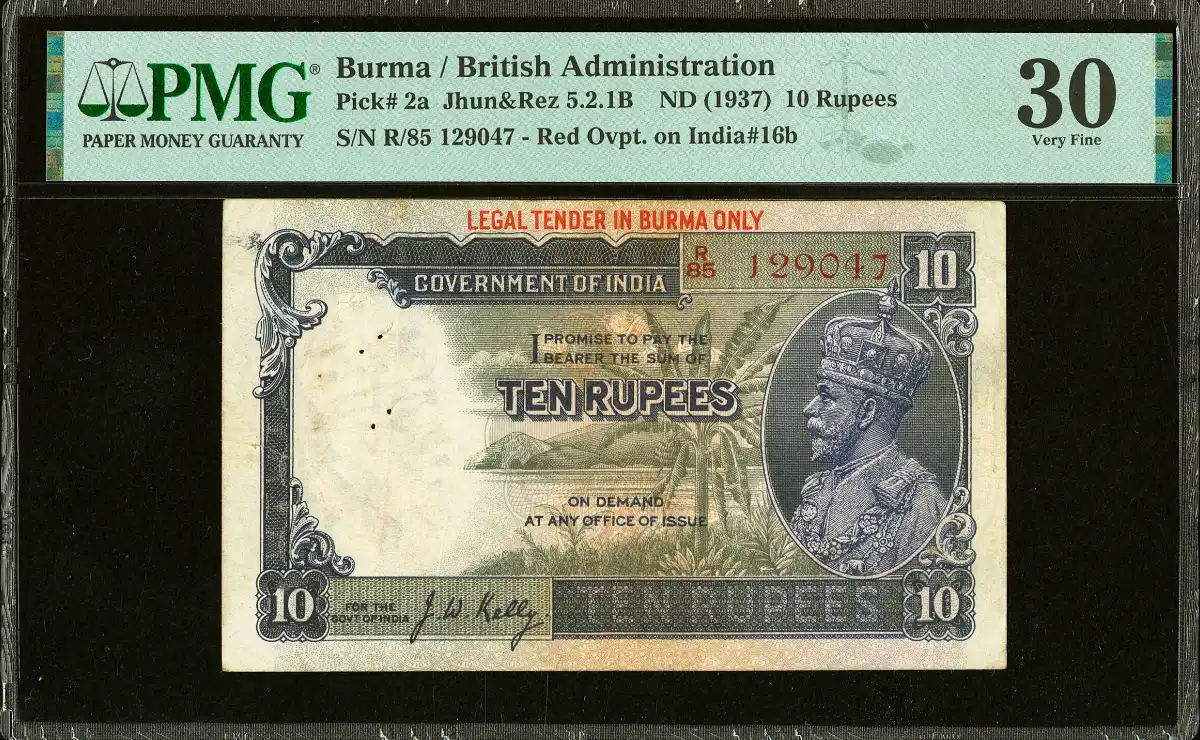
Burma 10 Rupees KGV Red Overprint Pick 2a
View Details →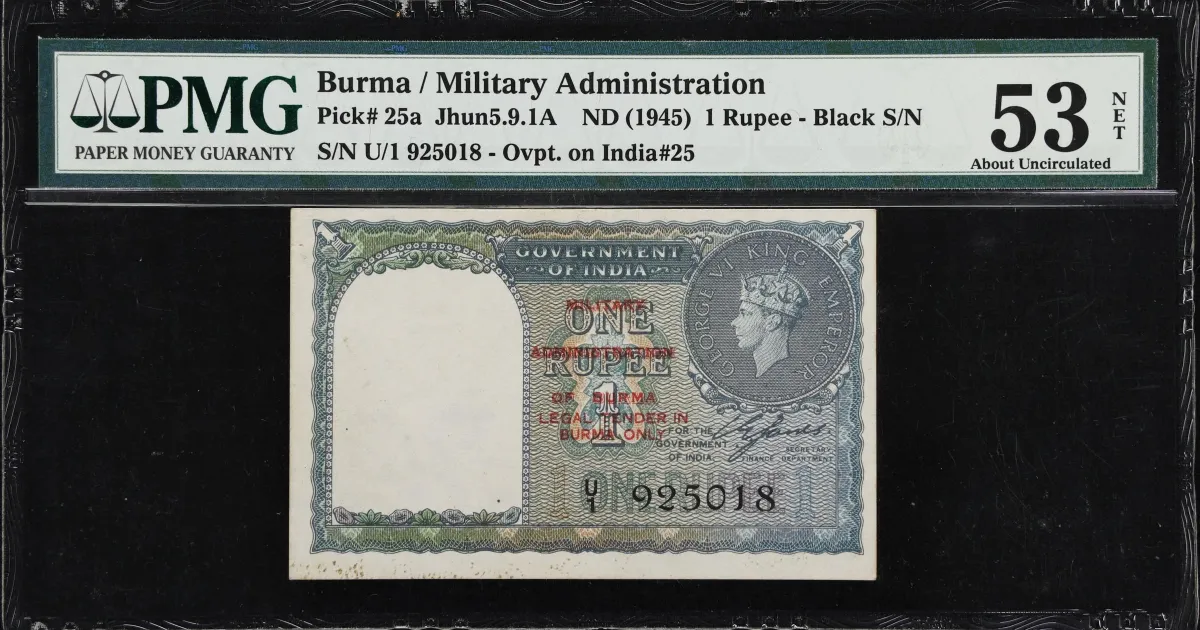
Burma 1 Rupee KGVI Black Serial Pick 25a
View Details →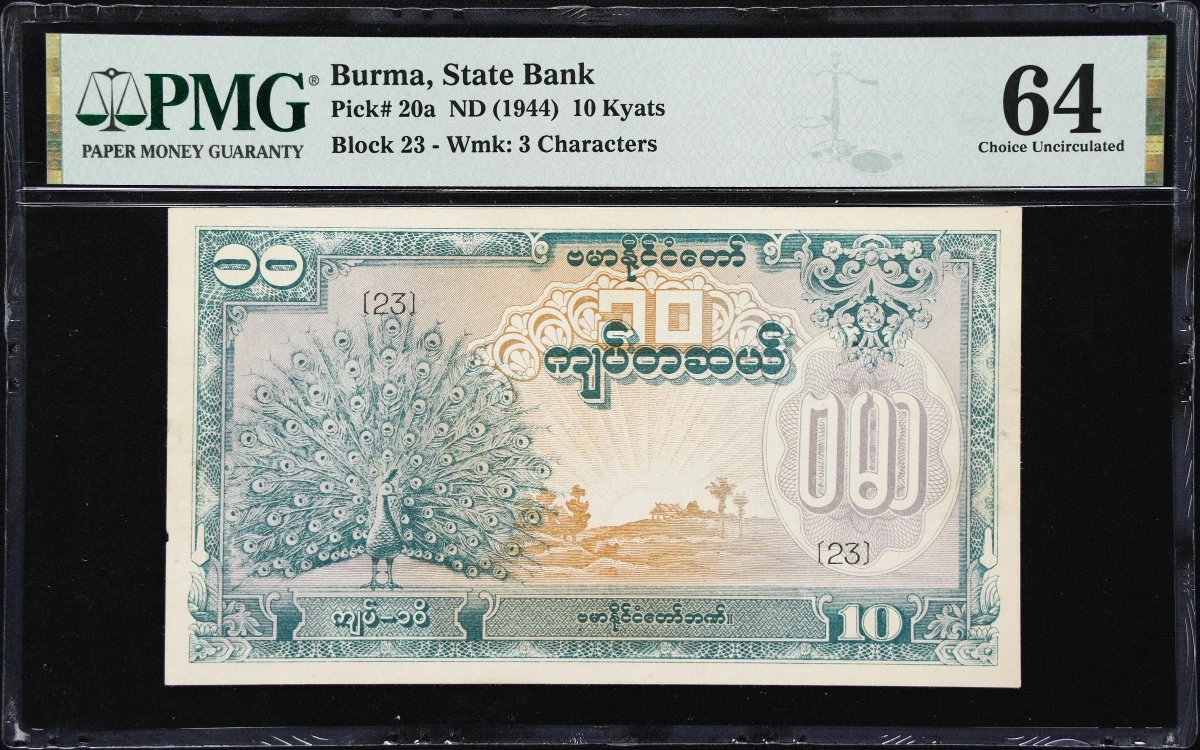
Burma 10 Kyats Burma State Bank Pick 20a
View Details →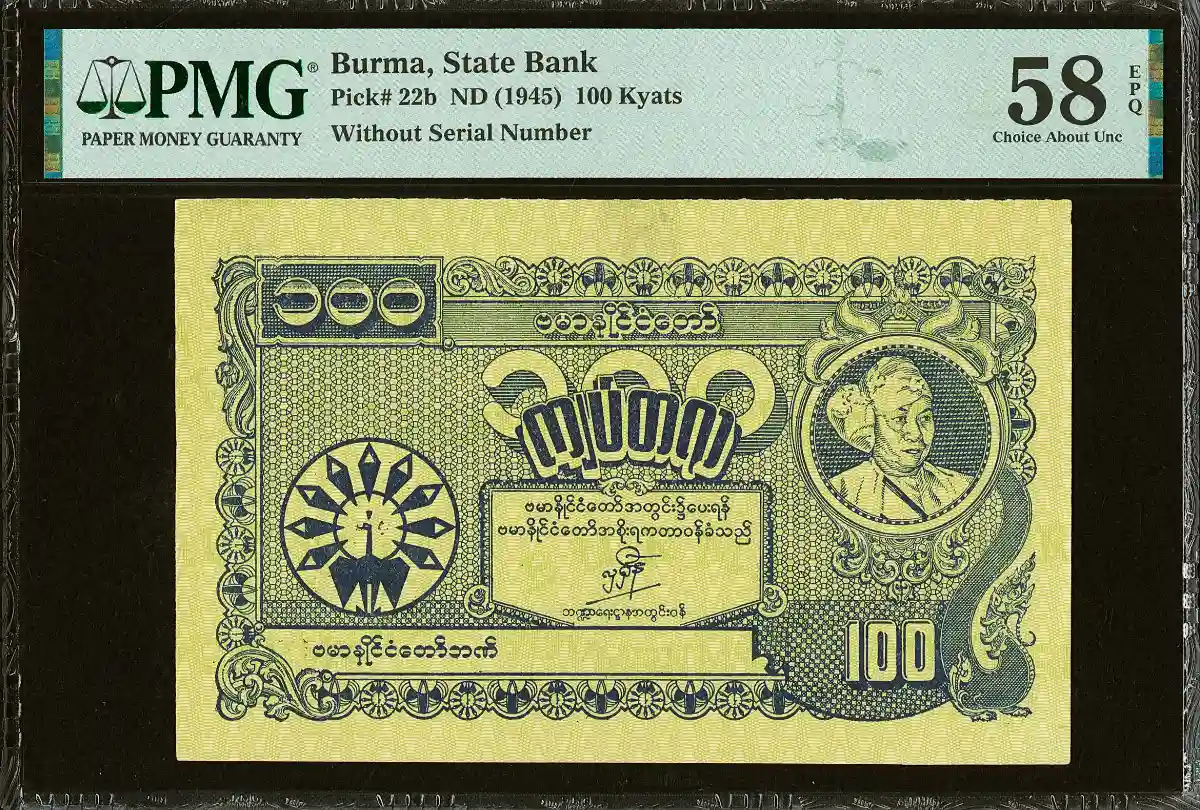
Burma 100 Kyats Ba Maw WWII Pick 22b
View Details →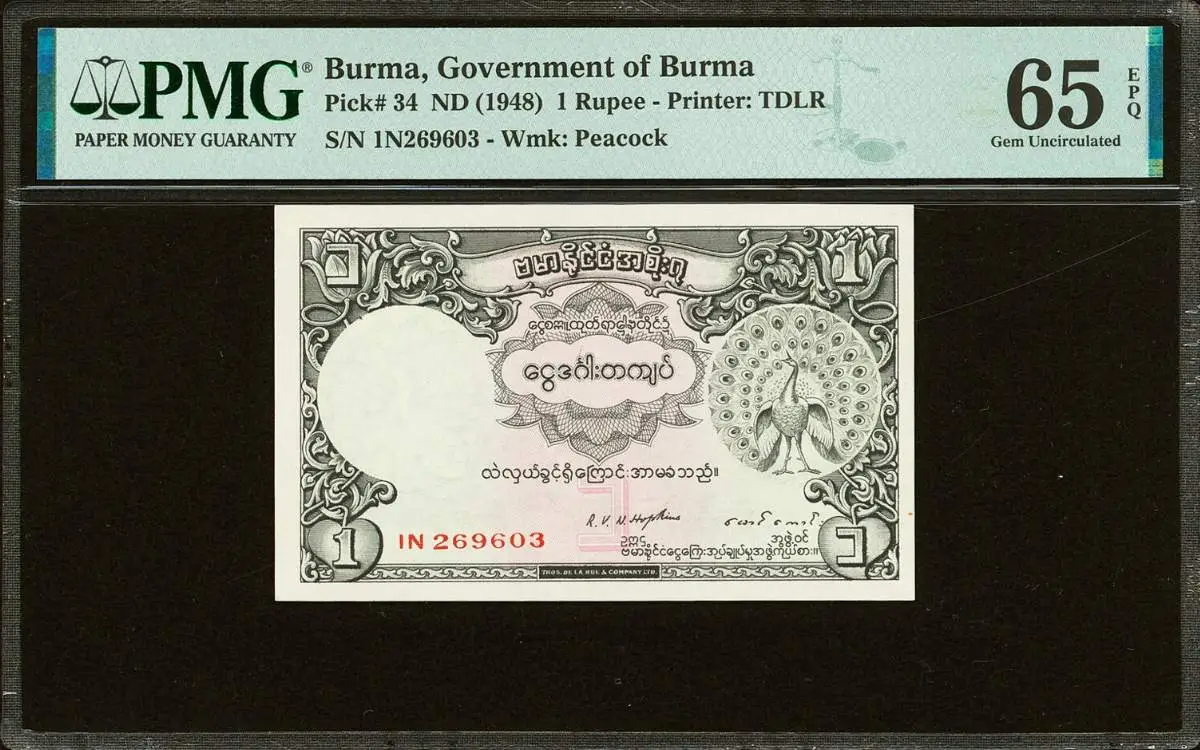
Burma 1 Rupee Government of Burma 1948 Pick 34
View Details →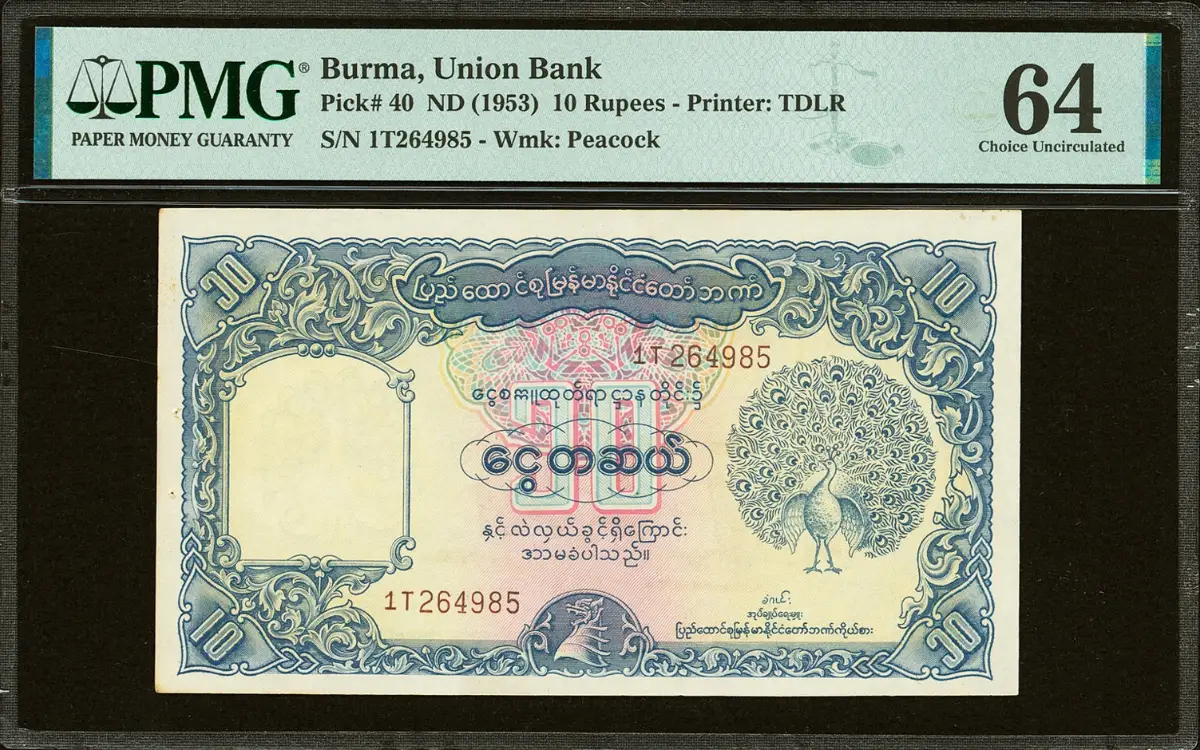
Burma 10 Rupees Union Bank of Burma Pick 40
View Details →Major Periods of Burma Paper Money
Key periods across colonial Burma, wartime issues, independence, and modern Myanmar
British Burma
Colonial issues include King George V overprints, King George VI Peacock notes, and post-war Military Administration and Currency Board issues.
Japanese Occupation
Japanese invasion money (JIM) and Ba Maw-era Burma State Bank notes reflect the major monetary changes and wartime disruption of World War II.
Independent Burma
Government and Union Bank issues, including Aung San notes, trace Burma’s national currency development from independence through the later socialist era.
Myanmar
Modern Central Bank of Myanmar issues from 1989 onward reflect the country’s evolving national currency designs, denominations, and monetary identity.
Burma Paper Money: Historical Overview
From colonial administration to independence and modern Myanmar currency
Burma paper money occupies a distinctive place in Asian numismatic history. During the colonial era, Burma was closely connected to British India’s monetary system. After Burma was administratively separated from British India in 1937, King George V notes bearing the overprint “LEGAL TENDER IN BURMA ONLY” were introduced. These were followed by King George VI Reserve Bank of India issues designed specifically for Burma, including the well-known Peacock Series.
World War II brought major monetary disruption. Japanese invasion money circulated during the occupation, while the Japanese-backed Burma State Bank issued locally branded Burmese currency. Following the Allied return, transitional issues included Military Administration of Burma overprints and later Burma Currency Board notes, documenting the shift from wartime occupation back to civilian administration.
After independence in 1948, Burma developed its own national currency system. Early notes were issued under the Government of Burma and the Government of the Union of Burma before the Union Bank of Burma assumed responsibility for banknote issuance. Burma formally replaced the rupee with the kyat in 1952, with the first Union Bank kyat notes entering circulation in 1953.
Later issues reflected changing political and economic systems, including the Peoples Bank of Burma and the Union of Burma Bank. Collectors are drawn to these periods for distinctive designs, unusual denominations, and historically important varieties. Following the country’s official name change in 1989, modern issues appeared under Myanmar and later the Central Bank of Myanmar.
Burma and Myanmar paper money also includes specimen notes, color trials, printer archive material, and other non-circulating issues produced by security printers such as Thomas De La Rue and Security Printing Works (Wazi). Together, these colonial, wartime, post-independence, and modern issues provide a broad field for specialized collecting.
Why Collect Burma Paper Money?
Historical depth, scarcity, distinctive design, and strong collector interest
Historical Depth
Burma banknotes span colonial rule, wartime occupation, independence, and changes in the monetary system.
Scarcity
Climate, circulation, and limited survival make many early Burma banknotes considerably scarcer in high grade.
Design Appeal
Peacock motifs, national imagery, and distinctive regional designs give Burma paper money a strong visual identity.
Burma Banknote Guides
Explore the key eras, issues, and varieties of Burma paper money
Burma Banknotes FAQs
Common questions about Burma paper money and Burmese banknote collecting
Burma banknotes encompass paper currency issued across the country’s colonial, wartime, post-independence, and modern periods. This includes British Burma overprints, Peacock Series notes, Japanese occupation money, independent Burma issues, and modern Myanmar currency.
During transitional periods, existing British India banknotes were officially overprinted for use in Burma. Important examples include King George V “Legal Tender in Burma Only” notes, post-war Military Administration of Burma issues, and Burma Currency Board overprints.
The Peacock Series refers to Reserve Bank of India banknotes issued specifically for Burma featuring King George VI and distinctive Burmese design elements, including a peacock motif. These issues are among the best-known British Burma banknotes.
Japanese Invasion Money (JIM) was occupation currency issued by Japanese military authorities for use in Burma during World War II. Many varieties are common today because they were produced in large quantities, while scarcer blocks, high-grade examples, and related Burma State Bank issues attract more specialized collector interest.
Burma formally replaced the rupee with the kyat in 1952, with the Union Bank of Burma’s first kyat-denominated banknotes entering circulation in 1953. This established the modern kyat used in subsequent Burmese currency systems.
Some Burma banknotes can be valuable, while many common issues remain affordable. Value depends on rarity, variety, condition, certification, and historical significance. Early King George V overprints, King George VI Peacock notes, scarce varieties, specimens, color trials, and high-grade certified examples can command substantial premiums.
Yes. NumisAsia actively buys rare Burma banknotes, including British Burma paper money, Burma State Bank issues, specimens, color trials, scarce varieties, and PMG or PCGS-certified material. If you have individual notes or a collection to sell, please contact our specialists.
Looking for a Specific Burma Banknote?
Submit your want list and our specialists will help source rare Burma issues, varieties, specimens, and professionally certified examples.
Collect Burma Banknotes?
Browse Burma banknotes, colonial issues, specimens, and certified paper money
Browse Burma BanknotesWant to Sell Banknotes?
We actively buy rare Asian banknotes, collections, and PMG/PCGS certified notes
View What We Buy