
Banknote Grading Scale
The complete 1–70 banknote grading scale, PMG grading scale and PCGS Banknote standards reference for paper money collectors
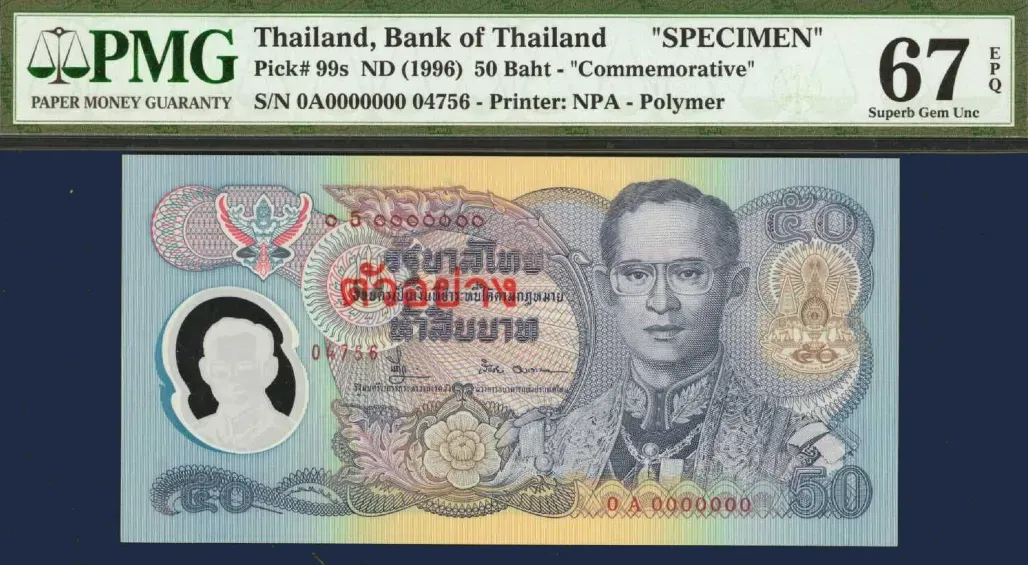
This banknote grading scale explains how numerical grades from 1 to 70 describe the physical condition of paper money. A grade does not by itself determine rarity, authenticity or market value; those questions depend on the note, the issuing authority, professional authentication, collector demand and many other factors.
Use the interactive explainer to decode an existing Paper Money Guaranty (PMG) or PCGS Banknote grade, then consult the complete banknote grading scale for the principal grade levels, paper-quality designations and common holder terminology.
Banknote Grading Scale Tool: Grade & Label Explainer
Select the grading service, numerical grade and designation shown on a PMG or PCGS Banknote holder
Condition
Designation
This tool explains information already printed on a grading label. It does not independently grade or authenticate the banknote.
How to Read a Grade on the Banknote Grading Scale
Read the numerical grade, paper-quality designation and holder remarks together
A certified holder contains several pieces of information, and the large numerical grade is only one of them. Begin by confirming the issuing country or authority, denomination, catalogue reference, date or series and any variety identified on the label. Then read the numerical grade together with its descriptive term, such as Choice Very Fine, About Uncirculated or Gem Uncirculated. Finally, check for a paper-quality designation and any comments describing issuance characteristics, damage, repairs or alterations.
This sequence matters because two banknotes with the same numerical grade can have different visual qualities, paper originality, margins and documented problems. The banknote grading scale provides a structured condition reference, but the complete label supplies the context needed to understand what the grading service actually certified.
1. Numerical Grade
The number places the banknote within the 1–70 condition framework. Higher numbers generally indicate less circulation and fewer condition distractions, but every grade has its own requirements. A higher grade does not automatically make a note rarer or more valuable. Catalogue variety, demand, surviving population and historical importance remain separate considerations.
2. Paper Quality
Paper Money Guaranty uses EPQ, while PCGS Banknote uses PPQ. These designations concern originality and the absence of processing intended to improve the note’s appearance. They should not be treated as a second numerical grade. A note without EPQ or PPQ may still be genuine and collectible, but the holder should be checked carefully for comments or condition issues.
3. Remarks and Modifiers
PMG Star recognizes exceptional eye appeal at the assigned grade. PMG NET and PCGS Details indicate that a problem is too significant for the numerical grade alone to describe fully. Other remarks may record staple holes at issue, annotations, stains, rust, mounting, repairs or other characteristics. Always read these comments before comparing two certified notes.
Grade Is Not the Same as Value
The market value of a certified banknote depends on more than its position on the banknote grading scale. Country, denomination, issue, signature combination, serial number, variety, rarity, demand, eye appeal and recent comparable sales may all affect price. Certification can make the stated condition and authenticity easier for buyers to assess, but it does not promise that a banknote will sell for a particular amount.
Understanding the 1–70 Banknote Grading Scale
A numerical framework for describing the physical condition of paper money
The 1–70 banknote grading scale originated with Dr. William Sheldon’s system for coins and was later adapted for paper money. It gives collectors and professional grading services a shared vocabulary for describing condition more consistently than broad terms such as Fine or Uncirculated alone.
Paper Money Guaranty publishes the PMG grading scale, while PCGS Banknote publishes its own standards. Their terminology is similar, but individual requirements and designations are not identical. The descriptions below are a concise collector reference; the grading company’s current published standards control its own certification decisions.
Banknote Grading Scale: Uncirculated Grades (60–70)
Uncirculated levels on the banknote grading scale, distinguished by centering, margins, handling and overall eye appeal
70 Gem / Supreme Gem Uncirculated
The highest numerical grade. PMG requires no evidence of handling at 5× magnification, centering and registration that appear centered to the unaided eye, EPQ and the PMG Star designation. PCGS Banknote requires perfect apparent centering, full margins, aligned registration, no handling and PPQ.
69 Superb Gem Uncirculated
Extremely close to a 70, with only a very slight alignment, registration, handling or printing imperfection permitted under the applicable service’s standards. PMG requires EPQ; PCGS requires PPQ.
68 Superb Gem Uncirculated
Full or strong margins with slight off-centering or registration shift and only very minor handling. PMG requires EPQ; PCGS requires PPQ.
67 Superb Gem Uncirculated
A high-grade note with pleasing or above-average margins and centering. Minor or light handling may be present. PMG requires EPQ; PCGS requires PPQ.
66 Gem Uncirculated
A Gem Uncirculated note with above-average or pleasing centering and somewhat more light handling than at grade 67. PMG requires EPQ; PCGS requires PPQ.
65 Gem Uncirculated
A Gem Uncirculated note with acceptable-to-above-average centering and limited minor handling or distractions. Grades 65 and higher must qualify for EPQ at PMG or PPQ at PCGS Banknote.
64 Choice Uncirculated
An uncirculated note with off-centering on one or more sides and noticeable handling or a distracting crinkle. There must be no fold through the design. A qualifying note may receive EPQ or PPQ, but the designation is not required at this grade.
63 Choice Uncirculated
An uncirculated note with imperfect margins or considerable off-centering. Several handling flaws or minor issues may be present, but there is no fold through the design.
62 Uncirculated
A strictly uncirculated note with poor centering, moderate handling, corner-tip issues or other minor distractions. There is no fold through the design.
61 Uncirculated
A strictly uncirculated note with poor centering and stronger distractions, such as counting marks, smudges, foxing, light staining or small margin issues. Eye appeal is usually limited.
60 Uncirculated
A note without folds through the design but with substantial handling, poor centering or several minor problems. Toning, a small stain, fading or other distractions may reduce the eye appeal.
Banknote Grading Scale: Moderately Circulated (12–35)
Moderately circulated levels on the banknote grading scale, covering notes with visible wear but identifiable designs
35 Choice Very Fine
A Choice Very Fine note with moderate circulation and generally attractive eye appeal. PMG commonly describes four to seven light folds; PCGS focuses on moderate folds that are not overly distracting.
30 Very Fine
A Very Fine note with more noticeable folds and wear than grade 35. PMG commonly describes seven to ten folds, while PCGS also considers the strength of the folds and overall eye appeal.
25 Very Fine
A Very Fine note showing clear circulation, harder folds and possibly light soiling. The paper should retain meaningful body or “snap,” despite the visible wear.
20 Very Fine
A moderately circulated Very Fine note with numerous folds, mild soiling and possibly minor defects. It remains structurally sound and generally retains reasonable body.
15 Choice Fine
A Choice Fine note with too much folding or circulation for a Very Fine grade. The paper may retain moderate body, but wear and one or more pronounced folds are clearly visible.
12 Fine
A Fine note with considerable circulation, rounded corners, edge fraying or margin splits. It should remain whole and retain enough paper strength to be handled normally.
Banknote Grading Scale: Lower Grades (1–10)
Lower levels on the banknote grading scale for heavily circulated notes with substantial wear or damage
10 Very Good
A solid, whole but heavily circulated note with substantial wear, weak body and several minor problems. Heavier soiling and rounded corners are common.
8 Very Good
A heavily circulated, limp note with significant wear. Light stains, splits and small missing pieces may be present, although the note remains recognisable and substantially intact.
6 Good
A very worn, soft note with serious splits, frayed margins and other damage. Small holes, tears or missing edge pieces may occur.
4 Good
A very heavily circulated and completely limp note with numerous problems. Pieces may be missing, but the note remains identifiable.
3 About Good — PCGS
A PCGS grade for a delicate, severely worn note that commonly has missing pieces. PMG’s published scale notes that grades below 4 are generally not collectible unless rare and are often assigned NET because of major problems.
2 Fair — PCGS
A PCGS grade for a note with the majority of the paper present but extreme wear and commonly larger missing pieces. Eye appeal is normally very limited.
1 Poor — PCGS
The lowest PCGS numerical grade. The note must remain identifiable by catalogue number but may be extremely worn and close to falling apart.
PMG Grading and PCGS Special Designations
Understanding EPQ, PPQ, Star, NET and Details alongside the numerical banknote grading scale
PMG EPQ
Exceptional Paper Quality indicates that PMG considers the paper original and not physically, chemically or materially processed to create the appearance of a higher grade. Grades 65 and higher require EPQ; qualifying notes graded 20–64 may also receive it.
PCGS PPQ
Premium Paper Quality indicates sufficient originality for the assigned grade under PCGS Banknote standards. Grades 65 and higher require PPQ. Qualifying notes from Very Good through Gem may receive the designation; Good grades and lower do not qualify.
The Star (★)
A PMG-only designation for exceptional eye appeal at the assigned grade. A note must qualify for EPQ to receive the Star designation, and every PMG 70 must qualify for both EPQ and Star.
PMG NET
PMG uses NET when a significant problem cannot be described adequately by the numerical grade alone.
PCGS Details
PCGS Banknote uses Details when damage or another problem exceeds what is expected for the numerical grade. The reason is stated on the label. The PCGS Banknote Guarantee does not cover Details grades; those notes are guaranteed genuine only. Older PCGS Currency holders may instead use the term Apparent.
Issuance Characteristics and Later Alterations
A recognised issuance characteristic, such as a staple hole applied during official issue, may be treated differently from later damage. Post-issuance alterations—including pressing, washing, mounting or restoration—can affect eligibility for EPQ or PPQ. The grading service determines the effect in each individual case.
PMG Grading and PCGS Label Anatomy
How to read the grade, paper-quality designation and condition remarks shown on third-party holders

PMG Label — Front
Shows the note description, catalogue reference, numerical grade, designation and other identifying information.

Legacy PCGS Currency Label
This image shows an older PCGS Currency holder. Current PCGS Banknote holders and terminology may differ.

PMG Label — Back
The reverse may contain the certification number, security features, condition remarks and explanations relevant to a NET grade.
Common Label Remarks and Comments
Labels may identify issuance characteristics, minor damage or later alterations. Common examples include staple holes at issue, additional staple holes, pinholes, spindle holes, ink stamps, annotations, previously mounted, stains, rust and repairs. Terminology and placement differ between grading services and holder generations. See the Banknote Glossary for related definitions.
Should You Submit Your Banknotes for Grading?
Professional certification can be useful, but it is not economical for every banknote
Understanding the banknote grading scale is only the first step. Professional certification by Paper Money Guaranty or PCGS Banknote can provide significant benefits, but not every banknote justifies submission fees, shipping and waiting periods. Experienced collectors treat grading as a strategic tool rather than a default step.
As a general rule, the strongest candidates for PMG or PCGS certification include high-value notes where authentication matters, exceptional uncirculated examples where condition creates a meaningful premium, specimen notes and rare varieties that are difficult for non-specialists to evaluate, and notes with low population counts where a top-certified example commands collector interest.
Common notes with modest market value, or heavily circulated examples that are readily available, rarely justify the cost of certification. The decision should always be based on rarity, condition, authenticity concerns, and your collecting goals.
Banknote Grading Scale FAQs
Common questions regarding the 1–70 paper money grading scale
The PMG grading scale is the 70-point numerical system used by Paper Money Guaranty to describe a banknote’s physical condition. Its current published table gives individual descriptions from 4 through 70 and notes that grades below 4 are generally not collectible unless the note is rare and are often assigned NET because of major problems. The grade does not determine rarity or market value.
Both services use a 70-point numerical framework, but they publish and apply their own standards. PMG uses EPQ, Star and NET terminology. PCGS Banknote uses PPQ and Details terminology. Grade names, holder layouts and the treatment of particular characteristics may differ.
It depends on when and why the hole was made. A grading service may distinguish a recognised issuance characteristic from later damage. Additional or post-issuance staple holes can affect the grade, designation or label remarks. The grading service decides how the characteristic is treated in each case.
PMG uses NET when a significant problem cannot be described adequately by the numerical grade alone. PCGS Banknote uses Details when damage or another problem requires additional qualification. The holder normally identifies the relevant problem.
Not necessarily. Certification can improve buyer confidence, comparability and marketability, but value still depends on rarity, demand, eye appeal, the assigned grade, label remarks and the cost of certification. A common or low-value note may not gain enough value to justify submission.