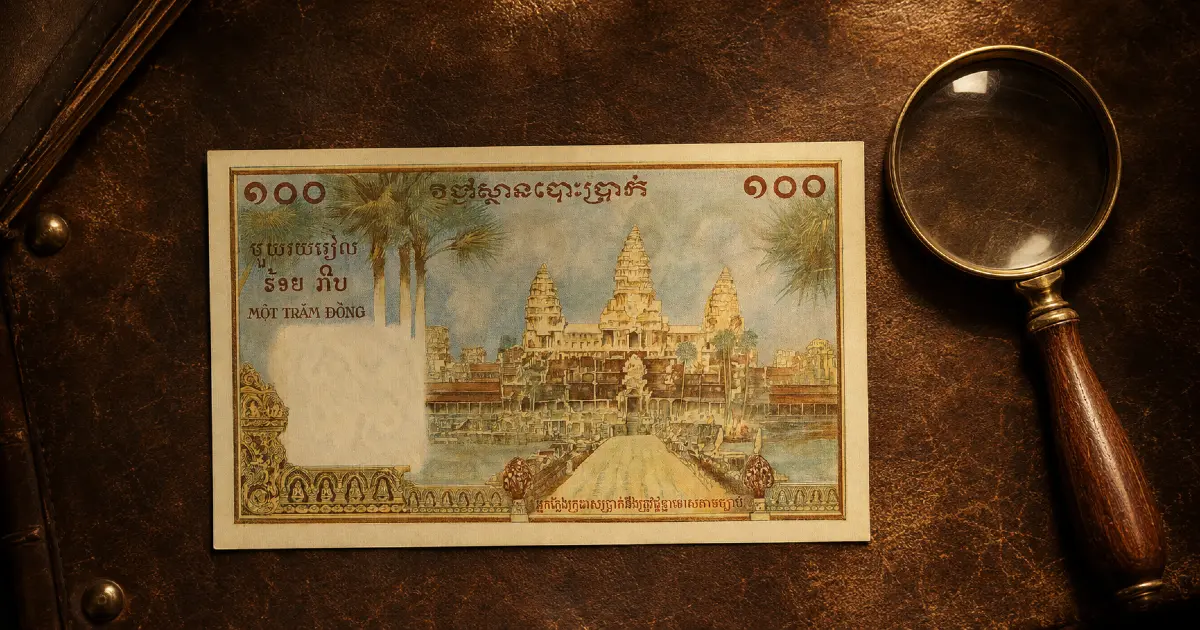
Banknote collecting themes are the foundation of serious numismatics, transforming the specialized study and collection of paper currency far beyond the simple acquisition of circulating legal tender. From paper money collecting ideas centered on colonial history to banknote collection types organized by issuing authority, denomination series, or portrait subject, the scope for a structured, purposeful collection is extraordinary. For the dedicated specialist, an Asian banknote is a historical document, a masterclass in security printing, and a traveling monument that records the political, economic, and cultural milestones of the continent.
Whether your focus falls on national heroes, wildlife motifs, architectural landmarks, colonial-era issues, or revolutionary overprints, thematic paper money collecting gives every acquisition a purpose and a context. While early collectors often assembled broad, unstructured accumulations of global paper money, modern banknote collectors rely on structured, thematic approaches that bring genuine scholarly depth to the hobby.
A well-chosen theme does something a general collection cannot — it creates a narrative. By narrowing your focus to a defined geographic zone within Asia, a historical flashpoint, an artistic movement, or a production anomaly — error notes, specimen issues, replacement serials — you can build deep, interconnected type sets with true historical value and numismatic authority. This comprehensive guide is the ultimate resource for thematic Asian paper money collecting ideas, mapping every major category and design philosophy to inspire your next numismatic project, whether you are assembling your first themed set or refining a world-class reference collection.
Table of Contents
Geographic Frameworks & Asian Cartographic Themes
Geographic boundaries provide the most intuitive and foundational structure for organizing paper currency. Collecting along cartographic lines allows Asian numismatists to track how borders expanded, contracted, and dissolved in response to regional historical shifts.
Country-Specific Type Sets
Focusing on a single Asian nation is the traditional entry point for structured collecting, allowing you to study a country’s economic and political evolution over time. Rather than merely gathering random notes, an authoritative country collection aims to build a chronological type set spanning every major monetary reform, design series, and signature combination.
A country-specific theme reveals how national authorities use paper money to manage crises and assert sovereignty. For instance, a specialist studying Thai paper money can trace the country’s trajectory from early uniface banknotes to the modern, high-security polymer issues authorized by the Bank of Thailand. Similarly, specialized type sets of countries like Cambodia, India, Nepal, Pakistan, or the Philippines provide a complete visual timeline of their transformation from early colonial administrative layouts to modern independent central banking systems.
Regional & Geopolitical Groupings
Regional collecting expands focus beyond a single border to examine a group of interconnected Asian territories bound by shared geography, trade paths, or colonial legacies. This approach highlights how different cultures within the same geopolitical sphere approach currency design.
- Southeast Asia: A highly dynamic region where collectors can track the transition from Western colonial currency boards to post-war independence issues. A comprehensive regional type set might contrast the French influence on the French Indo-China Piastre, the British administrative footprint on the Straits Settlements and Malayan Dollar issues, and the Dutch legacy within the early Netherlands Indies and Indonesian Rupiah.
- The Persian Gulf & Middle East: This collecting theme tracks the evolution of currency boards across the Gulf, charting how early regional reliance on external tender like the Indian Gulf Rupee gave way to modern, independent monetary authorities in Qatar, Bahrain, Kuwait, and the United Arab Emirates.
- South Asia (The Subcontinent): A focus territory examining the shared numismatic roots of India, Pakistan, Bangladesh, and Ceylon (Sri Lanka), highlighting how post-partition states split away from British Indian plate systems to establish independent sovereign aesthetics.
Historical Epochs & Asian Monetary Transitions
Banknotes are immediate eyewitnesses to history. Because Asian governments altered their currency during political and economic transitions, collecting around historical themes offers a tangible connection to the past.
Military Conflict & Occupation Scrip
During major regional conflicts, invading forces or military administrations often issued emergency fiat money to control local economies, pay soldiers, and suppress domestic trade. These issues provide an extraordinary look at wartime logistics.
The premier example of this theme is Japanese Invasion Money (JIM) issued during World War II. Between 1942 and 1945, the Greater Japan Imperial Government printed specialized, unnumbered fiat banknotes for occupied territories across the Netherlands Indies (Indonesia), the Philippines, Malaya, and Burma, alongside custom emergency printings for their wartime ally, Thailand. These notes often omitted traditional serial numbers and central bank promises, standing as stark reminders of wartime economic control.
Political Revolutions & Regime Collapses
When a political system falls in Asia, its currency is usually the first thing to be replaced, overprinted, or demonetized. Collecting notes from these periods provides a look at the birth of new nations.
- Central Asian Post-Soviet Transition: This focus tracks the sudden transition from the highly uniform Soviet Ruble to the transitional emergency vouchers and early independent issues of the Central Asian republics in the early 1990s, such as the Kazakhstani Tenge, the Uzbekistani Som, and the Turkmenistanyn Manat.
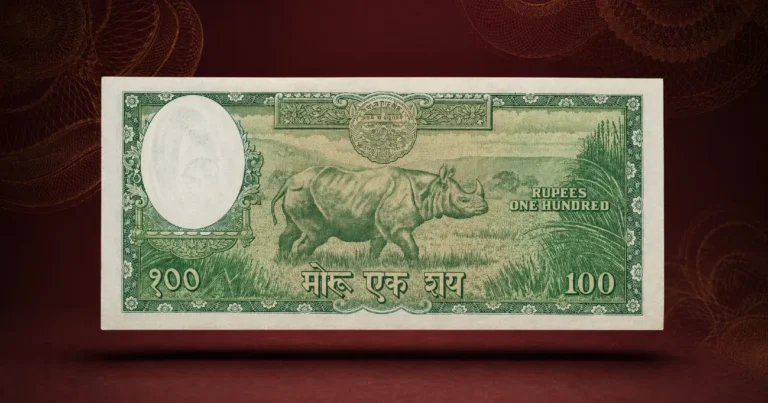
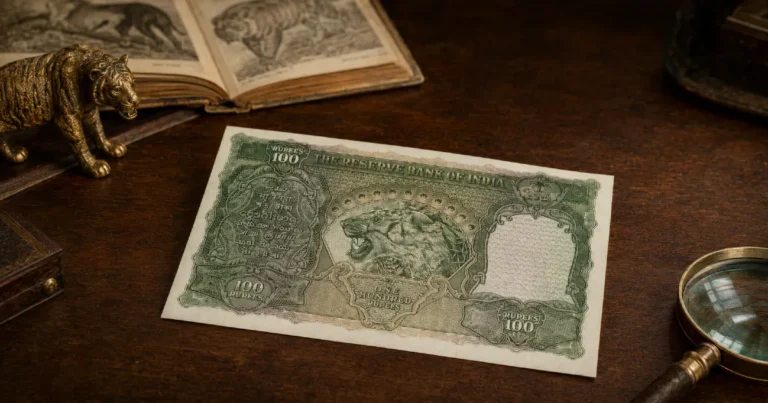
- Independence and Nation Building: Tracking the exact moments when liberation movements overthrew foreign rule. This is clearly seen by studying how the Reserve Bank of India transitioned away from British imperial profiles to independent themes, or how the Sadar Muluki Khana (Central Treasury) of Nepal established its very first paper currency family in 1945 — a foundational era fully documented in our Government of Nepal banknotes guide — helping to build a unified national identity.
Artistic Design in Banknote Collecting Themes
For many numismatists, the appeal of an Asian banknote lies in its aesthetic beauty and the incredible engineering required to print it. This theme focuses on the artistic styles, master engravers, and high-security printing companies that turn paper currency into miniature works of art.
Intaglio Engraving & High-Security Printing Houses
Before digital printing, Asian banknotes were produced using fine-line intaglio printing. Master engravers hand-carved mirror images of portraits and landscapes into steel plates. When pressed onto paper under high pressure, these plates left raised ridges of ink that gave currency its unique tactile feel.
Collectors often build collecting themes around the output of premier international security printing houses. These companies were trusted by Asian governments to manufacture their currency sheets:
- Thomas De La Rue & Co. (London): Celebrated for their pioneering security line work, distinctive geometric lathe rosettes, and multi-colored safety underprints used across early issues for India, Ceylon, Burma, and Malaya.
- The India Security Press (Nashik): Responsible for executing the fine intaglio plates for early regional issues across South Asia, including the historic 1945–1960 Mohru issues of Nepal.
- The Yokohama Specie Bank & Japanese Bureau of Engraving: Renowned for their complex backgrounds, classical textures, and high-contrast wartime print blocks.
Artistic Movements & Period Design Styles
Asian banknotes naturally reflect the dominant global art movements of the era in which they were created, frequently blended with local traditional motifs.
- Art Nouveau & Ornate Scrollwork: Seen clearly across early 20th-century Asian commercial bank issues, featuring flowing organic lines, stylized floral borders, and graceful allegorical figures framing local port scenes.
- Art Deco & Industrial Symmetry: Visible on mid-century issues from the 1930s and 1940s, showcasing bold geometric symmetries, stylized industrial backdrops, and high-contrast color blocks.
- Modernism & Minimalism: Reflected across modern Asian polymer series, featuring clean lines, functional layouts, abstract geometric windows, and a heavy focus on clean, high-contrast typography.
Cultural Motifs, Symbolic Profiles & Iconography
Governments carefully select the imagery on their banknotes to project state values, national heritage, and political legitimacy. Collecting around cultural motifs allows you to explore the shared identities of different nations.
Non-Royal Revolutionary Leaders & Founding Fathers
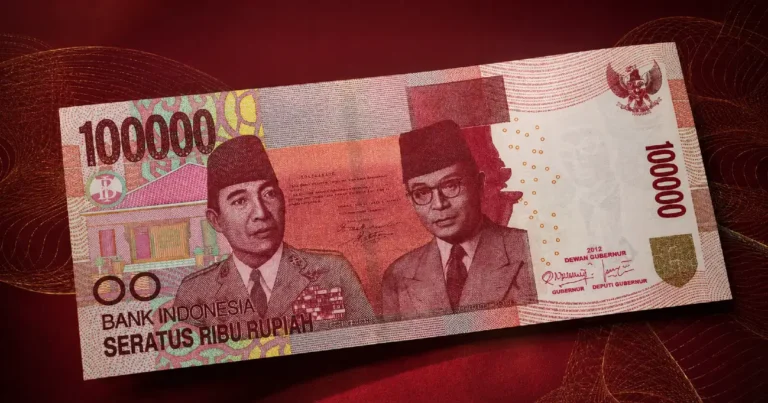
A powerful theme within Asian numismatics is the celebration of non-royal national heroes, revolutionary leaders, and independence icons on paper currency. When nations liberated themselves from colonial rule or dynastic empires, they replaced portraits of foreign monarchs with the faces of the individuals who led their independence movements.
Collectors focus on these iconic portraits to study the birth of modern republics. This banknote theme explores how master engravers captured the details of civilian and military leaders, transforming them into enduring symbols of national identity. To explore this specific category further, see our comprehensive guide to National Heroes on Banknotes: Iconic Asian Portraits, which profiles non-royal leaders like General Aung San, Mahatma Gandhi, and Muhammad Ali Jinnah.
Architectural Monuments & Heritage Sites
Asian banknotes frequently depict a nation’s architectural triumphs, from ancient archaeological wonders to sacred spiritual complexes. This sub-theme allows collectors to take a visual tour of global landmarks.
A typical type set might focus on:
- Ancient Archaeological Sites: Features ruins like Cambodia’s Angkor Wat, Indonesia’s Borobudur temple complex, or Pakistan’s ancient city of Mohenjo-daaro.
- Sacred Religious Complexes: Shows structures like Kathmandu’s iconic Pashupatinath Temple, the historic temples of Thailand, or grand regional mosques.
Mythology, Folklore & Legend
For a touch of cultural mystique, some collectors focus entirely on currency that illustrates local folklore, epic literature, and deep-seated Asian mythological traditions. These notes use intricate scrollwork to frame gods, legendary creatures, and allegorical scenes.
Excellent examples include Chinese notes displaying dragons and phoenixes, Indonesian notes weaving traditional shadow puppets (Wayang) or the mythical Garuda into their security backgrounds, and Laos or Thai notes depicting Airavata (three-headed elephant).
Topical Banknote Collecting Themes: Wildlife, Flora & Technology
Topical collecting focuses on a single subject across different countries, regardless of when or where the notes were issued. This flexible approach allows you to explore how a single concept is visualized across different Asian cultures.
Fauna, Flora & Natural Landscapes
Collecting wildlife themes is highly popular because it celebrates global biodiversity and natural heritage. Many Asian central banks choose to feature local endangered species or native landscapes on their currency to promote environmental awareness and cultural pride.
- Avian Numismatics (Birds): Sri Lanka is world-famous for its banknote series featuring highly detailed illustrations of endemic birds, such as the Sri Lanka Hanging Parrot, the Emerald Dove, or the Serendib Scops Owl.
- The Big Game Series: Nepal’s paper currency routinely showcases the rich wildlife of the Terai plains, featuring clear, beautiful illustrations of the one-horned rhinoceros, Bengal tigers, snow leopards, and elephants.
- Marine & Floral Ecosystems: Exploring notes that display the coral reefs of the Maldives, the diverse marine life of Indonesia, or native orchids and flora across the tropical sectors of Southeast Asia.
Science, Technology & Innovation
This forward-looking theme celebrates human ingenuity, scientific discovery, and industrial progress. Type sets are assembled around notes that feature:
- Scientific Pioneers: Portraying innovators like Japan’s bacteriologist Hideyo Noguchi on the 1000-yen note.
- Advanced Substrates: Collecting modern polymer notes, such as Singapore, Malaysia, and Vietnam’s high-tech plastic banknote series, which revolutionized currency durability and anti-counterfeiting security across the region.
Advanced Numismatic & Production Specialties
Advanced collectors often look past standard designs to focus on the technical production process itself. This specialized arena requires a deep understanding of security printing techniques, plate tracking, and manufacturing anomalies.
Errors, Misprints & Production Anomalies
Error notes are banknotes that accidentally bypassed strict treasury quality control checks with manufacturing defects intact. Because modern security printing presses utilize multi-stage inspection systems, major errors are incredibly rare and highly prized by specialists.
Variety collectors categorize error themes into distinct mechanical failure modes:
- Inverted Overprints: Occurs when a sheet is fed backwards into an overprint press, resulting in serial numbers or state seals appearing upside down relative to the main intaglio design.
- Cutting Misalignments: Where sheets are misaligned before the final blade stroke, resulting in one banknote showing portions of its neighbor’s design.
- Gutter Folds: Occurs when a sheet wrinkles or folds inside the press, leaving a stark, unprinted white streak running through the design when the paper is flattened.
Fancy Serial Numbers & Arithmetic Variations
Every standard banknote carries a unique tracking serial number stamped by an automated numbering machine. Many collectors focus entirely on locating rare numerical combinations, mathematical regularities, or auspicious sequences.
The market recognizes several specific categories of fancy serial numbers:
- Solid Numbers: Every digit in the sequence is identical (e.g.,
111111through999999). In Asian collecting circles, solid888888or999999numbers command significant premiums due to cultural associations with wealth and longevity. - Low Serial Numbers: Early print runs under a new prefix block, typically ranging from number
000001to000010. - Radars & Repeaters: Radars are palindromic sequences that read the same forwards and backwards (e.g.,
236632), while repeaters feature a repeating sequence of digits (e.g.,236236).
Color Trials, Specimens & Proof Sheets
Before a new banknote series is approved for mass production and public circulation, printing companies generate sample notes for testing, archival storage, and central bank validation. These issues are never intended to enter public hands, making them highly sought-after rarities when they appear on the market.
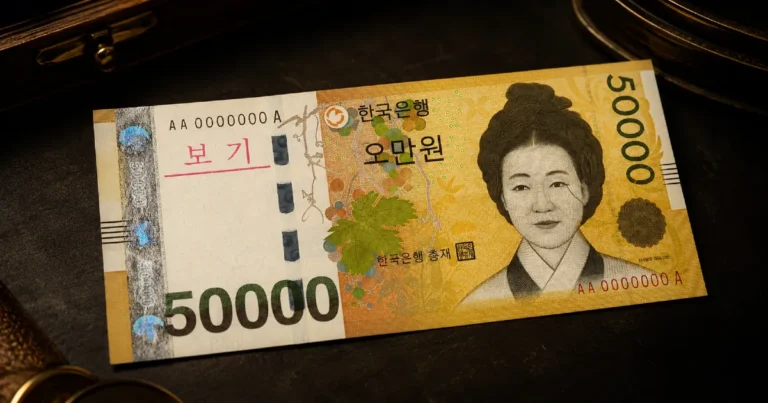
- Specimen Banknotes: Standard notes overprinted with text like “SPECIMEN” or “SAMPLE” in high-contrast red or black ink. They frequently feature all-zero serial numbers (
000000) or have their signature blocks defaced with clean punch holes to prevent fraud. - Color Trials: Test sheets produced using experimental ink palettes to evaluate how different color combinations interact under high-security scanners. These trials let collectors see alternative versions of iconic notes that were never officially adopted.
Summary Directory of Asian Banknote Collecting Themes
| Master Category | Focus Variant | Primary Collector Deliverable |
|---|---|---|
| Geographic | Country Type Set | Chronological timeline of a single Asian nation’s economic history. |
| Geopolitical | Regional Grouping | Study of shared trade zones, regional paths, and colonial currency boards. |
| Historical | Occupation Scrip | Insight into wartime logistics, propaganda, and emergency printing (e.g., JIM). |
| Artistic | Intaglio Houses | Appreciation for the fine-line engraving work of classic printing houses (e.g., TDLR). |
| Iconographic | National Heroes | Exploration of founding fathers and non-royal revolutionary icons. |
| Topical | Nature & Wildlife | Cross-border cataloging of native flora, fauna, and local landscapes. |
| Production | Errors & Anomalies | Specialized tracking of printing press failures and rare misprints. |
| Arithmetic | Fancy Serials | Sourcing rare palindromic, solid, or low-number serial sequences. |
📌 Looking for Specific Banknote Theme Guides?
To help you expand your thematic collection, explore our deep-dive numismatic directories and specialized variety studies:
- Iconic Leaders: National Heroes on Banknotes: Iconic Asian Portraits
- Burma Specialty: General Aung San Burma Banknote Variety Guide
- Nepal Commemoratives: Nepal Commemorative Banknotes Catalog