The national heroes on banknotes of Asia represent some of the most historically significant and numismatically compelling portraits ever produced on paper currency. For sovereign states emerging from colonial rule, a banknote functions as a traveling monument — a miniature canvas designed to project national identity, state values, and political legitimacy both domestically and across international borders. The inclusion of revolutionary leaders, founding fathers, and freedom fighters on circulating currency was the primary mechanism through which newly independent Asian republics transformed political pioneers into enduring national symbols.
For variety specialists and advanced collectors, tracking historical figures on Asian banknotes provides an extraordinary window into the political and cultural shifts of the twentieth century. Unlike regular-issue notes bearing the portraits of ruling monarchs, currency celebrating founding fathers on paper money captures the precise moments of national birth, anti-colonial struggle, and institutional transformation. By studying these iconic portraits on Asian banknotes, collectors can trace how state security printing factories utilized sophisticated intaglio engraving techniques to immortalize the faces of independence on circulating paper wealth.
For collectors interested in such focused pursuits, our comprehensive Banknote Collecting Themes: Guide & Ideas explores many other thematic directions across Asian numismatics. This article specifically profiles these non-royal commemorated figures — highlighting their achievements and the profound reasons each nation chose to honor them on its currency.
Table of Contents
Bangladesh: Sheikh Mujibur Rahman
Sheikh Mujibur Rahman, born in 1920, is universally revered as the founding father of Bangladesh. He engineered and led the historic movement for political independence from Pakistan, ultimately becoming the first President and later serving as the Prime Minister of the newly formed state. His visionary leadership was instrumental in driving the Bengali nationalist movement, which culminated in the formal creation of Bangladesh in 1971. His devotion to an independent and sovereign delta home earned him the enduring title of “Bangabandhu” (Friend of Bengal).
From a collector-focused standpoint, Sheikh Mujibur Rahman’s portrait is prominently featured across various denominations of contemporary Bangladeshi banknotes. His face on the currency serves as a primary symbol of the nation’s struggle for independence and the spirit of Bengali nationalism. These banknotes honor his historical legacy and recognize his foundational contributions to the nation’s establishment. Advanced variety specialists frequently focus on the crisp intaglio line work used to print his signature heavy-rimmed spectacles and traditional waistcoat costume.
China: Sun Yat-sen
Sun Yat-sen, widely hailed across East Asia as the “Father of Modern China,” was a revolutionary leader who played a pivotal role in overthrowing the Qing Dynasty and establishing the Republic of China. Born in 1866, Sun’s political vision for China was centered entirely on his ideological framework: the Three Principles of the People—which advocate for nationalism, democracy, and the livelihood of the people. He founded the Kuomintang (KMT) and led the historic 1911 Revolution, which successfully ended over two thousand years of imperial dynastic rule in China and laid down the core foundations for modern political and social systems.
Sun Yat-sen’s portrait is famously featured on various denominations of the Republic of China’s banknotes. For variety collectors, his image symbolizes the birth of modern China and the country’s historic transformation from a feudal empire to a republic. The 100 yuan note prominently displays his portrait, reflecting his lasting legacy. Variety specialists pay close attention to the background security laths, geometric borders, and anti-counterfeiting underprints that frame his portrait on these classic issues.
India: Mahatma Gandhi
Mohandas Karamchand Gandhi, commonly known around the globe as Mahatma Gandhi, was the premier leader of the Indian independence movement against British colonial rule. Born in 1869, Gandhi is renowned for developing and practicing the philosophy of nonviolent resistance and civil disobedience (Satyagraha). His massive social mobilization efforts were instrumental in securing India’s independence from the British Empire in 1947. He continuously advocated for civil rights and social reforms, emphasizing peace, truth, and communal harmony.
Mahatma Gandhi’s image appears on all contemporary Indian banknotes. His portrait serves as a constant visual reminder of his contributions to India’s freedom struggle and his core principles of peace and nonviolence. The Reserve Bank of India’s main series of circulating paper currency, known formally as the Mahatma Gandhi Series, features his image across a vast denomination spectrum ranging from 10 to 2000 rupees. Variety specialists focus on the precision of the portrait engraving relative to the Ashoka Pillar emblem positioned on the opposite side of the notes.
Indonesia: Sukarno and Hatta
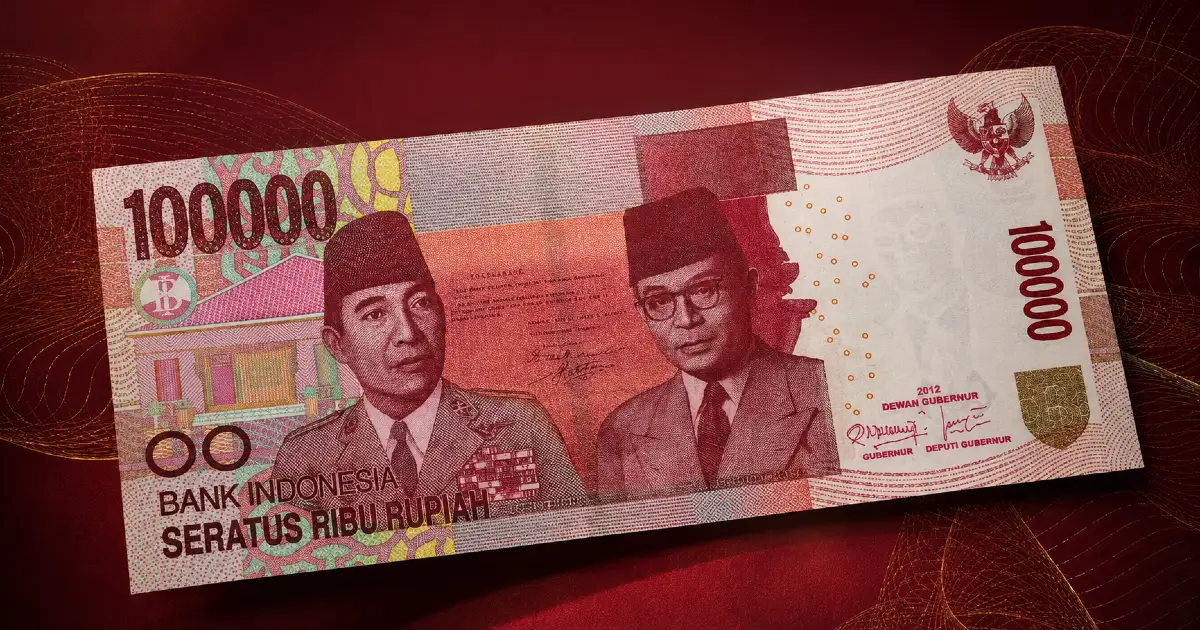
Sukarno and Mohammad Hatta are celebrated as the foundational founding fathers of the Republic of Indonesia. Sukarno, born in 1901, served as the first President of Indonesia, while Hatta, born in 1902, served as the country’s first Vice President. Both leaders played crucial roles in organizing and leading Indonesia’s multi-year armed struggle for independence from Dutch colonial rule. On August 17, 1945, Sukarno and Hatta jointly declared Indonesia’s independence, marking the formal end of colonial dominance. Sukarno’s vision was anchored in unity, encapsulated in the national motto “Bhinneka Tunggal Ika” (Unity in Diversity), while Hatta contributed significantly to the country’s economic frameworks and international diplomacy.
Sukarno and Hatta’s dual portraits are featured together on the high-value 100,000-rupiah banknote. Their combined images symbolize Indonesia’s fight for independence and the early leadership that shaped the nation’s borders. The banknote serves as a powerful tribute to their enduring legacy. Collectors target these high-grade issues for their rich color palettes and complex background screens inspired by traditional Indonesian textile art.
Japan: Hideyo Noguchi
Hideyo Noguchi was a prominent Japanese bacteriologist who made monumental contributions to medical science, particularly in the field of bacteriology. Born in 1876, Noguchi’s intensive laboratory work extended far beyond Japan, making a lasting global impact. He is best known for his research on yellow fever and syphilis, and his dedication led to important discoveries that advanced the world’s understanding of infectious diseases. Tragically, Noguchi contracted yellow fever and passed away while conducting field research in Africa.
Hideyo Noguchi’s portrait is prominently featured on the 1000-yen banknote. His inclusion on the currency highlights Japan’s recognition of his scientific achievements and his contributions to global public health. The banknote serves as a beautiful tribute to his legacy and celebrates the spirit of scientific inquiry. For collectors, this note stands out as a rare example where a state chose to honor a scientific pioneer over a political or military leader.
Malaysia: Tunku Abdul Rahman
Tunku Abdul Rahman was the first Prime Minister of independent Malaya and is revered as the Bapa Kemerdekaan (Father of Independence). Born in 1903, he led the diplomatic mission to London to negotiate independence from British colonial rule, which was successfully achieved in 1957. He subsequently played a central role in the formation of Malaysia in 1963, uniting the various states and ethnic communities across the peninsula and Borneo.
T0 his portrait or historic silhouette appearing on commemorative issues represents national liberation and unity. For collectors, tracking banknotes that depict his historic declaration of “Merdeka!” provides a direct link to the political birth of the nation.
Mongolia: Genghis Khan
Genghis Khan, born with the name Temujin in 1162, is the legendary founder of the Mongol Empire, which grew to become the largest contiguous empire in world history. He is a deeply revered figure in Mongolia for his historic role in unifying the disparate Mongol tribes, expanding their territory, and creating a unified national identity. His leadership and military strategies expanded the empire across Asia and deep into Europe, while his legal code, the Yassa, and his administrative policies helped to create a highly structured and cohesive society.
Genghis Khan’s portrait is featured across various denominations of Mongolian banknotes, including the 500 tugrik note. His image functions as a powerful symbol of Mongolia’s historical legacy and the enduring influence of his leadership. The banknotes honor his role in shaping the nation’s long-term history and identity. Variety collectors study these notes for their unique traditional patterns, script elements, and security background layers.
Myanmar (Burma): General Aung San
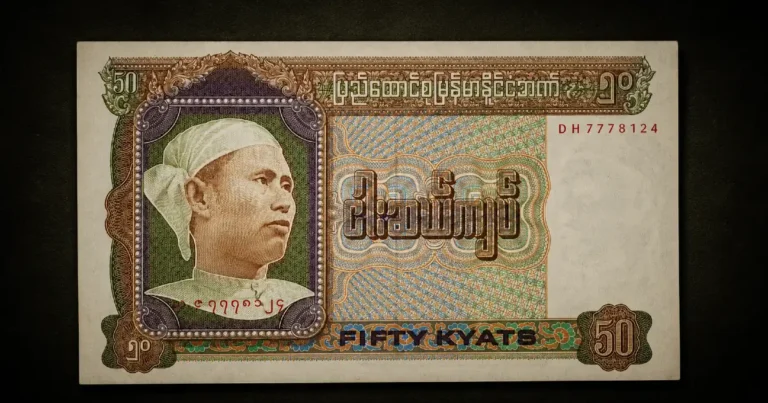
General Aung San, born in 1915, is the premier national hero of Myanmar and is hailed across the country as the father of modern Burma. He played a crucial, indispensable role in organizing the country’s independence movement against British colonial rule. Aung San founded the modern Burmese army and successfully negotiated Burma’s independence from Britain, which was formally achieved in 1948. Although he was tragically assassinated before seeing his country completely free, his leadership and vision were instrumental in creating an independent state.
General Aung San’s portrait is famously featured across various denominations of Myanmar’s banknotes, symbolizing the nation’s fight for independence and the enduring legacy of his leadership. His image has graced multiple historical series, including the initial Union Bank of Burma: 1958 Aung San Kyat Banknotes, the subsequent People’s Bank of Burma Banknotes: 1965 Aung San Kyat, and later issues such as the Union of Burma Bank: Aung San Kyat Banknotes (1972-1979) and the Union of Burma Bank: Aung San Kyat Banknotes (1985-1987). To review a complete technical breakdown of these historic issues, signature combinations, and specific design varieties, explore our dedicated guide to Aung San Burma Banknotes.
Pakistan: Muhammad Ali Jinnah
Muhammad Ali Jinnah, born in 1876, is the founding father of Pakistan. He played a pivotal, driving role in campaigning for the creation of Pakistan as a separate, independent nation for Muslims in the Indian subcontinent. Jinnah’s political advocacy led to the Partition of British India and the formal establishment of Pakistan in 1947. He served as the first Governor-General of Pakistan and is remembered for his vision of an inclusive state.
Muhammad Ali Jinnah’s portrait is featured across all standard denominations of Pakistani banknotes. His image represents the ideals of freedom, democracy, and the historic struggle for regional rights. The banknotes honor his role as the “Quaid-e-Azam” (Great Leader) and celebrate his enduring legacy in Pakistani history. Variety specialists pay close attention to the execution of his traditional Sherwani costume tunic, which features high-contrast intaglio lines perfect for verifying plate authenticity.
Philippines: José Rizal
José Rizal, born in 1861, is the national hero of the Philippines. He was a brilliant writer, polymath, and nationalist whose non-violent literary works inspired the movement for Philippine independence from Spanish colonial rule. Rizal’s novels, “Noli Me Tángere” and “El Filibusterismo”, exposed the injustices of colonial rule and ignited the Filipino people’s desire for freedom. He was executed by the Spanish administration in 1896, but his martyrdom galvanized the Philippine Revolution and ultimately led to the country’s freedom.
José Rizal’s portrait is featured on various historical denominations of banknotes. For collectors, his image represents the Philippines’ long struggle for independence and the power of his intellectual ideas. The banknotes honor his intellectual legacy and celebrate his role as an international symbol of national pride. Variety collectors target these notes for their fine portrait detailing and historical reverse vignettes.
Singapore: Yusof bin Ishak
Yusof bin Ishak was a prominent journalist and statesman who served as the first President of Singapore following its independence from Malaysia in 1965. Born in 1910, his leadership during Singapore’s early years was defined by a commitment to multiculturalism, religious harmony, and social cohesion during a period of intense geopolitical uncertainty. His face appears exclusively on the current Portrait Series of Singaporean banknotes, symbolizing the foundational values of integrity and unity that shaped the modern global city-state. Collectors value this crisp series for its vibrant colors, clean polymer substrates, and advanced optical security features.
Singapore: Lee Kuan Yew
While the standard circulating Portrait Series features President Yusof bin Ishak, the Monetary Authority of Singapore has immortalized Lee Kuan Yew—the nation’s founding Prime Minister and chief architect of its transition from a third-world port to a global financial capital—on high-profile commemorative issues. Lee Kuan Yew’s strategic governance, anti-colonial campaigns under the People’s Action Party (PAP), and nation-building policies shaped modern Singapore following its independence in 1965.
For variety specialists, Lee Kuan Yew’s portrait is featured on specialized commemorative currency, such as the 2015 SG50 $50 polymer notes celebrating Singapore’s golden jubilee. His image is executed with advanced security printing techniques on synthetic plastic film, making these notes prized targets for topical collectors. His portrait symbolizes economic survival, political meritocracy, and state sovereignty.
Sri Lanka: Don Stephen Senanayake
Don Stephen Senanayake, born in 1884, is universally celebrated as the “Father of the Nation” in Sri Lanka (formerly Ceylon). He was the premier leader of the non-violent independence movement against British colonial rule, successfully negotiating the constitutional transition that led to Ceylon achieving dominion status in 1948. Becoming the first Prime Minister of independent Ceylon, Senanayake established a foundation for agricultural development, irrigation infrastructure, and multi-ethnic state-building.
From a numismatic standpoint, Don Stephen Senanayake’s portrait has been honored on multiple generations of Sri Lankan banknotes, including prominent appearances on high-value denominations and special commemorative legal tender issues. His intaglio-printed profile represents the peaceful dawn of sovereign governance and the birth of modern Sri Lankan identity. Variety collectors focus on the fine line work of his civilian attire and the traditional Sinhalese background screens that accompany his portrait.
Vietnam: Ho Chi Minh
Ho Chi Minh, born in 1890, was the revolutionary leader who led Vietnam to independence from French colonial rule. He is the founding father of the Democratic Republic of Vietnam and a central, towering figure in Vietnamese history. His leadership was pivotal in organizing the struggle for Vietnam’s independence. He proclaimed the establishment of the Democratic Republic of Vietnam in 1945 and led the country through the First Indochina War, inspiring anti-colonial movements worldwide.
Ho Chi Minh’s image is featured on all denominations of Vietnamese banknotes. His portrait functions as a primary symbol of Vietnam’s revolutionary spirit and its fight for sovereignty. The banknotes serve as a beautiful tribute to his leadership and the impact of his vision for the country. Modern polymer issues feature his portrait printed with extreme precision, complete with integrated see-through window details that reveal a secondary hidden image under direct light.
Conclusion
The inclusion of national heroes on banknotes across Asia serves as a powerful reminder of each country’s unique history and the individuals who have shaped its political destiny. These figures, through their leadership, vision, and personal sacrifice, have left an indelible mark on their nations. By commemorating non-royal leaders on currency, countries not only honor their historical achievements but also educate future generations about their contributions to national identity and pride. For variety specialists, collecting these notes offers a deeply rewarding journey through the fine line intaglio plates and high-security paper developments of the twentieth century.
📌 Looking for Royal Portraits?
While this directory index tracks revolutionary leaders and non-royal founding figures, Asian paper wealth features a rich legacy of royal lineage. For technical variety guides on ruling monarchs, explore our dedicated studies:
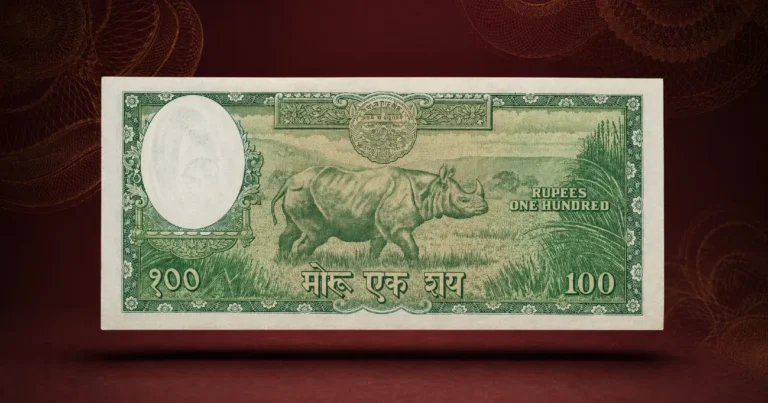
- Nepal Treasury Issues: Government of Nepal Banknotes
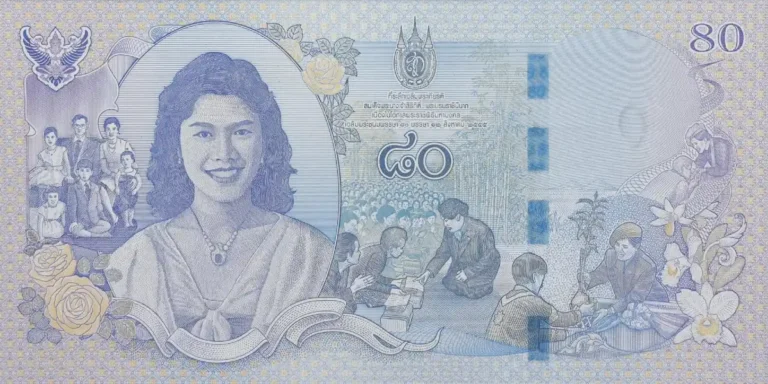
- Thailand: Queen Sirikit Commemorative Banknote Guide