The history of banknotes begins with early paper money in China and continues through centuries of currency innovation, central banking, security printing, and modern polymer banknotes. Although banknotes are now familiar objects in everyday commerce, the shift from gold, silver, copper, and other forms of metallic money to paper currency backed by public trust and state authority was one of the most important developments in monetary history.
For collectors, researchers, and numismatic historians, banknotes are more than payment instruments. They record political change, economic development, printing technology, anti-counterfeiting design, and national identity. From Tang Dynasty “flying money” and Song Dynasty Jiaozi to European banknotes, colonial paper currency, private bank issues, central bank notes, and today’s polymer currency, the evolution of banknotes reveals how societies created portable, trusted, and secure forms of money. Understanding this history of banknotes is essential for any serious collector or numismatic researcher.
This guide traces the paper money history of the world from its origins in Imperial China to the rise of modern polymer currency. It is both a reference for researchers and a collector’s companion to the evolution of banknotes across a thousand years. Along the way, it explores the first banknotes, the development of paper currency in Europe and Asia, the growth of banknote security features, and the transition from traditional paper notes to durable polymer banknotes.
Table of Contents
Early Paper Money in Imperial China
The earliest chapter in the history of banknotes begins in China, where paper money history predates European currency by several centuries. Long before European banks issued formal credit notes, Chinese merchants and officials faced the practical difficulty of moving large quantities of metal coinage.
The Birth of Flying Money
During the Tang Dynasty (618–907 AD), China’s primary circulating currency consisted of heavy, low-value copper cash coins. For wealthy merchants traveling vast distances along domestic trade routes, transporting thousands of pounds of copper coins was logistically hazardous and highly vulnerable to highway banditry. To solve this dilemma, merchants began depositing their heavy copper coins at local provincial capital offices in exchange for paper receipts known as Feiqian (飛錢), or “flying money.” These paper documents allowed merchants to travel light and redeem their paper receipts for copper cash upon arriving at their destinations. While Feiqian was not a true legal tender circulating publicly, it established the foundational concept of paper instruments acting as safe substitutes for metallic coinages.
The World’s First True Banknote
The critical leap from private deposit receipts to official, circulating paper currency occurred during the Song Dynasty (960–1279 AD) in the province of Sichuan. Due to a severe local shortage of copper, the regional government forced the population to use heavy iron coins, which possessed an incredibly low purchasing power. In response, a cooperative of sixteen wealthy merchant houses issued private paper receipts called Jiaozi (交子) to represent deposits of these iron cash coins.
The Jiaozi notes were immensely popular due to their portability and efficiency, circulating freely as an abstract medium of exchange. Recognizing the usefulness and fiscal importance of this system, the Song government took control of Jiaozi issuance in 1023 AD, establishing the world’s first officially regulated, state-backed paper banknote system. These early notes were printed using hand-carved copper or woodblock plates onto specialized paper manufactured from mulberry tree bark.
Yuan and Ming Dynasties
When Kublai Khan established the Mongol Yuan Dynasty (1271–1368 AD), he enacted a sweeping monetary decree: all metallic coins were banned, and the empire transitioned to a purely paper-based fiduciary system. The primary note family, known as Chao (鈔), was issued without any physical metallic backing. Although this helped the Yuan state finance military and administrative expenses, excessive note issue contributed to severe inflation and weakened confidence in the currency.
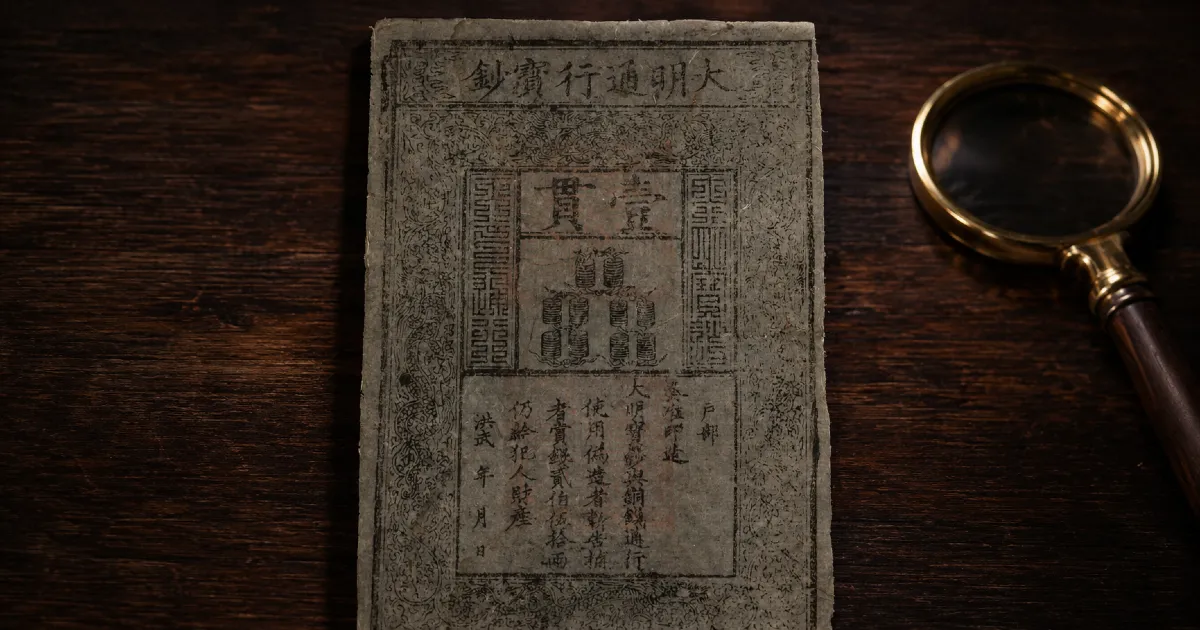
The subsequent Ming Dynasty (1368–1644 AD) attempted to restore monetary order by issuing the famous Da Ming Baochao (大明寶鈔) notes. Printed on large, gray mulberry-bark sheets, these notes carried fierce warnings threatening counterfeiters with execution while promising rewards to informants. However, because the Ming court systematically failed to anchor the paper notes to physical metal reserves and refused to accept old notes for taxes, public trust declined sharply.
By the early 15th century, the value of the Da Ming Baochao had plummeted to less than one percent of its face value, forcing China to abandon mass paper experiments for centuries and return to a silver bullion economy. This collapse remains one of the most instructive episodes in paper money history, demonstrating how the evolution of banknotes depends as much on institutional trust as on printing technology.
How Paper Money Spread Beyond China
As paper wealth expanded within China’s borders, knowledge of this revolutionary chapter in the history of banknotes leaked westward along the Silk Road trade networks, provoking deep intrigue and skepticism across Central Asia and Europe.
Marco Polo’s Accounts and Western Disbelief
When Venetian merchant Marco Polo returned from his travels in East Asia in the late 13th century, his detailed descriptions of the Great Khan’s paper currency were met with widespread disbelief in medieval Europe. In his journals, Polo marvelled at how the Chinese emperor could transform the bark of mulberry trees into pieces of paper that could buy any merchandise across the empire as if they were pure gold or silver. To a European continent entirely dependent on the tangible, intrinsic value of gold florins and silver groats, the concept of paper possessing abstract legal value seemed like pure alchemy.
The 1294 Tabriz Chao Experiment
The first major Western migration of paper banknotes occurred in 1294 AD in Tabriz, the capital of the Ilkhanate (a Mongol breakout empire in modern-day Iran and Iraq). Facing a completely depleted state treasury due to royal extravagance and a devastating cattle plague, the ruler Gaykhatu Khan was persuaded by his financial ministers to replicate the pure paper system of the Yuan Dynasty.
The Ilkhanate printed paper notes mimicking Chinese Chao issues, even featuring Chinese characters alongside Arabic script. Gaykhatu issued an edict forcing all merchants to trade exclusively with the paper Chao under penalty of death. The results were severe: many merchants refused to accept the paper notes, markets were disrupted, and trade slowed sharply. Within two months, riots erupted across Tabriz, forcing the Khan to repeal the decree and abolish paper currency entirely to prevent an all-out civil war. This failure demonstrated that paper money could not succeed through executive force alone; it required public trust and institutional stability.
Europe’s First Banknotes
The history of banknotes takes a decisive European turn in the 17th century, when paper money became inseparable from chartered banking institutions and state finance.
Stockholms Banco (1661)
The honor of issuing the first true circulating banknotes in Europe belongs to Sweden. In 1656, a merchant named Johan Palmstruch established the Stockholms Banco, a private banking institution operating under an official royal charter. At the time, Sweden used large copper plate money, which was heavy and inconvenient for commerce.
In 1661, Palmstruch introduced Kreditivsedlar, a new form of credit note. They were transferable bearer instruments and could circulate in payment, making them a major step toward modern European banknotes. However, the bank soon issued more notes than it could safely redeem. Stockholms Banco printed far more Kreditivsedlar notes than it held in copper reserves. When worried depositors rushed to liquidate their notes for physical copper plates in 1667, the bank collapsed, and Palmstruch was prosecuted, marking Europe’s first banking boom-and-bust cycle.
The Bank of England (1694)
Despite the Swedish collapse, the operational efficiency of paper money could not be ignored. The Bank of England was incorporated under a royal charter to raise a loan of £1.2 million to help King William III finance the Nine Years’ War against France.
Early Bank of England notes were primitive compared to modern currency. They were printed on fine bank paper, but the exact denominations, serial numbers, and the promise to pay the bearer were written entirely by hand, finalized with individual signatures from the bank’s chief cashiers. Over the course of the 18th century, these notes evolved from hand-signed credit instruments into a highly standardized, printed national paper currency. Over time, Britain’s financial system helped demonstrate that paper currency backed by institutional credit and state authority could support large-scale commerce.
Colonial and Private Banknotes
As European maritime powers expanded across the globe, they introduced paper money systems in many colonial territories — a critical but often overlooked phase in paper money history.
Colonial Emergency Scrip
In the Americas and French Canada, colonial administrators routinely faced severe shortages of official European silver and gold coins. To maintain basic local commerce, authorities turned to ingenious emergency paper substitutes. In 1685, the intendant of French Canada, facing a delayed military pay shipment from Europe, famously confiscated all playing cards in the colony, cut them into quarters, signed them with official wax seals, and issued them as currency.
During the American Revolutionary War (1775–1783), the Continental Congress issued vast sums of unbacked paper currency known as “Continental Currency” to fund the military campaign against Great Britain. Lacking any physical gold or silver backing and heavily targeted by British economic warfare counter-strategies (massive colonial counterfeiting operations), the value of the Continental plummeted to zero, giving rise to the historic phrase “not worth a Continental.”
Private Asian Merchant Notes
The 19th century saw the growth of private and semi-private note issuance across parts of the West and colonial Asia. During this period, unified national central banking systems were not yet dominant. Instead, an array of private commercial merchant banks, regional corporations, and chartered trading monopolies printed their own private banknotes to capture local economic markets.
Across East and South Asia, Western imperial institutions like the Hongkong and Shanghai Banking Corporation (HSBC), the Chartered Bank of India, Australia and China, and the Mercantile Bank of India issued elaborate paper currencies to support colonial trade, shipping, and regional commerce. These notes featured complex, multi-lingual texts displaying English alongside Chinese characters, Arabic script, or Hindi text, allowing them to gain acceptance among diverse local merchant classes.
The Rise of Central Banks
By the mid-19th century, the wide variety of private and regional banknotes created problems for trade, redemption, public trust, and state monetary control. Governments across the globe recognized the urgent need to monopolize and centralize currency production.
The Legislative Turning Points
A major step in modern currency stabilization was the Bank Charter Act of 1844 in the United Kingdom. The Act banned new note-issuing banks in England and Wales and gradually reduced the role of existing private issuers, strengthening the Bank of England’s central position in British banknote issue.
Similar centralization movements occurred across the globe over the next several decades. In Japan, the Meiji Restoration unified a fragmented feudal monetary system by establishing the Bank of Japan in 1882, ending the issuance of regional feudal clan notes (Hansatsu).
In the United States, the National Bank Acts of the 1860s had already curtailed most state-bank-note issuance, while the Federal Reserve Act of 1913 created the Federal Reserve System and introduced a more centralized framework for modern U.S. paper currency. Centralizing banknote production was a turning point in the history of banknotes — allowing sovereign nations to implement uniform legal tender laws and use currency as an official symbol of national identity and state authority.
Banknote Security Milestones
The history of banknotes has always been closely linked to anti-counterfeiting technology. In paper money history, the moment currency gained legal value, counterfeiters emerged to exploit it. To protect public confidence, monetary authorities adopted increasingly sophisticated printing, paper-making, and design techniques.
The Shift to Steel Engraving
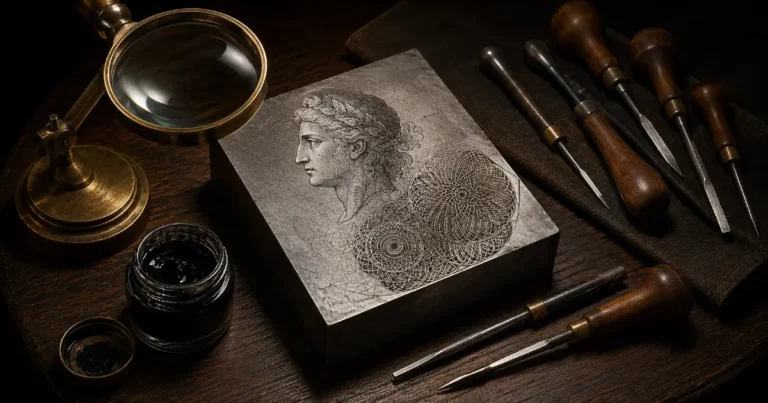
Early paper currencies relied entirely on hand-written signatures, official red ink wax seals, and coarse woodblock cuts to verify authenticity. However, the industrial era revolutionized printing capacity. In the early 19th century, inventors like Jacob Perkins developed advanced methods for duplicating hand-engraved steel master plates, allowing for the mass production of incredibly detailed intaglio banknotes.
Central banks integrated complex mechanical geometric lathes (such as the rose engine) into their security lines. These machines generated intricate guilloche patterns — interlocking webs of fine lines that were extremely difficult to reproduce by hand or with early photographic methods.
Substrate Advancements and Embedded Features
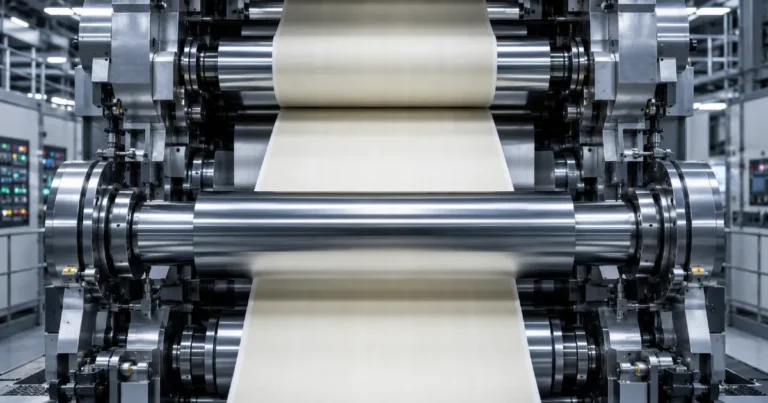
As printing technologies advanced, paper manufacturing itself became highly restricted. Security printers abandoned standard wood-pulp paper in favor of specialized cotton-fiber and linen rags blended with abaca fibers, giving banknotes their distinct physical durability and tactile snap.
- The Cylinder-Mold Watermark: Refined during the 19th and 20th centuries, this process embedded multi-toned portraits directly into the varying thicknesses of the paper fibers during manufacturing.
- The Security Thread: First introduced by specialized security mills in the mid-20th century, a thin metallic or plastic ribbon was woven directly into the internal structure of the paper web, providing a stark internal security profile visible only under direct transmitted light.
For an exhaustive, hands-on diagnostic guide explaining how to analyze these specific security elements under a magnification lens, explore our technical companion reference page: Banknote Security Features: Preventing Counterfeiting.
From Paper to Polymer Banknotes
For centuries, banknotes were mainly printed on durable paper made from cotton, linen, or other plant fibers. However, the late 20th century introduced a major material change: synthetic polymer banknotes.
The 1988 Australia Polymer Revolution
During the late 1960s and 1970s, Australia faced a massive wave of high-quality counterfeit 10-Dollar paper banknotes, which threatened to severely undermine public confidence in the national currency. In response, the Reserve Bank of Australia partnered with the Commonwealth Scientific and Industrial Research Organisation (CSIRO) to develop a new banknote substrate based on synthetic polymer.
In 1988, Note Printing Australia (NPA) issued the world’s first circulating synthetic polymer banknote: the historic 10-Dollar Bicentennial commemorative note. This note was manufactured from non-porous, biaxially-oriented polypropylene (BOPP) film. Because polymer notes are non-porous and waterproof, they are incredibly durable, lasting up to four to five times longer than traditional cotton-rag paper notes in circulating conditions.
Advanced Optical Security Windows
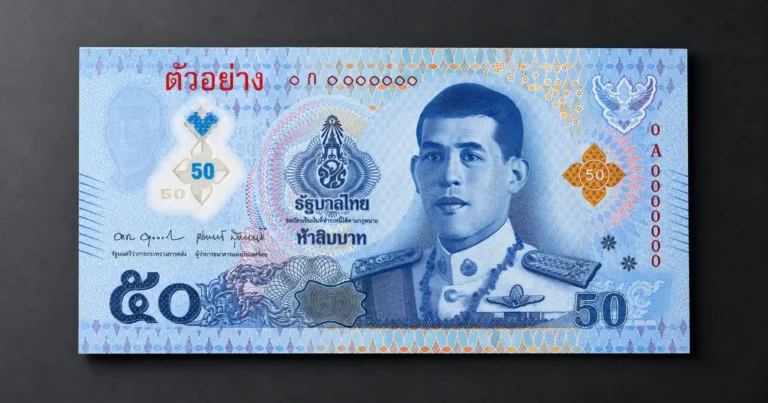
From a numismatic standpoint, the transition to polymer created new possibilities for banknote design and security. Because the core substrate begins as a crystal-clear plastic film, security printers can leave targeted sections of the banknote entirely unprinted. This creates transparent windows that cannot be accurately scanned or photocopied. Within these clear window portals, modern mints embed complex diffractive optical elements, color-shifting iridescent foils, and complex holographic portraits that shimmer vividly under light.
Today, many countries use full-polymer or hybrid banknotes, marking a definitive milestone in the evolution of banknotes. This material revolution also represents one of the most significant chapters in the broader history of banknotes since the introduction of cotton-rag paper.
Banknotes in the Digital Age
In the 21st century, digital payments, bank transfers, mobile wallets, and central bank digital currency projects have raised new questions about the future role of physical banknotes.
Why Physical Banknotes Still Matter
Despite the convenience of digital payments, physical banknotes continue to play important roles in privacy, financial inclusion, emergency resilience, and everyday commerce.
- Privacy and Independence: Physical cash can be used without electricity, internet access, or payment apps. It also offers a higher degree of transaction privacy than many digital payment systems.
- System Backup Redundancy: During natural disasters, cyber incidents, or power outages, digital payment systems may become temporarily unavailable. Physical banknotes can provide a practical backup for everyday transactions when digital systems are disrupted.
For the international community of numismatists, variety specialists, and cultural historians, the growth of cashless payments may increase interest in banknotes as historical, artistic, and collectible objects. For collectors and historians alike, the evolution of banknotes from Tang Dynasty flying money to polymer security windows is one of the great narratives of human ingenuity. Banknotes are not mere units of trade; they are miniature works of art that capture the political triumphs and sovereign spirit of the nations that printed them.
History of Banknotes Timeline
This guide traces paper money history from its origins in Imperial China to the rise of modern banknotes used around the world. For collectors, the history of banknotes also provides useful context for understanding rarity, design changes, issuing authorities, and the development of modern paper currency.
| Historical Era | Primary Milestone | Pioneer Authority | Key Numismatic Significance |
| 7th Century AD | Feiqian (“Flying Money”) Receipts | Tang Dynasty (China) | The foundational concept of paper deposit certificates |
| 1023 AD | Regularized Government Jiaozi | Song Dynasty (China) | The first officially regulated, circulating paper currency system |
| 1294 AD | Tabriz Chao Currency Experiment | Ilkhanate (Persia / Iran) | The first major migration of paper wealth |
| 1661 AD | Kreditivsedlar Bearer Notes | Stockholms Banco (Sweden) | Europe’s first official circulating bank notes |
| 1694 AD | Chartered Royal Banknote Issuance | Bank of England (United Kingdom) | The rise of institutional credit paper wealth |
| 18th–19th Century | Colonial Scrip & Revolutionary Currency | Continental Congress / Global Colonies | High-risk emergency note printings |
| 19th Century | Private Commercial Merchant Notes | Imperial Chartered Banks (Asia / West) | Elegant, multi-lingual intaglio printings |
| 1844 AD | Centralization of Monetary Monopoly | Bank Charter Act (United Kingdom) | The gradual decline of private banknote issue |
| 19th Century | Geometric Lathe & Hardened Steel Plates | Security Printing Houses (Global Mints) | The industrialization of anti-counterfeiting |
| 1988 AD | Biaxially-Oriented Polypropylene (Polymer) | Note Printing Australia (Australia) | The modern synthetic plastic revolution |