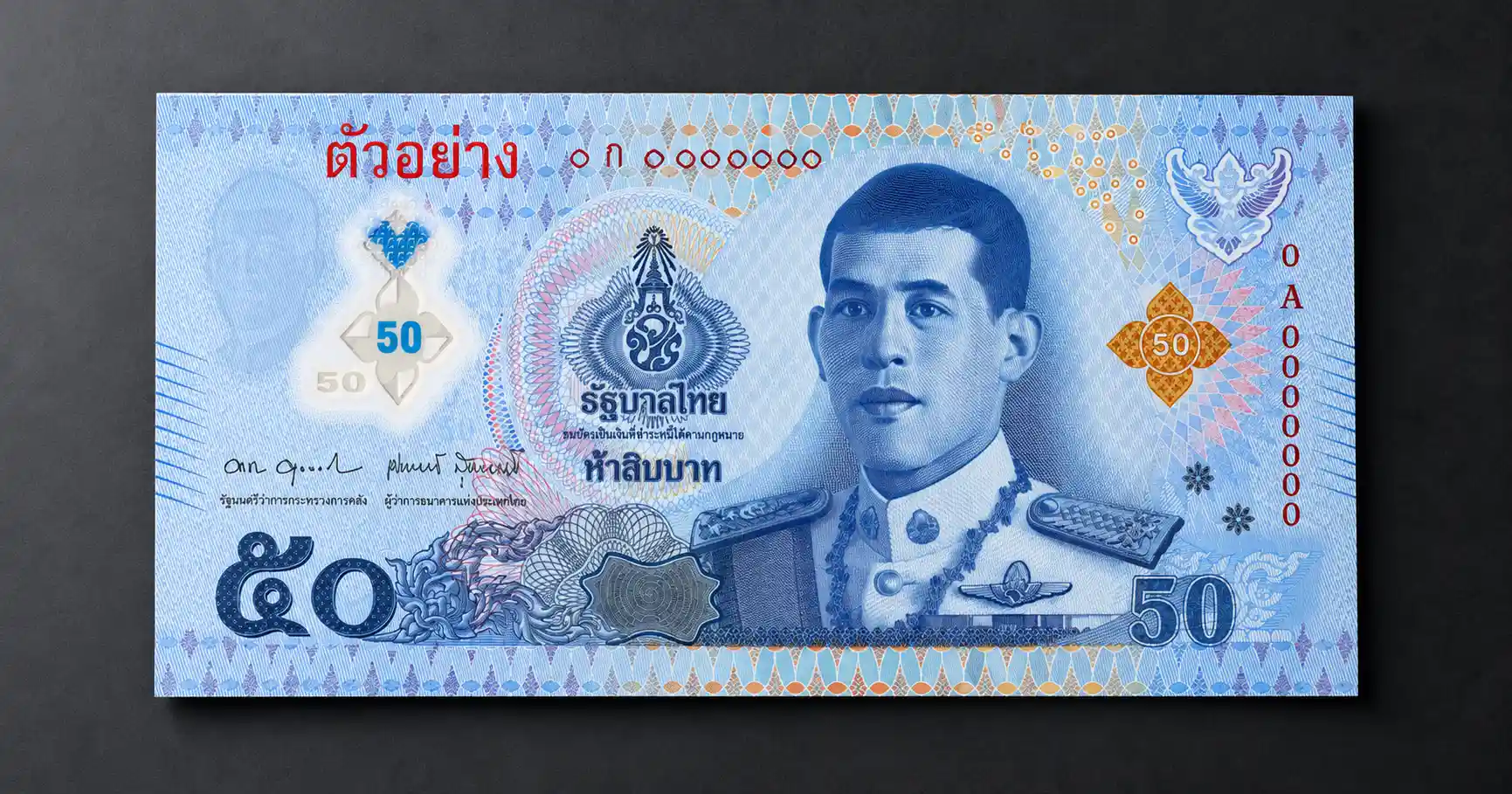
Modern banknote security features help protect paper money and polymer banknotes from counterfeiting while giving collectors practical tools for authentication. These features include watermarks, security threads, raised intaglio printing, UV elements, holograms, microprinting, see-through registers, color-shifting inks, and polymer windows.
For currency authorities, banknote security features support public confidence by making genuine notes easier to verify and more difficult to reproduce. For collectors and numismatic variety specialists, the same anti-counterfeiting features can help confirm authenticity, identify printing variants, study production methods, and assess wear. Understanding these details is especially important when examining rare banknotes, high-value notes, specimen issues, and older paper currency that may be vulnerable to alteration or forgery.
This practical guide explains how to check banknote security features by feel, sight, tilt, light, and magnification. It covers the main currency security features found on modern and collectible banknotes, including how to inspect a watermark, read a security thread, feel intaglio texture, test UV security features, recognize microprinting, and understand the role of polymer windows in modern anti-counterfeiting design.
Table of Contents
Why Banknote Security Features Matter
Banknote design is closely connected to developments in counterfeiting technology. The rapid development of commercial digital scanners, high-resolution laser printers, and image-editing software has made basic currency designs vulnerable to reproduction. To stay ahead of counterfeiters, central banks and security printing houses develop advanced anti-counterfeiting features that are difficult to reproduce with commercial imaging systems.
For variety specialists, checking banknote security features serves a dual purpose. It protects a collector from sophisticated forgeries while revealing valuable data about the printing process. Minor variations in a security thread’s position, shifts in an ultraviolet fluorescent ink mix, or wear on an intaglio printing plate can help collectors trace a banknote to a specific printing run, factory, or historical variant. These identification techniques can also help collectors study printing methods, issue varieties, and production differences.
Feel: Intaglio Printing and Substrate
The tactile feel of a genuine note is one of the most immediate banknote security features a collector can check without any equipment. Physical currency relies on distinct physical textures that are difficult to simulate by standard office lasers or commercial inkjet printers.
Intaglio Engraving
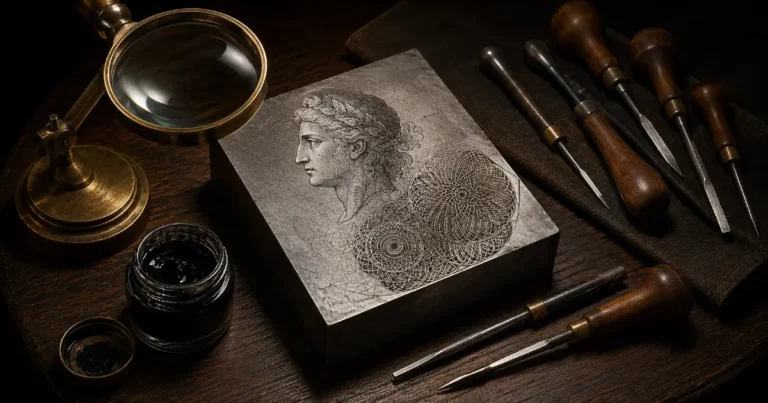
Intaglio printing is an important tactile anti-counterfeiting feature on modern banknotes. During manufacturing, master steel plates are engraved with deep recessed grooves that hold specialized, high-viscosity inks. The printing press applies thousands of pounds of pressure per square inch, forcing the paper deep into the ink-filled grooves. This intense compression forces the ink upward, creating thick, raised ridges on the surface of the banknote.
When you run a finger across the main portraits, state titles, or value numerals of a genuine banknote, you may feel this distinct, raised texture. Counterfeiters using flat offset or digital printing cannot replicate this physical profile, as their ink sits completely flat on the surface of the paper.
Paper vs. Polymer Textures
The base material, or substrate, used to print currency provides a critical tactile baseline for collectors:
- Cotton-Linen Rag Paper: Most traditional paper banknotes do not use wood-pulp paper. Instead, they are printed on specialized paper made from cotton and linen rags, often blended with regional plant fibers like abaca. This material provides an instantly recognizable physical snap, a unique rattle when flexed, and deep structural durability.
- Synthetic Polymer (BOPP): First introduced by Note Printing Australia in 1988, synthetic polymer banknotes are manufactured from non-porous, biaxially-oriented polypropylene film. Polymer notes have a distinctly smooth, plastic feel, a high degree of flexibility, and a complete absence of surface fibers. They do not absorb moisture or dirt, making them highly resistant to everyday wear.
Tactile Blind Marks
To assist blind and visually impaired individuals with navigation, modern central banks integrate raised geometric patterns along the outer margins of the note. These tactile marks are executed using heavy intaglio layers or mechanical embossing techniques, creating sharp, raised lines, dots, or diagonal bars. Because these marks are positioned on areas prone to frequent handling, variety specialists often inspect them under magnification to check for fiber flattening and handle wear over time.
Look: Watermarks and Security Threads
When a banknote is held up to a direct light source, several banknote security features become visible within the paper or polymer substrate.
Cylinder-Mold Watermarks
The watermark is one of the oldest and most reliable anti-counterfeiting features in paper money history. True multi-toned watermarks are embedded directly into the paper web while it is still a wet slurry of fibers during production. A specialized cylinder-mold wire mesh presses a three-dimensional design into the wet sheet, causing the cotton-linen fibers to settle in varying thicknesses.
When viewed under transmitted backlight, the thinner areas let more light pass through to create vivid, highlighted zones, while the thicker fiber concentrations block light to cast soft, dark shadows. This creates a highly detailed, lifelike portrait with smooth gradations of tone. Counterfeiters often try to mimic this by printing a faint gray image on the surface of low-grade paper, but these imitations look muddy, dark, and flat when backlit.
Security Threads
The integration of a vertical security thread provides an important defense against advanced digital duplication. This feature is manufactured as a distinct component and woven into the paper matrix during production. Collectors track three primary variations of this element:
- Solid Embedded Threads: A thin, metallic or plastic ribbon sealed entirely inside the paper layers, appearing as a solid black line when backlit.
- Windowed Threads: A ribbon that weaves in and out of the paper surface, appearing as silver dashes on the front of the note but forming a solid, continuous vertical band under transmitted backlight.
- Microprinted Threads: Advanced windowed ribbons featuring microscopic text or denominations laser-etched onto the metallic film, readable under a magnifying loupe.
See-Through Registers
Also known as perfect registration devices, this feature tests the alignment precision of high-speed security printing presses. Designers place an incomplete, abstract geometric motif on the obverse face of the note, with a corresponding, non-overlapping design on the reverse face.
When viewed normally under ambient lighting, the shapes appear disconnected. However, when held up to a backlight, the front and back patterns align perfectly to form a single, complete image (such as a geometric star, symbol, or numeral). If a banknote is run through a standard commercial two-pass printing press, the front-to-back alignment will show visible blurring, overlapping, or white gaps along the edges.
Tilt: Holograms and Color-Shifting Inks
Dynamic optical elements are among the most visually striking anti-counterfeiting features on modern currency, changing appearance based on viewing angle in ways that static photocopiers and digital scanners cannot replicate.copiers and digital scanners.
Optically Variable Ink (OVI)
Optically Variable Ink is a high-tech anti-counterfeiting feature used on prominent elements like high-denomination numerals or security seals. This specialized ink contains microscopic, multi-layered interference flakes that filter light differently depending on the angle of illumination.
When a collector tilts the banknote back and forth, the color shifts dramatically (e.g., from a deep emerald green to a bright metallic gold). This color transition is fluid and distinct. Counterfeiters often attempt to copy this effect using glitter spray or metallic model paints, but these imitations lack a clean, uniform color shift and look dull and grainy under magnification.
Diffractive Holograms and Patches
Sovereign bank notes often feature multi-layered metallic foils stamped onto their surface using high-temperature thermal application systems. These diffractive security patches contain microscopic holographic gratings that bend light to create complex visual effects. When tilted, the hologram displays floating three-dimensional portraits, shifting value numerals, and brilliant rainbow color bands. Modern holographic patches also feature micro-perforations and clear text windows, making them difficult for counterfeiters to strip off and apply to forged notes.
Polymer Clear Windows
Synthetic polymer banknotes offer a unique canvas for advanced anti-counterfeiting features through integrated transparent windows. Because the polypropylene film starts as a completely clear sheet, security printers can leave specific areas unprinted, creating a window you can see right through.
These windows are not simply empty spaces; they serve as secure foundations for intricate designs. Mints often seal complex diffractive optical elements inside the window, which project patterns onto nearby surfaces when a laser pointer shines through them. They can also feature complex vignette profiles and fine line-work printed directly onto the plastic layer.
Light: UV and Infrared Features
Some advanced banknote security features remain completely invisible under normal viewing conditions, requiring specialized light sources to reveal their anti-counterfeiting patterns.
UV Fluorescent Fibers and Inks
Testing currency with ultraviolet light is a core practice for variety specialists and banknote authenticators worldwide. Standard commercial paper contains optical brighteners that reflect UV light, causing it to glow bright white. In contrast, official banknote paper is manufactured to be completely UV-dull, absorbing ultraviolet light and remaining dark under a lamp.
When a banknote is placed under a 365-nanometer UV light source, several hidden anti-counterfeiting features may become visible.
- Invisible Fluorescent Inks: Complex artistic motifs, regional maps, or serial numbers that are completely invisible in daylight glow in brilliant neon colors (such as vivid green, orange, or yellow) under a UV lamp.
- Dual-Fluorescent Inks: Advanced printing patterns that display one color under ambient light but shift to a completely different fluorescent hue under UV illumination.
- Security Fibers: Microscopic silk or synthetic fibers mixed randomly into the wet paper pulp during production appear as small fluorescent fibers scattered across the fabric of the note.
Infrared (IR) Absorbent Inks
Central banks often hide machine-readable features within the ink layouts to facilitate automated verification by high-speed sorting machines at commercial banks. Security printers accomplish this by formulating pairs of inks that look identical to the human eye under normal light but react differently when exposed to infrared light wavelengths.
When viewed under a specialized infrared camera system, specific portions of the design disappear completely, while other sections printed with IR-absorbent inks remain sharp and dark. This creates a hidden barcode pattern that digital copiers cannot detect or reproduce.
Magnify: Microprinting and Guilloche Patterns
Magnification reveals a third category of banknote security feature invisible to the naked eye — fine security lines and hidden text designed specifically to defeat digital scanning systems.
Microprinting
Microprinting involves embedding incredibly small alphanumeric text strings into the fine lines, borders, or background vignettes of a banknote layout. To the naked eye, these elements look like solid decorative lines or basic background tints. However, when viewed under high magnification, they resolve into crisp, perfectly legible letters, denominations, or country titles.
Because digital copy machines are limited by their scanner resolutions, they cannot process lines this fine. On a counterfeit note, microprinting usually appears as a blurred, muddy smudge or an interrupted string of broken ink dots.
Guilloche Networks
Guilloche patterns are intricate decorative borders, backgrounds, and safety rosettes composed of continuous, interlocking geometric lines. Historically, these patterns were generated using complex mechanical geometric lathes, which carved mathematically perfect curves into metal printing plates.
Modern design software generates these lines using complex vector equations, creating web-like patterns where lines cross at exact angles. If a counterfeiter attempts to scan and print a banknote featuring a guilloche network, the digital sampling process distorts the fine lines, creating unsightly Moire patterns and visible geometric irregularities that are easily spotted under a loupe.
How to Check Banknote Security Features
The following checklist brings together the main banknote security features a collector can examine without specialized laboratory equipment.
- Feel the Substrate and Textures: Run your fingers over the main portrait and value numerals to check for the sharp, raised ridges of genuine intaglio engraving. Flex the note to evaluate its physical snap and baseline texture.
- Look Through the Note Against Backlight: Hold the note up to a direct light source. Verify that the cylinder-mold watermark shows smooth, three-dimensional gradients of tone, that the vertical security thread forms a continuous solid band, and that the see-through register alignment pattern fits together perfectly without overlaps.
- Tilt the Note to Observe Optical Shifts: Angle the note back and forth under ambient light. Watch the optically variable ink zones for a distinct, fluid color shift. Check the holographic patches for sharp 3D depth and changing rainbow colors.
- Examine the Fine Details Under a Loupe: Place a 10x numismatic loupe over the background borders. Verify that the microprinted text strings are perfectly sharp and legible, and that the intricate fine lines of the guilloche networks do not show any digital dot matrix patterns or ink bleeding.
Common Counterfeit Warning Signs
Many counterfeit notes fail to reproduce all layers of a note’s anti-counterfeiting features. Collectors can often identify suspicious examples by checking for the following warning signs:
- Completely Flat Surface Texture: The note is completely smooth across its entire surface, indicating it was printed using a standard digital flatbed process rather than intaglio plates.
- Muddy or Dark Watermarks: The watermark portrait looks dark, heavy, and static when held up to the light, often caused by a counterfeiter printing a faint gray image on the surface of the paper.
- Broken Microprinted Text: Under a magnification lens, the hidden microprint strings look blurry, jagged, or resolve into a series of disconnected cyan, magenta, yellow, and black (CMYK) ink dots.
- Absence of an Ultraviolet Reaction: The entire banknote paper glows a brilliant, blinding white under a UV lamp, or the hidden fluorescent designs look faint, dull, or smear across the surface.
Banknote Security Features for Collectors
Banknote security features combine secure printing, specialized materials, optical effects, and machine-readable elements to help protect modern currency from counterfeiting. For collectors, these features are also useful tools for authentication, variety study, and condition assessment.
By learning how to check intaglio texture, watermarks, security threads, UV elements, holograms, microprinting, and polymer windows, collectors can examine banknotes more confidently and understand the technical details behind modern security printing.
To see how these banknote security features developed through history, explore our comprehensive timeline guide: History of Banknotes: From Early Paper Money to Polymer. To learn how central banks print and inspect these security layers, visit our step-by-step manufacturing breakdown: Banknote Production Stages: How Paper Money Is Made.