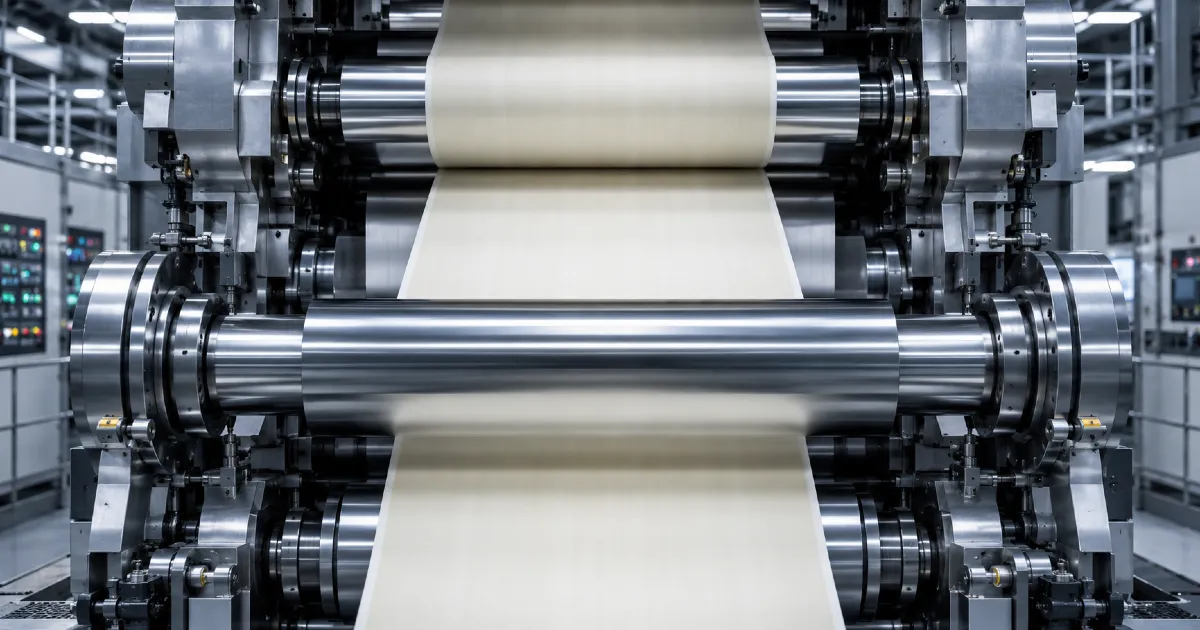
The banknote production stages explain how paper money and polymer banknotes are designed, manufactured, printed, inspected, cut, and prepared for circulation. Unlike ordinary commercial printing, the banknote printing process uses restricted substrates, secure inks, engraved plates, serial numbering, automated inspection systems, and controlled distribution procedures.
Understanding how banknotes are made helps collectors, researchers, and variety specialists recognize the difference between normal production characteristics and unusual printing errors. Each stage of paper money production — from design and substrate preparation to intaglio printing, numbering, quality control, and bundling — affects the final appearance, texture, alignment, and collectability of a finished note.
This guide follows the main banknote production stages in order, focusing on the industrial manufacturing workflow rather than the history of banknotes or the identification of individual security features.
Table of Contents
Why Banknote Production Is Different from Ordinary Printing
Manufacturing legal tender requires a controlled industrial environment with restricted access, secure materials, and strict accounting procedures. Unlike ordinary commercial printing, the currency manufacturing process uses specialized substrates, secure inks, engraved plates, pressure-based printing systems, and precise front-to-back registration methods.
Security and accountability are the main differences between paper money production and ordinary printing. Substrate, plates, inks, unfinished sheets, rejected sheets, and serial-numbered notes must be tracked through the production workflow. Sheets that fail inspection are logged, separated, and destroyed under controlled procedures. This level of manufacturing control helps ensure that issued notes remain consistent with the approved master design.
For collectors, this process also explains why production-related varieties can occur. Misalignment, missing print layers, inverted overprints, cutting errors, serial number shifts, and plate wear all originate from specific points in the banknote production workflow. These controls make the banknote production stages far more complex than ordinary commercial printing, where materials, waste, and finished products are not usually tracked with the same level of security.
1. Design and Engraving
The first stage of banknote production begins before any paper, polymer, ink, or printing plate enters the factory line. It starts with the design of the note and the preparation of the master artwork used in later banknote printing process.
Banknote Design Layout
Design teams use specialized secure design software to create the initial banknote layout. The design must combine visual elements such as portraits, landscapes, cultural motifs, denomination panels, serial-number areas, and spaces reserved for security features.
Background patterns, fine-line screens, and geometric borders are also planned at this stage to support both visual identity and anti-counterfeiting protection. These design elements must fit precisely with the later printing stages, including offset printing, intaglio printing, numbering, and inspection.
A banknote design is therefore not simply an artwork. It is a technical layout that must work across several layers of production.
Master Engraving and Portrait Work
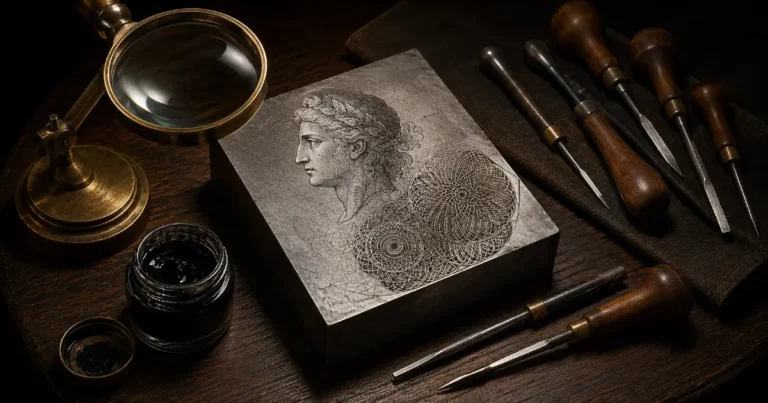
Once the design layout is approved, engravers prepare the detailed portrait, lettering, and fine-line elements used for intaglio printing. In traditional engraving, the design is cut into a steel master die using fine tools under magnification.
The depth and direction of each engraved line influence how ink transfers to the final sheet. Fine engraved lines create tonal variation, depth, and texture, especially in portraits, national emblems, and denomination panels. The completed master die becomes the reference for producing working plates used during the banknote printing process.
Modern production may combine hand engraving, digital engraving, and computer-assisted design, depending on the issuing authority and printer. However, the objective remains the same: to create a precise master design that can be reproduced securely and consistently across large print runs.
2. Substrate Preparation: Paper and Polymer
A key stage in the currency manufacturing process is preparing the base material, or substrate. The substrate affects durability, texture, embedded security elements, print performance, and the overall feel of the note.
Because the substrate affects so many later stages, it is one of the most important steps in paper money production.
Cotton and Linen Banknote Paper
Traditional paper banknotes are not usually printed on ordinary wood-pulp paper. Instead, they are commonly made from cotton, linen, or other durable plant fibers. These materials are processed into a strong paper web designed to resist repeated folding, handling, moisture exposure, and wear.
Cotton-based banknote paper has a distinctive feel, sound, and texture. It is stronger than ordinary writing paper and provides a suitable surface for watermarks, security threads, offset printing, intaglio printing, and serial numbering.
During paper production, the fibers are cleaned, processed, and formed into sheets under controlled conditions. The resulting banknote paper must be consistent in thickness, strength, color, opacity, and print behavior.
Polymer Banknote Substrate
Modern banknote production also includes synthetic polymer substrates. Many polymer banknotes are made from biaxially oriented polypropylene, commonly known as BOPP. This transparent plastic film is durable, non-porous, and resistant to water and dirt.
Before printing, the polymer film is usually coated with opaque ink layers so that printed designs can appear clearly on the note. Selected areas may be left transparent to create clear windows. These windows can later carry optical features, fine-line printing, or other security-related elements.
Polymer banknote production requires different handling and printing controls from cotton-paper production because the surface behaves differently under ink, pressure, heat, and wear.
Watermarks and Threads During Substrate Production
Some security features are added during substrate production, before the sheets reach the main printing line. In paper banknotes, watermarks are formed by varying the thickness of the paper fibers while the paper is still being made. This creates lighter and darker areas when the note is held to the light.
Security threads may also be inserted into the paper during production. These can be fully embedded inside the sheet or appear intermittently at the surface as windowed threads. Because these elements are built into the substrate, they are part of the physical structure of the banknote rather than surface printing.
This article focuses on when these elements enter the production workflow. For a practical authentication guide to watermarks, security threads, UV elements, and other features, see the dedicated article on banknote security features.
3. Plate Making and Printing Preparation
Before large-scale printing can begin, the approved design and engraved elements must be converted into working plates. These plates allow the same design to be printed repeatedly across large sheets containing multiple banknotes. This is one of the less visible banknote production stages, but it has a major influence on registration, plate varieties, and the consistency of repeated design elements.
Duplicating the Master Die
A single hand-engraved master die is too important to be used directly for high-volume production. Instead, it is duplicated through controlled plate-making methods.
In traditional intaglio production, the master image may be transferred into working dies or plates through electrochemical duplication. This allows the original engraved design to be reproduced across a multi-note plate. A single sheet may contain dozens of note impressions arranged in a grid.
This step is important for variety specialists because each position on a sheet can sometimes show small differences caused by plate wear, retouching, or production adjustments.
Digital Plate Making
Background designs, fine-line patterns, and other non-intaglio elements may be prepared using computer-to-plate systems. Digital plate making allows complex vector line-work, background screens, color separations, and registration marks to be transferred onto printing plates.
These plates must be prepared with high accuracy because later print stages depend on proper alignment. Even small errors in plate preparation can affect registration, color placement, or the appearance of repeating background elements.
Plate making is therefore one of the most important technical stages in the banknote printing process.
4. Background Offset Printing
Background offset printing lays down the multi-colored base design of the banknote. This stage often includes fine-line patterns, color fields, guilloche designs, background artwork, and front-to-back registration elements.
This stage is one of the most important parts of the banknote printing process because it establishes the color, background pattern, and alignment framework of the note.
Simultan Offset Printing
Many banknotes use specialized offset presses designed for high-security printing. In some systems, the front and back background designs are printed at the same time. This helps achieve precise alignment between the obverse and reverse designs.
Accurate front-to-back registration is important for visual quality and for features such as see-through registers, where separate printed elements on each side of the note align when viewed against light.
For collectors, registration shifts or misalignment can sometimes create collectible printing varieties, depending on severity and authenticity.
Guilloche Background Printing
The background art printed during this stage may include guilloche patterns, fine-line networks, and geometric screens. From a distance, these areas may look like simple color fields. Under magnification, they reveal interlocking lines and detailed patterns.
Offset printing may also use blended color transitions, sometimes called rainbow printing. These gradual color changes are difficult to reproduce cleanly with ordinary copying or scanning equipment.
In production terms, this stage provides the visual foundation for the rest of the note. Later stages, including intaglio printing and numbering, must align accurately with the offset background.
5. Intaglio Printing
After background printing, the sheets move to intaglio printing. This is one of the most recognizable stages of banknote printing process because it creates raised ink texture on the surface of the note.
Intaglio printing is commonly used for portraits, denomination numerals, central bank names, official titles, and other important design elements.
How Intaglio Printing Works
Intaglio printing uses metal plates engraved with recessed grooves. These grooves hold thick, high-viscosity ink. After ink is applied, the plate surface is wiped clean so that ink remains mainly inside the engraved recesses.
The paper or polymer sheet is then pressed against the inked plate under controlled pressure. The pressure transfers ink from the recessed grooves onto the substrate and forms raised ink ridges on the surface of the note.
This banknote printing process gives banknotes their distinctive tactile quality and contributes to the security and durability of the design.
Raised Ink and Tactile Texture
When users or collectors run their fingers across the main portrait, value numerals, or official text of many genuine banknotes, they can usually feel the raised texture created by intaglio printing.
This raised ink profile is difficult to reproduce using flat digital printing or ordinary offset printing. For collectors, intaglio texture can also provide clues about wear, circulation, plate pressure, and production quality.
However, the purpose of this section is to explain how intaglio texture is produced. For guidance on checking intaglio printing as an authentication feature, see the banknote security features guide.
6. Numbering and Signatures
After the main design layers have been printed, the sheets receive unique identifiers and official printed details. This stage turns repeated banknote designs into individually traceable notes.
Serial Number Printing
Serial number printing is usually carried out using specialized numbering machines. These systems print unique numbers on each note and advance automatically through a planned sequence.
Serial numbers may include prefixes, suffixes, replacement indicators, check letters, or other series markers depending on the issuing authority. The placement, font, ink color, and format of serial numbers are important to collectors because they can help identify varieties, replacement notes, and different print runs.
Numbering errors, such as mismatched numbers, missing digits, shifted numbering, or incorrect prefixes, can occur when this stage does not align properly with the rest of the production process.
Signatures and Official Overprints
Many banknotes carry printed signatures of central bank governors, treasury officials, ministers of finance, or other issuing authorities. These signatures may be printed during the numbering stage or added through a separate printing pass.
Some notes also receive overprints, seals, issue marks, date changes, or other official additions. For variety specialists, differences in signatures, overprint styles, ink shades, and placement can help distinguish one issue or variety from another.
This stage is therefore important not only for legal validation but also for numismatic classification.
7. Security Features in the Banknote Printing Process
Security elements are added at different points in the banknote production stages. This section focuses on when and how these elements enter the manufacturing workflow, rather than how collectors inspect them for authentication.
Modern currency production relies on a combination of embedded, printed, and applied features. Each type enters the workflow at a different stage.
Embedded Elements
Embedded elements are built into the substrate before printing begins. These may include watermarks, security threads, fibers, or other materials incorporated during paper production.
Because they are part of the paper structure, embedded elements cannot simply be printed onto the surface after the note is finished.
Printed Elements
Some security-related features are printed during offset, intaglio, screen printing, or other specialized printing stages. These may include fine-line patterns, microprinting, optically variable inks, UV-reactive inks, and other specialized ink applications.
The production process must control ink placement, drying time, layer order, and registration so that these features perform as intended.
Applied Elements
Other features may be applied to the surface of the note using foil stamping, patch application, lamination, or related methods. These can include holographic patches, metallic strips, or optical elements used on paper, polymer, or hybrid banknotes.
Because these features are added at different stages of production, they create a layered security structure that is difficult to reproduce using ordinary commercial equipment.
For a detailed checklist on how to identify these features under light, tilt, touch, UV, and magnification, see: Banknote Security Features: Watermarks, Threads & UV.
8. Inspection and Quality Control
Once the main printing stages are complete, the printed sheets must pass inspection before they can be cut and released for circulation. This stage helps ensure that only acceptable notes continue through the production line. Among all banknote production stages, inspection and quality control are especially important because they determine which sheets are accepted, rejected, or destroyed.
Automated Banknote Inspection
Modern banknote production uses automated inspection systems to check printed sheets at high speed. Camera systems scan both sides of each sheet and compare the result against approved reference images. You can read more about how sovereign facilities manage these strict tolerances on the U.S. Bureau of Engraving and Printing official site.
Inspection systems can detect issues such as ink smears, missing print layers, color variation, poor registration, thread problems, numbering defects, and damage to the substrate. Polymer notes may also be checked for window defects, coating issues, or print adhesion problems.
Rejected Sheets and Waste Control
When a defect is detected, the sheet or note is logged and separated from accepted production. Depending on the stage of production, the defective item may be marked, digitally recorded, or routed to a controlled destruction process.
Rejected sheets and notes are tracked and accounted for so that incomplete, flawed, or unauthorized items do not enter circulation. This is one reason why genuine production errors that escape into public hands can be of interest to collectors.
Quality control is therefore not only a manufacturing step. It is also part of the security and accounting system behind banknote issue.
9. Cutting, Bundling, and Distribution
The final phase of the banknote production stages turns approved printed sheets into individual notes ready for storage and distribution. This final step connects the factory side of the currency manufacturing process with the banking and cash-distribution system.
Sheet Cutting
Sheets that pass inspection are sent to precision cutting machines. These machines cut large printed sheets into individual banknotes according to the approved sheet layout.
Cutting must be carefully aligned so that each note has consistent margins and correct design placement. Cutting errors, such as off-center notes or partial design shifts, can occur if the sheet or cutting system is misaligned.
Counting, Bundling, and Wrapping
After cutting, individual notes are counted and sorted into standard bundles. Many currency systems group notes into straps, bricks, or other standardized units for handling and storage.
The notes may be banded, shrink-wrapped, boxed, and labeled according to denomination, series, print run, and serial number sequence. These controls help central banks and cash centers track finished currency.
Vault Distribution
Finished notes are packed into secure containers and delivered to central bank vaults, cash centers, commercial banks, or other authorized distribution points. From there, the notes enter circulation through bank branches, cash distribution networks, and automated teller machines.
This completes the journey from raw material to circulating currency.
Summary: Banknote Production Stages
The following table summarizes the nine main banknote production stages, from design and substrate preparation to inspection, cutting, bundling, and distribution.
| Workflow | Industrial Process | Key Machinery / Systems | Production Output |
|---|---|---|---|
| 1. Design and engraving | Banknote design layout and master engraving | Secure design software, engraving tools, steel dies | Approved master design and engraved reference elements |
| 2. Substrate preparation | Paper or polymer substrate production | Cylinder-mold paper machines, BOPP film systems, coating units | Durable paper or polymer sheets prepared for printing |
| 3. Plate making | Master die duplication and digital plate preparation | Electrochemical duplication, computer-to-plate systems | Working plates for offset and intaglio printing |
| 4. Background printing | Offset or simultan printing | High-security offset presses | Multi-colored background designs and registration elements |
| 5. Intaglio printing | Raised ink printing | Recessed metal plates, wiping systems, pressure cylinders | Tactile portraits, titles, numerals, and raised ink details |
| 6. Numbering and signatures | Serial number and official overprint application | Numbering machines, letterpress or offset units | Unique identifiers, signatures, prefixes, and official marks |
| 7. Security feature integration | Embedded, printed, and applied security elements | Substrate mills, screen-printing units, foil application systems | Layered security structure incorporated into the note |
| 8. Inspection and quality control | Automated sheet inspection and defect control | Camera inspection systems, digital comparison tools | Accepted sheets separated from rejected or defective items |
| 9. Cutting, bundling, and distribution | Sheet cutting, counting, wrapping, vault storage, and circulation release | Guillotine cutters, counting machines, banding systems, secure crates, vault systems | Finished banknotes prepared for storage, distribution, and circulation |
Conclusion
The banknote production stages show how modern currency is created through a controlled sequence of design, substrate preparation, plate making, offset printing, intaglio printing, numbering, inspection, cutting, and distribution. Each stage contributes to the durability, consistency, security, and visual quality of the finished banknote.
For collectors and variety specialists, understanding how banknotes are made provides useful context for studying printing errors, plate varieties, serial number placement, alignment differences, substrate types, and production-related features. A finished banknote is not simply a printed object; it is the result of a carefully managed manufacturing process designed to produce secure, durable, and recognizable currency for circulation.