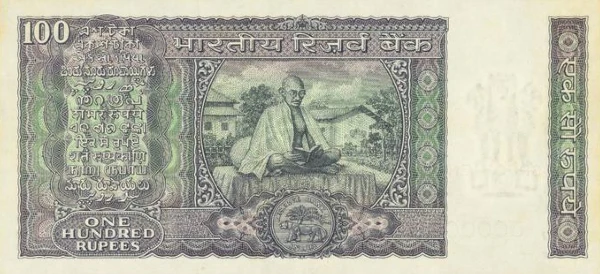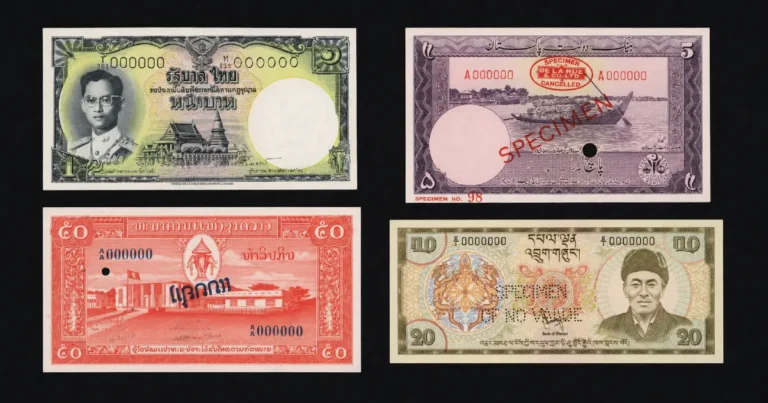
Error banknotes are notes that left the printing works carrying an unintended production fault. Unlike ordinary banknotes, these notes contain mistakes that occurred during the printing or production process, resulting in unusual characteristics such as missing colors, inverted overprints, cutting errors, mismatched serial numbers, or fold-related defects. Most defective notes are removed during quality control, which is why genuine error banknotes are often scarce and highly collectible.
Collectors value error banknotes for several reasons. Some errors are visually pronounced and immediately recognizable, while others are rare because of the narrow circumstances required for them to occur. In many cases, an otherwise ordinary banknote can become a desirable numismatic collectible simply because of a production error. As a result, error notes have become a popular collecting specialty across Asia and around the world.
This comprehensive error banknotes guide explains the major types of banknote errors, how they occur, how collectors classify them, and the factors that influence rarity and value. Whether you are researching a possible banknote misprint, learning to identify genuine production errors, or building a collection of error banknotes, understanding these printing anomalies will help you make more informed collecting decisions.
Table of Contents
What Are Error Banknotes?
Error banknotes are notes that contain unintended mistakes introduced during the manufacturing process. These mistakes can occur at various stages of production, including printing, overprinting, numbering, paper handling, cutting, and the application of security features.
Unlike post-issue damage caused by circulation, handling, or environmental factors, genuine error banknotes originate at the printing works before the notes are released into circulation. Modern banknote production is subject to strict quality control procedures, so relatively few error notes escape detection — a scarcity that makes many examples highly desirable to collectors.
The severity of an error can vary considerably. Some errors are subtle and require careful examination, while others are immediately obvious. A minor misalignment may go unnoticed by casual observers, whereas a major fold error, missing print, or blank back error can transform an ordinary banknote into a highly collectible item.
How Banknote Production Errors Occur
Modern banknotes pass through multiple stages of production before reaching circulation. Depending on the issuing authority and printing technology used, a banknote may undergo several separate printing operations, serial numbering, cutting, inspection, and the application of security features such as watermarks, security threads, holograms, or color-shifting devices.
Errors occur when something goes wrong during one of these production stages. A sheet may be misaligned, folded, improperly inked, incorrectly overprinted, or pass through the numbering process incorrectly. In other cases, defects may involve missing design elements, security features, or serial numbers.
Although quality control procedures are designed to identify and remove defective notes, occasional mistakes escape detection and enter circulation. These surviving examples form the basis of genuine production error banknote collecting.
Why Collectors Value Error Banknotes
As this error banknotes guide explains, error banknotes combine two qualities that many collectors seek: rarity and uniqueness.
Unlike regular banknotes produced in large quantities, genuine production errors are accidental and often occur in very limited numbers. Some errors may affect only a single note or a small group of notes within a print run, making them considerably scarcer than standard issues.
Collectors are also attracted to the visual appeal of high-impact errors. A note with a missing color, inverted overprint, gutter fold, or major cutting error can be instantly recognizable and significantly different from a normal example of the same issue.
Each error results from a specific production mistake, so no two error collections are exactly alike. This uniqueness, combined with rarity and collector demand, has made error banknotes one of the most popular specialties in paper money collecting.
Types of Banknote Errors
This error banknotes guide breaks down the main types of banknote errors collectors encounter, from printing and overprinting faults to cutting, numbering, and security feature defects. While some errors are relatively minor, others can dramatically alter the appearance of a note and become highly sought after by collectors.
Ink and Printing Errors
Printing errors occur when the transfer of ink to the banknote is disrupted during production. Depending on the nature of the malfunction, these errors can affect the clarity, position, or completeness of the printed design.
Examples include:
- Offset Printing Errors: Occurs when a printing sheet fails to feed into the press, causing the inked design to transfer directly onto the rubber impression blanket, which then stamps a mirror image onto the back of the next sheet.
- Doubled Print Errors: A structural glitch where a sheet receives two separate, slightly shifted printing impressions from the same plate, creating a jarring “ghosting” effect.
- Ink Smear & Solvent Smear Errors: Caused by an excess pooling of ink on the printing plate or a failure in the solvent drying system, resulting in heavy streaks or blurry bleeding across the design.
- Ink Transfer Errors: Occurs when wet, freshly stacked banknotes accidentally transfer portions of their damp ink onto the reverse side of the note resting directly on top of them.
- Insufficient Inking: Happens when ink fountains run low or a fluid line clog prevents the press plates from being fully coated, leaving the resulting banknote faded or partially blank.
- Obstructed Printing Errors: Occurs when a foreign object—such as a scrap of paper, a piece of felt, or oil debris—falls onto the sheet before it passes under the plate, blocking the ink from hitting the paper.
These printing-stage faults can range from minor visual distortions to a severe banknote misprint that significantly alters the note’s appearance.
Omission and Platen Defects
Omission errors occur when part of the design fails to print entirely. These errors are often among the most visually significant, since whole portions of the banknote may be missing.
Examples include:
- Missing Color Errors: Occurs when one or more ink fountains on the security printing press run dry or are improperly engaged, causing the banknote to skip an entire color phase.
- Missing Print Errors: A structural defect where a complete design layer—such as the background vignette or primary portrait artwork—is entirely absent from the face of the note.
- Blank Front/Back Errors: Happens when a printing sheet is fed incorrectly or two sheets pass through the press stuck together, leaving one side of the banknote completely blank while the other receives a flawless impression.
Major design elements are absent in these notes, so omission defects are usually easy to identify and can attract strong collector interest.
Overprint Errors
Many banknotes undergo additional printing processes after the main design has been applied. These secondary printings may include denominations, signatures, seals, commemorative markings, or emergency overprints.
When problems occur during this stage, collectors may encounter:
- Inverted Overprint Errors: Occurs when a stack of previously printed sheets is fed upside down into the secondary press, placing signatures, seals, or regional markers completely inverted.
- Missing Overprint Errors: A defect where a banknote bypasses the secondary printing stage entirely, leaving it devoid of essential validation elements like serial numbers or state seals.
- Overprint on Back Errors: Happens when a sheet is flipped entirely face-down during the secondary run, accidentally stamping front-facing overprint elements onto the reverse side of the note.
Overprint errors are particularly important in Asian paper money collecting because overprints were widely used on colonial, occupation, provisional, and emergency issues throughout the region.
Fold Errors
Fold errors occur when the paper is folded during production before receiving one or more printing impressions. The folded portion prevents ink from reaching part of the note, creating unusual blank areas or displaced design elements.
Examples include:
- Printed Fold Errors: Occurs when a large section or edge of a sheet accidentally flaps over before entering the press, leaving a stark blank void on the main face while a portion of the design is mistakenly printed onto the reverse of the folded flap.
- Gutter Fold Errors: Caused when a printing sheet wrinkles or creases tightly before passing beneath the ink plates. When the finished note is later flattened out by a collector, it reveals a distinct, unprinted white strip running straight through the design.
- Butterfly Fold Errors: A spectacular defect occurring when a sheet corner folds inward into a triangular shape prior to printing and final trimming. Once the note is sliced by the guillotine and unfolded, it exposes a large, unprinted flap of extra paper protruding sharply from the standard margin.
- Corner Fold Errors: Occurs when a precise corner of the paper web bends backward or inward prior to the secondary printing or cutting stages. This results in blank, unprinted triangles at the edges or structurally misshapen, elongated corner borders.
Fold errors often provide some of the clearest physical evidence of how a production mistake occurred.
Cutting and Alignment Errors
Banknotes are typically printed in large sheets before being cut into individual notes. Errors during positioning or cutting can result in portions of the design appearing in the wrong location.
Examples include:
- Misalignment & Margin Errors: Occurs when sheets are slightly shifted or improperly pulled into the press, resulting in a badly off-center design with uneven white borders.
- Cutting Errors: A significant failure where the cutting blade slices directly through the main body of the banknote design rather than along the designated target margins.
- Inverted Back Errors: Occurs when an entire stack of sheets is turned 180 degrees before the reverse side ink plate drops, causing the front and back designs to run in opposite vertical directions.
- Paper Jam Errors: A catastrophic printing press event where sheets crumple, pile up, or tear inside the moving machinery, resulting in highly distorted, multi-layered scrap fragments that occasionally escape into circulation.
These errors can vary from minor shifts in alignment to extreme examples where large portions of neighbouring notes become visible
Serial Number Errors
Serial numbers serve as unique identifiers for banknotes. Errors involving numbering equipment can create some of the most desirable and heavily studied varieties in paper money collecting.
Examples include:
- Missing Serial Number Errors: Occurs when the secondary numbering wheels fail to engage or hit the paper, leaving one or both serial locations completely blank.
- Mismatched Serial Numbers & Prefixes: A failure where an internal numbering digit wheel or prefix letter wheel jams, skips, or freezes, causing the dual serial numbers on the same note to conflict.
- Duplicate Serial Number Errors: A rare system failure where a numbering block fails to advance forward after a strike, printing the exact same numeric sequence onto consecutive sheets.
- Stuck Digit Errors: Happens when a specific numbering wheel gets stuck halfway between two numbers, leaving a digit that appears partially sliced or misaligned on the face of the note.
Serial numbers play a critical role in banknote identification, so genuine numbering errors are often closely scrutinized by collectors and grading services.
Security Feature Errors
Modern banknotes incorporate sophisticated security features to deter counterfeiting. Occasionally, defects occur during the manufacture or placement of these security elements.
Examples include:
- Watermark Anomalies (Missing, Misaligned, Inverted): Caused by errors during papermaking, resulting in the embedded internal portrait being entirely absent, shifted into the wrong pane, or printed upside down.
- Missing Security Threads: Occurs when the metallic or polymer security strip is accidentally omitted or fails to feed into the paper pulp web during manufacturing.
- Shifted & Placement Errors: Happens when the security ribbon weaves too far to the left or right of its legal target zone, disrupting the symmetry of the design.
- Double Security Threads: A premium production glitch where the paper manufacturing machine erroneously feeds two parallel security ribbons into a single banknote sheet block.
Security feature errors are especially relevant to modern Asian banknotes, many of which incorporate advanced anti-counterfeiting technology.
Combination Errors
Some banknotes exhibit multiple production errors simultaneously.
Examples may include combinations of:
- Fold and cutting errors
- Printing and numbering errors
- Omission and alignment errors
- Security feature and printing defects
Several independent failures must occur during production for a combination error to exist, making these notes considerably scarcer than examples with only a single error. As a result, they can be among the most desirable examples encountered by collectors.
How Error Banknotes Are Classified
Not all types of banknote errors are viewed equally by collectors. While some production mistakes are relatively minor and difficult to detect, others dramatically alter the appearance of a note. For this reason, collectors often classify error banknotes according to the severity and visibility of the production defect.
There is no universal classification system, but most error banknotes can be broadly grouped into minor, major, and spectacular errors.
Minor Errors
Minor errors are production defects that have little impact on the overall appearance of a banknote.
Examples may include:
- Small misalignments
- Minor ink smears
- Slightly shifted serial numbers
- Minor cutting irregularities
While these errors can still be collectible, they are generally more common and attract less attention than major production mistakes. In many cases, minor errors require careful examination before they become apparent.
Major Errors
Major errors are easily visible production mistakes that significantly affect part of the banknote’s design, printing, numbering, or security features.
Examples may include:
- Large cutting errors
- Significant fold errors
- Missing serial numbers
- Major misalignment errors
- Missing security threads
These errors are obvious and often visually appealing, so they tend to attract stronger collector interest and generally command higher premiums than minor errors.
Spectacular Errors
Spectacular errors represent the most visually extreme and desirable category of error banknotes.
These notes typically display major production failures that are immediately recognizable, even to non-collectors.
Examples may include:
- Blank front or blank back errors
- Large printed fold errors
- Multiple errors on a single note
- Major omission defects
- Extreme cutting or alignment errors
Spectacular errors are often the centerpiece of advanced collections because of their rarity, visual impact, and strong collector demand. When combined with a scarce banknote type or exceptional condition, they can become some of the most desirable error notes available to collectors.
Understanding this classification system helps collectors evaluate how significant an error may be before considering other factors such as rarity, condition, certification, and market demand.
How Error Banknotes Are Valued
Error banknote value is determined by more than the presence of a printing mistake. While some errors are relatively common and command modest premiums, others are exceptionally scarce and highly sought after by collectors. Factors such as the severity of the error, the underlying banknote, condition, certification, and collector demand all play important roles in determining desirability and market value.
Evaluating these underlying factors systematically helps buyers distinguish genuine value from minor anomalies. Collectors who are new to assessing rarity may also benefit from learning how banknote rarity is determined.
Visual Impact and Severity
One of the most important factors influencing value is how visible the error appears on the banknote.
Errors that are immediately obvious tend to attract greater collector interest than those requiring close examination. A blank back error, major fold error, or severe cutting error can transform the appearance of a banknote and make it instantly recognizable as an error note.
By contrast, minor misalignments, small ink smears, or slight cutting irregularities may be collectible but often generate less demand because the production defect is less apparent.
In general, collectors place the strongest premiums on errors that are both highly visible and easy to identify.
The Double Rarity Effect
Some of the most desirable error banknotes combine two forms of scarcity.
The first rarity arises from the production error itself. The second comes from the underlying banknote. When a significant error occurs on an already scarce or highly collectible issue, the result is often referred to by collectors as a “double rarity.”
For example, a major error found on a scarce British India King George VI portrait note, a British Burma provisional overprint, a Malaya King George VI issue, or an early Thai series banknote attracts substantially stronger collector interest than the error would generate on its own. Both the banknote and the production error contribute to desirability, which is why these combinations often command substantial premiums.
Collector Demand and Market Interest
Rarity alone does not determine value. Collector demand is equally important.
Certain categories of errors consistently attract strong interest because they are visually impressive and widely recognized by collectors. Examples include blank backs, major fold errors, inverted overprints, missing serial numbers, and severe cutting errors.
Demand can also vary by country and collecting community. Some errors may be especially popular among collectors of Asian banknotes due to their scarcity within a particular series or issuing authority.
As with other numismatic specialties, market values are influenced by the balance between supply and demand.
How Grade and Preservation Affect Error Banknote Value
Condition remains an important consideration, even for major error banknotes.
A major production error printed on a heavily circulated note may still be desirable, but collectors generally prefer examples that retain strong eye appeal, original paper quality, and minimal signs of handling. Notes with sharp corners, bright colors, and few circulation marks typically attract stronger demand than comparable examples in lower grades.
Collectors seeking a deeper understanding of condition assessment may find it useful to learn how banknotes are graded and authenticated.
Third-party grading services like PMG provide additional verification by appending official error banknote descriptions to their encapsulation labels, offering expert-backed confirmation of authenticity and error type.
Collectors evaluating certified examples should also understand the PMG and PCGS 1–70 grading scale, as even small differences in grade can significantly affect value, particularly for major or spectacular errors.
For many advanced collectors, the combination of a genuine production error, strong eye appeal, and a high grade represents the most desirable category of error banknotes.
Common Misconceptions About Error Banknotes
As interest in error banknotes has grown, so too has the number of notes incorrectly described as production error banknotes. While genuine production mistakes can be highly collectible, many apparent “errors” are actually the result of circulation damage, environmental exposure, or deliberate alterations made after the note left the printing works.
Understanding the difference between genuine production errors and post-issue damage is essential for building a quality collection and avoiding costly mistakes.
Banknote Errors vs Post-Issue Damage
One of the most common mistakes made by new collectors is assuming that any unusual-looking banknote is a genuine banknote misprint.
In reality, most damaged notes are not production errors. Common forms of post-issue damage include:
- Tears and holes
- Stains and discoloration
- Writing or markings
- Tape repairs
- Water damage
- Excessive wear from circulation
These defects occur after a note enters circulation and generally do not increase collector value. As established earlier, genuine error banknotes originate during manufacturing, before the note is ever issued.
When evaluating a suspected error, collectors should always consider whether the anomaly could have been caused by handling or environmental factors rather than a production mistake.
Not Every Printing Flaw Adds Value
Even when a banknote misprint originates during production, it does not automatically make the note valuable.
Minor imperfections may occur during printing without creating significant collector interest. Small ink marks, slight alignment shifts, or insignificant cutting irregularities are often considered quality-control defects rather than major collectible errors.
In many cases, collector demand is driven by visibility and impact. Errors that clearly alter the appearance of a banknote generally attract more interest than subtle defects that require magnification or specialist knowledge to identify.
As a result, two genuine errors can have very different levels of desirability depending on their visual appeal and rarity.
Detecting Alterations and Forgeries
Some notes are intentionally modified in an attempt to imitate a genuine banknote misprint.
Examples may include:
- Removed serial numbers
- Chemically altered printing
- Artificially created stains or smears
- Added folds or cuts
- Tampered security features
These alterations occur after production, so they are not considered genuine error banknotes.
Collectors should exercise caution when evaluating unusual notes, particularly when the error appears inconsistent with known production processes. For higher-value examples, independent certification can provide additional confidence regarding authenticity and the nature of the error.
By learning to distinguish genuine production errors from damage, defects, and alterations, collectors can build stronger collections and avoid many of the most common pitfalls associated with error banknote collecting.
Building an Error Banknote Collection
Error banknotes offer collectors a unique opportunity to acquire notes that differ from standard issues through accidental production defects. Collectors can pursue a wide variety of approaches depending on their interests, budget, and collecting goals.
Whether focusing on major printing mistakes or subtle production anomalies, a well-defined collecting strategy can help create a more rewarding and meaningful collection.
Collecting by Error Type
Many collectors specialize in one of the main types of banknote errors covered in this guide.
Some focus on visually significant errors such as fold errors, blank backs, or major cutting errors, while others prefer more specialized categories such as serial number errors, security feature errors, or overprint errors.
Focusing on a specific error type allows collectors to develop a deeper understanding of how those errors occur, how frequently they appear, and which examples are considered the most desirable.
Collecting Errors by Region or Country
Another approach is to concentrate on errors from a particular country, region, or issuing authority.
Collectors may choose to specialize in regions like the Middle East or countries like China, Hong Kong, India, Indonesia, Malaysia, Pakistan, Singapore, or Thailand.
This strategy combines traditional banknote collecting with the challenge of locating genuine production errors. It can also reveal interesting differences in printing technology, quality control procedures, and error frequency across various issuing authorities.
Collecting Certified Error Notes
As collections become more advanced, many collectors begin to focus on certified examples.
Third-party certification can provide additional confidence regarding the authenticity, condition, and nature of a banknote misprint. For major or spectacular errors, certification may also make it easier to compare examples and establish provenance within the marketplace.
Some collectors pursue certified examples exclusively, while others reserve certification for particularly scarce or valuable notes.
Developing a Long-Term Collecting Strategy
Successful collections are often built around clear objectives rather than impulse purchases.
Some collectors seek representative examples of every major error category, while others focus on a single specialty such as fold errors, serial number errors, or security feature errors. More advanced collectors may pursue exceptional examples that combine major production errors with scarce or historically important banknotes.
Collectors interested in building a banknote collection may find that defining clear goals from the outset helps create a more focused and rewarding collecting experience.
Regardless of the approach, patience and selectivity are often more important than quantity. By concentrating on quality, authenticity, rarity, and personal collecting interests, collectors can build error banknote collections that remain enjoyable and meaningful for years to come.
Start Collecting Error Banknotes at NumisAsia
As this error banknotes guide has shown, error banknotes remain one of the most actively collected areas of paper money collecting. From subtle serial number anomalies to major fold errors, omission defects, and security feature errors, these notes provide collectors with a unique glimpse into the complex process of banknote production.
Genuine production errors are accidental and often removed during quality control, so many surviving examples are significantly scarcer than their regular counterparts. Understanding how errors occur, how collectors classify them, and what factors influence desirability can help collectors make more informed decisions when building their collections.
At NumisAsia, we specialize in Asian and world paper money, including a carefully curated selection of genuine error banknotes. Our inventory regularly includes a wide range of production errors across different countries, denominations, and collecting categories, from affordable entry-level pieces to exceptional certified rarities.