
Thai Banknotes
Rare Thailand paper money, from early Siam issues and royal portrait notes to wartime series, commemoratives, and modern polymer banknotes
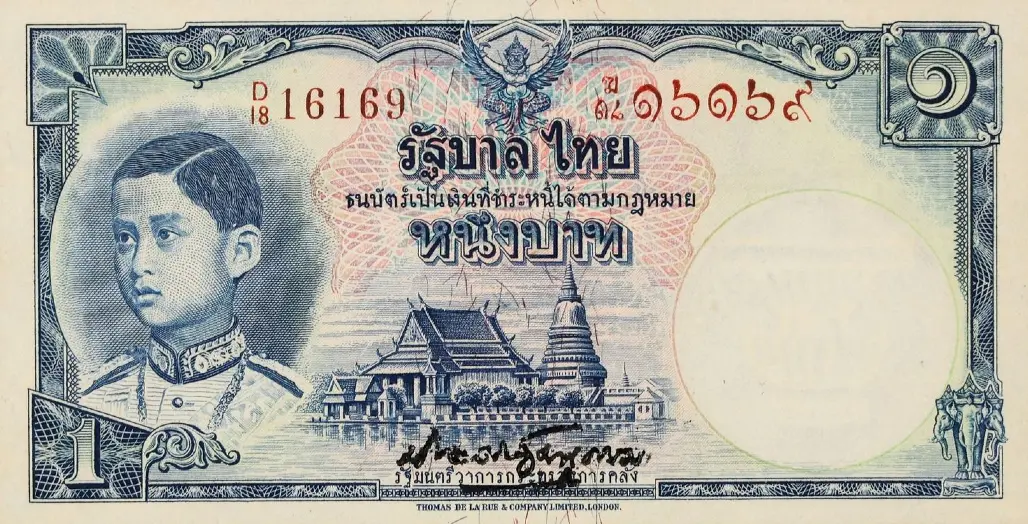
Thai banknotes form one of the most structured and historically varied areas of Asian paper money collecting. Across 17 regular series and numerous commemorative issues, Thailand paper money traces the country’s transition from early Siam banknotes through royal portrait series, wartime emergency issues, and modern polymer currency.
NumisAsia specializes in rare Thai paper money, including early Siam issues, historic royal portrait banknotes, specimens, commemoratives, and professionally certified examples graded by PMG and PCGS.
Featured Thai Banknotes
Selected Thailand banknotes, historic series, specimens, and professionally certified paper money for collectors
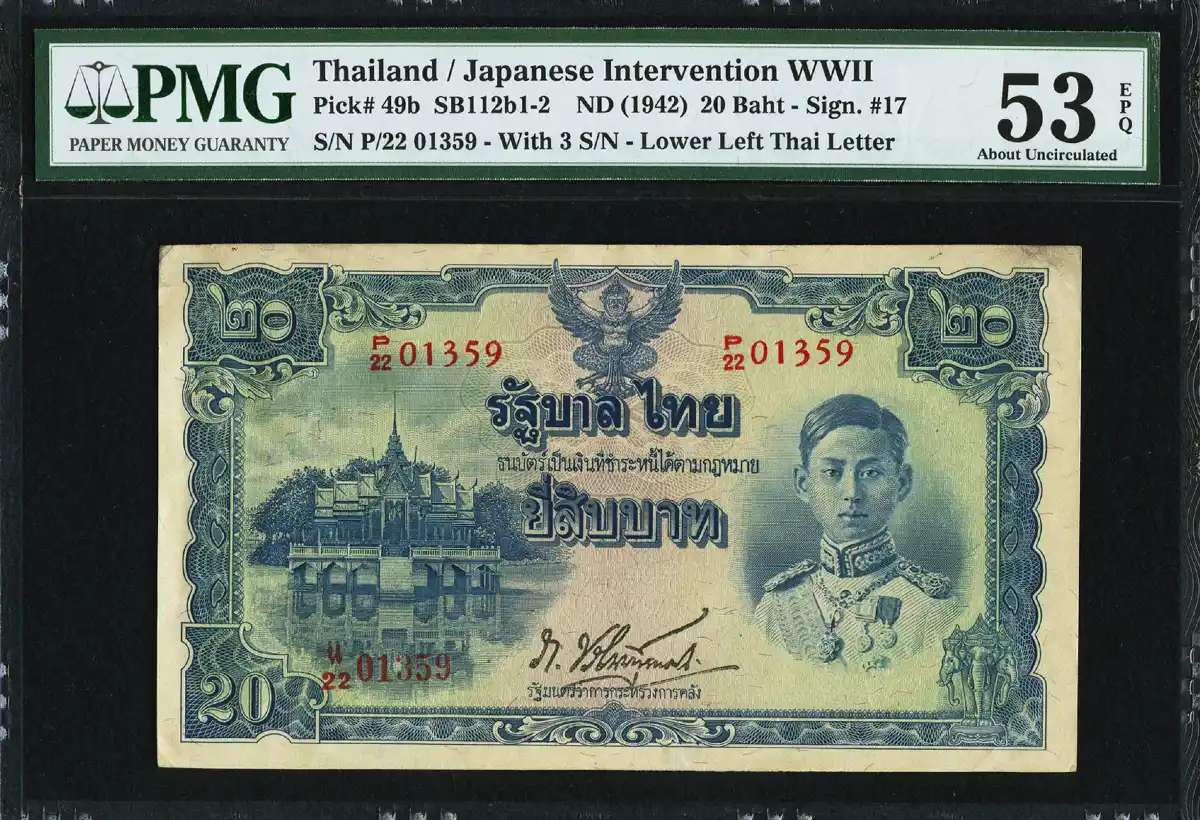
Thailand 20 Baht Series 5 Pick 49b
View Details →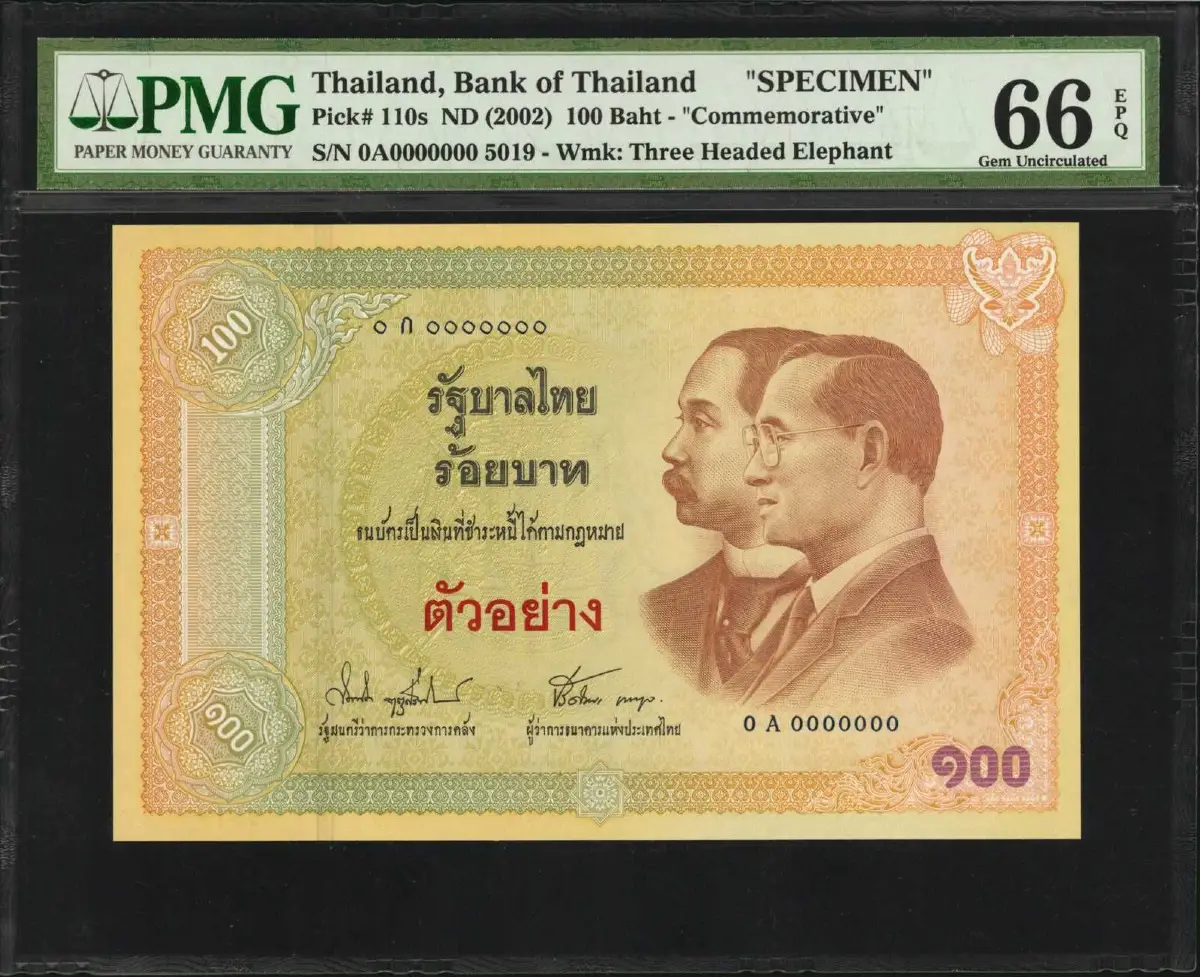
Thailand 100 Baht Specimen Pick 110s
View Details →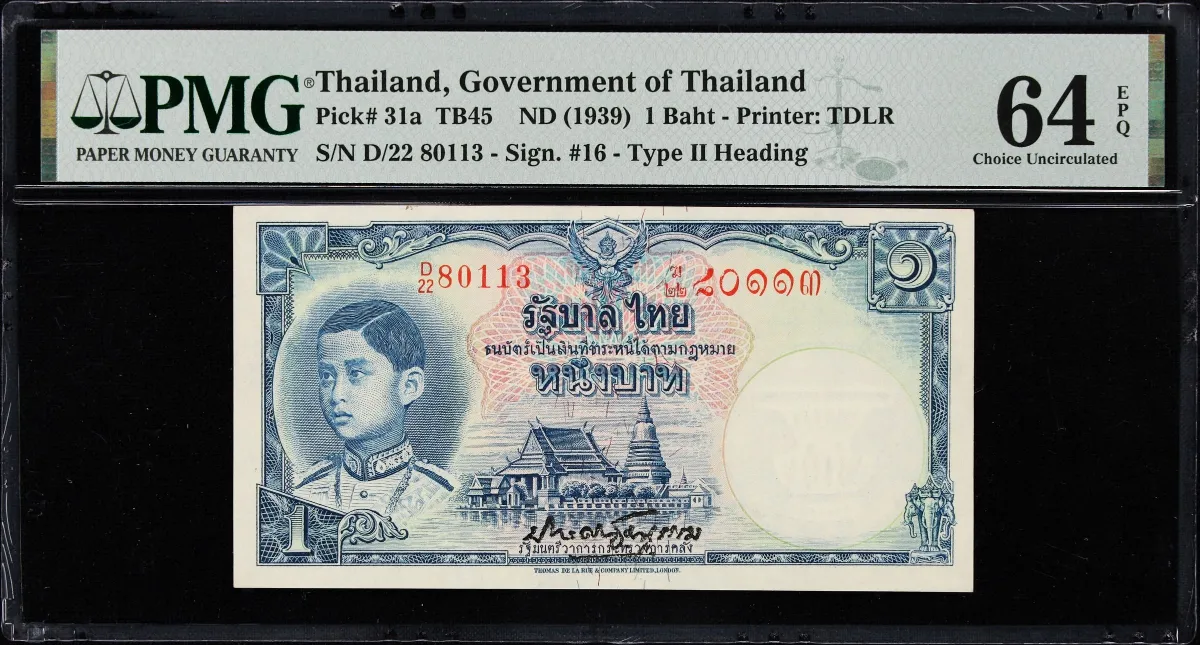
Thailand 1 Baht King Rama VIII Pick 31a
View Details →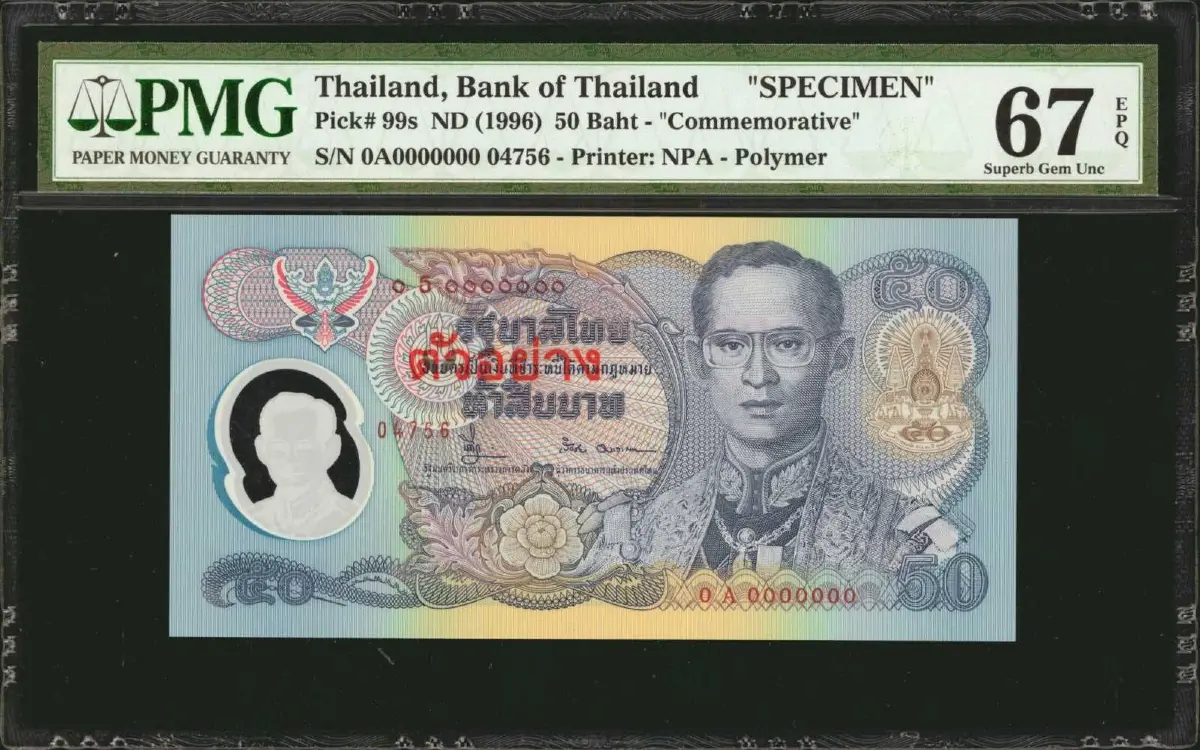
Thailand 50 Baht Polymer Specimen Pick 99s
View Details →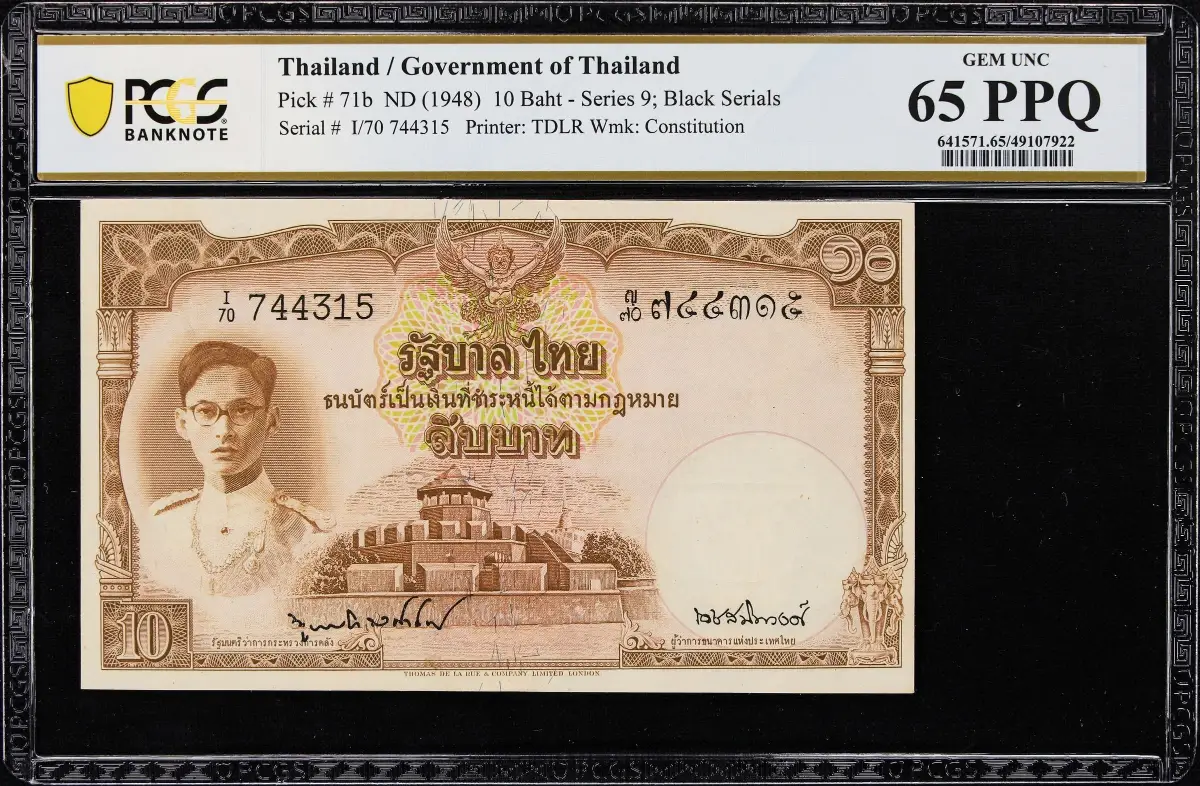
Thailand 10 Baht I/70 Pick 71b
View Details →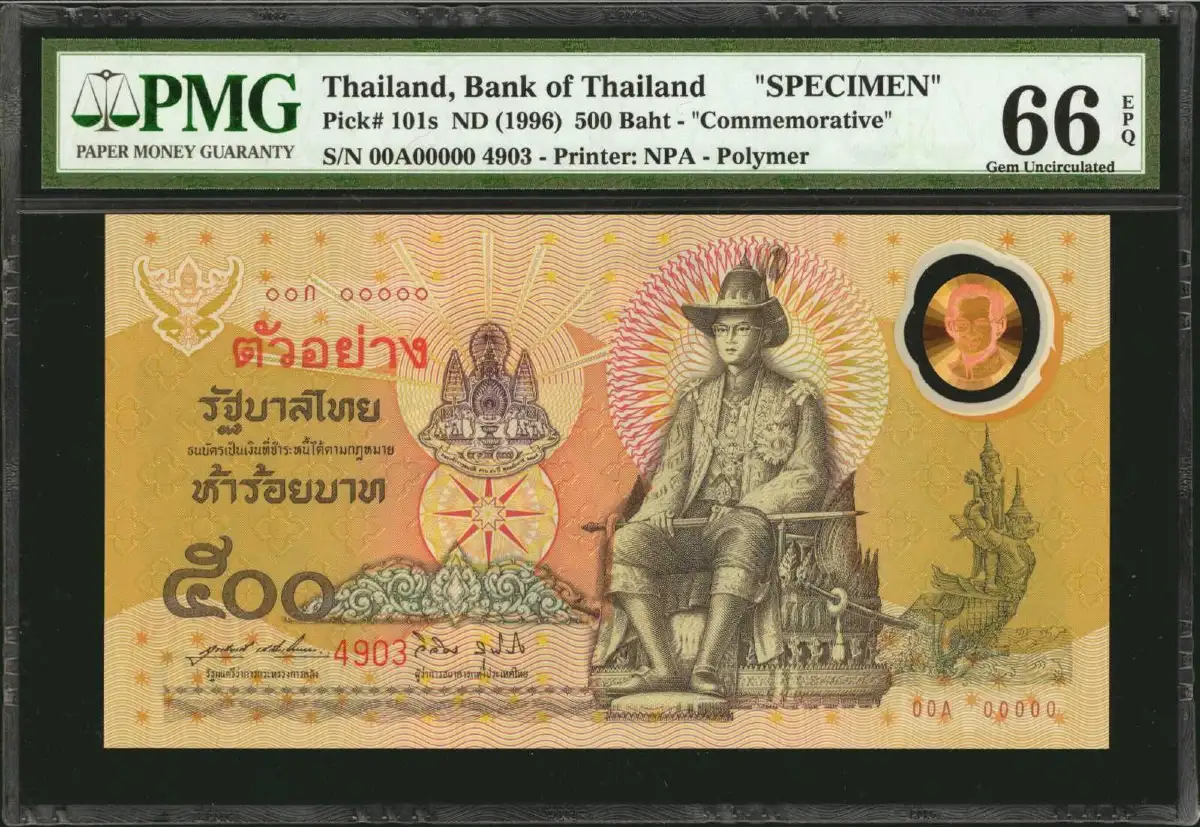
Thailand 500 Baht Polymer Specimen Pick 101s
View Details →Major Series of Thailand Paper Money
Key periods across Thailand’s regular and commemorative banknote issues
Pre-Portrait Notes
Series 1 and 2 established modern Siam paper money, including uniface notes and the Royal Ploughing Ceremony.
King Rama VII & VIII
Series 3 to 8 introduced royal portraiture and include the Siam transition, wartime issues, and emergency printings.
King Rama IX
Series 9 to 16 feature broad design variety, signature combinations, fancy serial numbers, and condition rarities.
Commemorative Issues
Special issues mark royal anniversaries, national events, and important milestones in modern Thai history.
Thai Paper Money: Historical Overview
From early Siamese currency notes to modern polymer banknotes
The history of Thai paper money reflects the modernization of the country’s monetary system. Before modern banknotes became established, Siam used a variety of forms of money, including cowrie shells, locally produced tokens, and distinctive silver Pot Duang or bullet money. During the reign of King Mongkut (Rama IV), early forms of state paper money such as Mai and Att Kradat appeared, helping establish the foundations for later paper currency.
The modern era began in 1902 with Series 1 banknotes. Printed by Thomas De La Rue in England, these early Siam issues were produced with the principal design printed on one side and are widely known among collectors as uniface notes. Series 2 introduced double-sided banknotes and is particularly recognized for the Royal Ploughing Ceremony vignette on the reverse.
Series 3 marked an important change by introducing the portrait of the reigning monarch. The first type featured King Rama VII, while a later type depicted King Rama VIII. Series 4 continued this transition and includes notes carrying both the “Government of Siam” and later “Government of Thailand” headings following the country’s name change in 1939.
World War II disrupted the supply of banknotes previously printed overseas. The newly established Bank of Thailand began operations in 1942, while wartime circumstances led to domestic emergency production and banknotes printed in Japan. Series 4 through 8 therefore include some of the most historically varied issues in Thai paper money, including post-war notes printed in the United States.
The reign of King Rama IX encompassed Series 9 through 16 and a major expansion in Thai banknote design and production. Thailand established domestic banknote production capability through the Bank of Thailand’s Note Printing Works, reducing reliance on overseas printers. This period also saw the development of an extensive tradition of commemorative banknotes celebrating royal and national events.
Thailand later introduced polymer technology through commemorative and circulating issues. Today, under King Rama X and Series 17, polymer has become an important part of Thailand’s circulating banknote system. From early Siam issues to modern polymer notes, the country’s paper money offers collectors a broad combination of history, design, varieties, and specialized collecting opportunities.
Why Collect Thai Banknotes?
Royal history, structured series, condition rarity, and distinctive commemorative issues
Royal Portraiture
Thai banknotes feature royal portraits and designs closely connected to the country’s modern history.
Series Collecting
Thailand paper money is organized into historical series, making it ideal for structured collecting.
Condition Rarity
Climate and circulation make many early Thai banknotes significantly scarcer in high grade.
Commemorative Appeal
Royal and national milestones have produced distinctive commemorative issues collected in Thailand and abroad.
Thai Banknote Guides
Explore important series, historical periods, designs, and themes in Thailand paper money
Series 3 Banknotes: First Portrait Notes of Siam
Series 4 Banknotes: The Transition from Siam
Seri Thai Banknotes: WWII Resistance Currency
Series 5 Banknotes: WWII Japanese Print Series
Ananta Samakhom Throne Hall on Thai Banknotes
History of Constitution of Thailand on Banknotes
Queen Sirikit: Series 14 & Commemorative Banknotes
Thailand Polymer Banknotes: Issues & Varieties
Thai Banknotes FAQs
Common questions about Thailand paper money and banknote collecting
Thai banknotes are the paper currency issued for Siam and later Thailand. The modern series began in 1902 and has developed through 17 regular series, along with wartime, commemorative, specimen, and other specialized issues collected today.
Introduced in 1902, Series 1 represents the first modern banknote series issued for Siam. Printed by Thomas De La Rue in England, these notes are commonly described as uniface because the principal printed design appears on one side.
Series 2 introduced double-sided banknotes for Siam and is especially recognized for the Royal Ploughing Ceremony vignette on the reverse. Scarcer varieties and well-preserved examples are particularly sought after by collectors.
Series 3 introduced royal portraiture to Thailand’s modern banknotes. The first type depicts King Rama VII, while a later type features King Rama VIII, making the series an important transition in Thai banknote design.
Series 4 captures an important period in Thailand’s history. Earlier notes carry the heading “Government of Siam,” while later examples use “Government of Thailand” following the country’s name change in 1939, creating distinctive varieties for collectors.
Some King Rama IX banknotes can be valuable, while many regular issues remain readily available. Value depends on the series, denomination, variety, serial number, condition, rarity, and certification. Scarce varieties, high-grade examples, errors, specimens, and selected commemoratives can command substantial premiums.
Yes. NumisAsia actively buys rare Thailand paper money, including early Siam issues, King Rama VII and VIII portrait notes, collectible King Rama IX varieties, color trials, specimens, errors, and PMG or PCGS-certified material. If you have individual notes or a collection to sell, please contact our specialists.
Looking for a Specific Thai Banknote?
Submit your want list and our specialists will help source rare Thai series, fancy serial numbers, replacement notes, specimens, and professionally graded examples.
Collect Thai Banknotes?
Browse Siam and Thailand banknotes, specimens, and certified paper money.
Browse Thai BanknotesWant to Sell Banknotes?
We actively buy rare Asian banknotes, collections, and PMG/PCGS certified notes.
View What We Buy