Banknote preservation is one of the most important yet often overlooked aspects of paper money collecting. Whether you own modern circulating banknotes, historical issues, or rare numismatic treasures, proper handling and storage play a crucial role in maintaining their appearance, structural integrity, and long-term collectibility.
Unlike coins, banknotes are highly vulnerable to damage. Exposure to moisture, heat, sunlight, dust, improper storage materials, and careless handling can cause permanent deterioration. Once paper fibres are weakened, colours fade, or physical damage occurs, restoration is often difficult, expensive, or impossible. For this reason, collectors should understand not only how to store banknotes, but also how to protect them from the many environmental and physical risks they face over time.
Fortunately, effective banknote preservation does not require a museum budget or specialist training. By following a few proven best practices and using appropriate storage materials, collectors can significantly reduce the risk of damage and help preserve their collections for future generations. Even simple changes to handling habits and storage methods can have a substantial impact on the long-term condition of paper money.
This guide explains the principles of banknote preservation, including safe handling techniques, environmental threats, storage solutions, archival-quality materials, and essential collecting accessories. Whether you are protecting a single keepsake or managing an extensive collection, these preservation practices will help ensure that your banknotes remain safe, stable, and well-protected for years to come.
Table of Contents
Why Banknote Preservation Matters
Banknotes are more fragile than many collectors realize. Unlike coins, which are struck on durable metal, paper money is susceptible to a wide range of physical and environmental hazards. A single careless fold, exposure to moisture, prolonged sunlight, or improper storage material can cause damage that may be impossible to reverse.
For collectors, banknote preservation is about more than maintaining appearance. Proper banknote preservation helps protect the historical, artistic, and educational value of paper money. Whether a note is a modern issue or a century-old rarity, preserving its original condition allows future generations to appreciate the craftsmanship, design, and historical significance it represents.
How Damage Affects Paper Money
Banknotes are manufactured from specialized paper or polymer substrates designed to withstand circulation, but they are not indestructible. Repeated handling, folding, writing, staining, and exposure to contaminants gradually weaken a note’s structure and appearance.
Damage can manifest in many forms, including creases, tears, pinholes, stains, fading, discoloration, edge wear, and surface abrasions. In severe cases, prolonged exposure to poor storage conditions may result in mold growth, paper degradation, or irreversible loss of design details.
Even minor damage can accumulate over time, making prevention far more effective than attempting to address problems after they occur.
Common Causes of Banknote Deterioration
Most banknote damage occurs gradually rather than suddenly. Environmental factors such as humidity, heat, sunlight, dust, and air pollution continuously affect paper fibres and printing inks. Improper storage materials can also introduce harmful chemicals that accelerate deterioration.
Physical handling presents additional risks. Frequent contact, folding, stacking, and transportation can create wear patterns that become more noticeable over time. Many collectors unintentionally damage their collections through routine activities without realizing the long-term consequences.
Understanding these risks is the first step toward developing effective banknote preservation habits.
Prevention Is Better Than Restoration
Unlike many other collectibles, damaged banknotes are extremely difficult to restore successfully. Amateur attempts to clean, flatten, repair, or improve a note often cause further harm and may permanently alter its original characteristics.
The most effective banknote preservation strategy is prevention. By handling banknotes carefully, using appropriate storage materials, and maintaining a stable storage environment, collectors can avoid many of the problems that commonly affect paper money collections.
Good preservation practices not only protect individual banknotes but also help ensure that an entire collection remains stable, organized, and enjoyable for years to come.
How to Handle Banknotes Safely
Proper handling is the foundation of effective banknote preservation. Even the best storage materials and environmental controls cannot fully protect a banknote if it is handled carelessly. Every time a note is touched, there is a risk of introducing oils, moisture, dirt, or physical stress that can contribute to long-term deterioration.
Fortunately, safe handling practices are simple to adopt. By developing good habits from the beginning, collectors can significantly reduce the likelihood of accidental damage and help maintain the condition of their banknotes over time.
Wash and Dry Your Hands First
Before handling any banknote, ensure that your hands are clean and completely dry. Natural skin oils, perspiration, food residue, and other contaminants can transfer to paper surfaces and leave stains that may become more visible over time.
Clean hands provide sufficient protection for most banknotes and are often the preferred approach among experienced collectors. If you have recently used lotions, hand creams, or other products that may leave residue, it is best to wash your hands thoroughly before touching any paper money.
Minimize Direct Contact
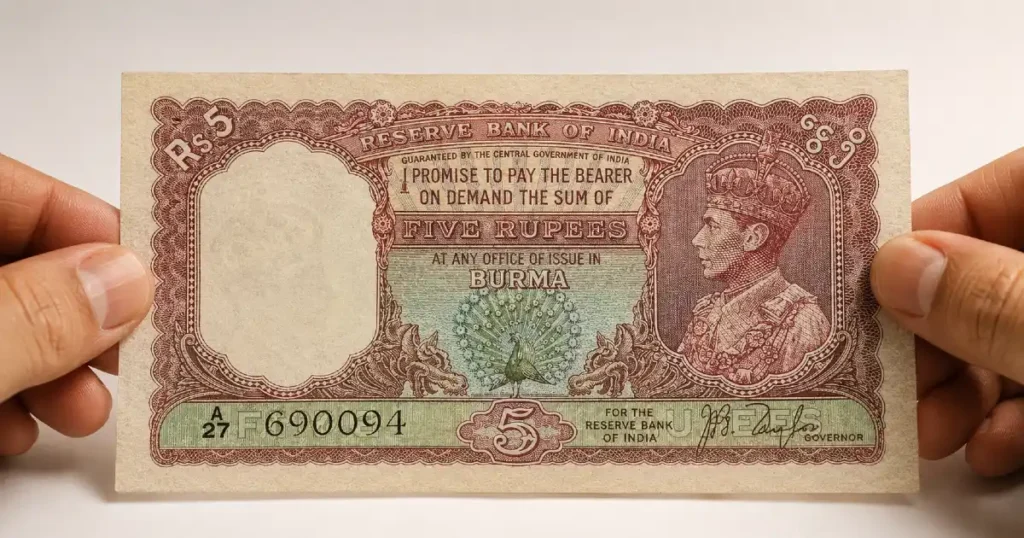
Whenever possible, handle banknotes by their edges rather than touching the printed surfaces. This reduces the risk of transferring oils and minimizes wear to delicate design elements.
When examining a banknote, avoid repeatedly bending, flexing, or flipping it unnecessarily. Frequent handling, even when done carefully, gradually increases the risk of accidental creases, edge wear, and other forms of damage.
For valuable or particularly fragile notes, it is often preferable to view them while they remain inside a protective holder.
Cotton Gloves: Useful or Unnecessary?
Many beginners assume that white cotton gloves are essential for handling banknotes. While cotton gloves have long been associated with museum collections and numismatics, they are not always the best choice for paper money.
Cotton gloves reduce tactile sensitivity, making it more difficult to feel and control a banknote. This loss of dexterity can increase the risk of accidental folds, edge damage, and handling mistakes. Cotton fibres may also snag on fragile notes or leave small fibres behind on the surface.
For most banknotes, experienced collectors generally prefer clean, dry bare hands. When additional protection is required, such as when handling exceptionally valuable or uncirculated notes, powder-free nitrile gloves are often a safer alternative because they provide better grip and greater tactile control.
Create a Safe Workspace
Always handle banknotes on a clean, flat, and uncluttered surface. Remove food, drinks, pens, scissors, adhesives, and other items that could accidentally damage a note.
A soft, clean working surface can help reduce the risk of abrasions and provide additional protection if a banknote is accidentally dropped. Good lighting is also important, allowing you to examine notes comfortably without excessive handling.
Taking a few moments to prepare a suitable workspace can greatly reduce the risk of accidental damage and make the collecting experience both safer and more enjoyable.
Environmental Threats to Banknotes
Even when banknotes are handled carefully, environmental factors can gradually cause deterioration over time. Unlike sudden physical damage, environmental damage often develops slowly and may go unnoticed until it becomes difficult or impossible to reverse.
Paper money is particularly vulnerable because it is composed of organic materials that react to changes in temperature, humidity, light, and air quality. Understanding these threats is essential for developing an effective banknote preservation strategy and creating a safe storage environment.
Humidity and Moisture
Excessive humidity is one of the greatest threats to paper money. High moisture levels can weaken paper fibres, encourage mold growth, and cause banknotes to warp, wrinkle, or stick together.
Mold is especially problematic because it can permanently stain paper, create unpleasant odours, and continue spreading if environmental conditions remain favourable. Once mold damage occurs, successful treatment can be difficult and may not fully restore the banknote.
Collectors should aim to store banknotes in a clean, dry environment where humidity levels remain relatively stable throughout the year.
Heat and Temperature Fluctuations
Prolonged exposure to heat can accelerate the natural ageing process of paper and printing inks. High temperatures may cause paper fibres to become brittle and can contribute to fading, discoloration, and other forms of deterioration.
Rapid temperature fluctuations can also create problems. Moving banknotes between significantly different environments may lead to condensation, particularly when humidity levels are high. Over time, these repeated changes can place unnecessary stress on both paper and storage materials.
A stable storage environment is generally more important than achieving a specific temperature.
Sunlight and Ultraviolet Exposure
Light exposure is one of the most common causes of fading in paper money collections. Ultraviolet (UV) radiation from sunlight and certain artificial light sources gradually breaks down inks and paper fibres, causing colours to lose their original vibrancy.
Damage from UV exposure is cumulative and irreversible. Even banknotes displayed indoors can suffer fading if exposed to direct sunlight for extended periods.
For this reason, collectors should avoid storing or displaying banknotes in locations where they receive direct sunlight or prolonged exposure to strong artificial lighting.
Dust, Dirt, and Airborne Pollutants
Dust may seem harmless, but it can gradually accumulate on banknotes and storage materials, increasing the risk of staining and abrasion. Airborne pollutants, smoke, and chemical vapours can also contribute to discoloration and long-term deterioration.
Collectors who store their collections in clean, enclosed environments will generally experience fewer banknote preservation issues than those who leave banknotes exposed to open air for extended periods.
Regular housekeeping and proper storage solutions can significantly reduce these risks.
Insects, Mold, and Other Biological Risks
Paper-based materials can attract a variety of biological threats, including insects, mold, mildew, and rodents. These hazards are most commonly encountered in damp, poorly ventilated storage areas such as basements, garages, and attics.
Insects may feed on paper or adhesives, while mold can rapidly spread under favourable conditions. Once biological damage occurs, the affected banknotes often suffer permanent losses in appearance and structural integrity.
Maintaining a clean storage environment and regularly inspecting collections can help identify potential problems before they become serious threats.
How to Store Banknotes Properly
Knowing how to store banknotes correctly is one of the most important aspects of banknote preservation. Whether you are new to the hobby or building an extensive archive, effective preservation begins with understanding how environmental conditions and storage materials affect paper money over time.
Even well-preserved notes can suffer damage if they are stored in unsuitable conditions or exposed to unnecessary handling. Proper storage protects paper money from physical wear, environmental threats, and accidental damage while making it easier to organize and enjoy a collection.
The best storage method depends on the size of the collection, the value of the banknotes, and how frequently they are handled. Regardless of the approach used, the goal is always the same: to provide a stable environment that minimizes risk and preserves the condition of the notes over time.
Short-Term Storage
Understanding how to store banknotes in the short term is particularly important for notes that are being actively examined, catalogued, purchased, or sold. During this period, notes remain particularly vulnerable because they are handled more frequently than those placed into long-term storage.
For short-term protection, banknotes should be placed in individual protective sleeves or holders as soon as possible after acquisition. Notes should never be left loose on desks, stacked without protection, or stored inside wallets, envelopes, or books where accidental creasing may occur.
Long-Term Storage
Long-term storage focuses on creating a stable environment where banknotes can remain protected for years or even decades. The ideal storage location should be clean, dry, dark, and subject to minimal temperature and humidity fluctuations.
Collectors should avoid storing banknotes in attics, basements, garages, or other locations prone to excessive heat, moisture, or environmental instability. Instead, collections are best kept in living areas where environmental conditions remain relatively consistent throughout the year.
Collectors storing banknotes in boxes or sealed containers may also benefit from placing silica gel packets nearby to help regulate humidity. Silica gel is inexpensive, widely available, and can be recharged for repeated use.
Regular inspection is also important. Periodically reviewing stored banknotes allows collectors to identify potential problems before significant damage occurs.
Individual Holders vs Albums
Both individual holders and albums can provide excellent storage solutions when used correctly. The choice often depends on personal preference and collecting objectives.
Individual holders offer maximum flexibility and are particularly useful for valuable, fragile, or frequently examined banknotes. They allow notes to be handled individually while reducing direct contact with the paper itself.
Albums provide a convenient way to organize and display collections while keeping banknotes protected. They are especially useful for collectors who enjoy viewing complete sets or thematic collections. However, the quality of the album and its storage materials plays a critical role in long-term banknote preservation.
Neither method is inherently superior. Many collectors use a combination of both approaches depending on the needs of their collection.
Third-Party Encapsulation (Slabbing)
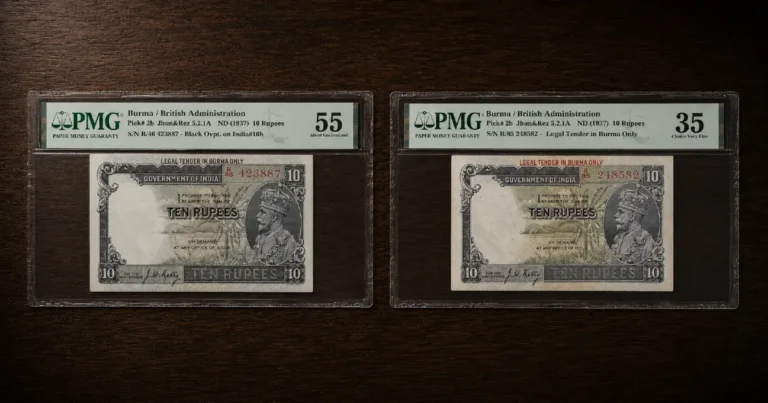
For high-value banknotes or exceptionally rare specimens, utilizing a professional third-party grading service is the gold standard of banknote preservation. Companies like Paper Money Guaranty (PMG) and PCGS Banknote physically seal the note inside a heavy-duty, chemically inert, PVC-free polymer shell.
Encapsulation by third-party grading services creates a permanent micro-climate that completely shields the paper from atmospheric humidity, pollutants, and accidental handling damage. While more expensive than buying standalone sleeves, slabbing offers absolute peace of mind and permanently preserves both the physical condition and market authenticity of your most prized banknotes.
Organizing a Growing Collection
As collections expand, organization becomes increasingly important. A well-organized collection reduces unnecessary handling and makes it easier to locate specific banknotes when needed.
Collectors may organize their collections by country, issuing authority, denomination, historical period, or other criteria that suit their collecting interests. Whatever system is chosen, consistency is key.
Maintaining a clear organizational structure not only improves accessibility but also supports better preservation by reducing the need for frequent searching, reshuffling, and handling of individual notes.
Choosing Safe Storage Materials & Sleeves
Knowing how to store banknotes safely begins with choosing the right materials. Not all storage materials are suitable for banknote preservation. In fact, some products marketed for collectibles can cause significant damage over time if they contain harmful chemicals or unstable materials.
When selecting holders, sleeves, albums, or storage systems, collectors should prioritize archival-quality materials that are specifically designed for long-term preservation. For definitions of common preservation and collecting terms, see our banknote glossary. Choosing the right materials can help protect banknotes from chemical deterioration, physical wear, and environmental contamination for many years.
Why Archival Quality Matters
Archival-quality storage materials are designed to remain chemically stable over long periods. They do not release harmful substances that can react with paper fibres, inks, or security features.
Unlike ordinary plastics and paper products, archival materials are manufactured to minimize the risk of discoloration, staining, brittleness, and chemical degradation. This stability makes them the preferred choice for museums, archives, libraries, and serious collectors.
While archival products may cost slightly more than standard storage materials, the additional protection they provide is often well worth the investment.
Polyester, Polypropylene, and Mylar Holders
Several plastics are widely recognized as safe for long-term banknote storage.
Polyester holders, often sold under brand names such as Mylar, are among the most trusted storage materials in the collecting community. They offer excellent clarity, durability, and chemical stability while providing strong protection against physical handling.
Polypropylene is another commonly used archival plastic. It is flexible, relatively inexpensive, and generally considered safe for long-term preservation when manufactured to archival standards.
Both materials allow collectors to view banknotes without direct handling while minimizing the risk of chemical interaction with the paper.
When purchasing sleeves or holders, it is advisable to choose products specifically marketed as archival, acid-free, and PVC-free.
Materials to Avoid
Some storage materials can cause serious and irreversible damage to paper money.
The most significant danger comes from Polyvinyl Chloride (PVC), a plastic commonly found in inexpensive sleeves, albums, and storage products. PVC often contains chemical additives known as plasticizers, which gradually migrate out of the plastic as it ages.
Over time, these chemicals can create a sticky residue that adheres to the surface of a banknote. They may also contribute to staining, discoloration, paper degradation, and ink migration. In severe cases, the damage can become permanent and impossible to reverse.
Collectors should also be cautious of products that do not clearly identify their materials. If a manufacturer does not specify that a storage product is archival-quality and PVC-free, it is generally safer to avoid it.
Acid-Free Storage Solutions
Acid is another long-term threat to paper money. Ordinary paper products, cardboard, envelopes, and some storage boxes may contain acids that gradually break down paper fibres and accelerate deterioration.
Acid-free storage materials are specifically designed to minimize this risk. Acid-free folders, storage boxes, backing boards, and archival papers provide a safer environment for long-term preservation.
When combined with high-quality archival sleeves and stable environmental conditions, acid-free storage solutions help create a comprehensive preservation system that protects banknotes from many of the most common causes of deterioration.
Choosing safe storage materials may not be the most exciting aspect of banknote collecting, but it is one of the most important. The quality of the materials surrounding a banknote often determines how well it survives the passage of time.
Essential Accessories for Banknote Preservation
While proper handling and storage practices form the foundation of effective banknote preservation, the right accessories can make those practices easier, safer, and more effective. Collectors do not need an extensive collection of specialized equipment, but a few carefully chosen tools can significantly improve both preservation and organization.
The best accessories are those that reduce unnecessary handling, protect banknotes from environmental risks, and allow collectors to enjoy their collections without compromising their condition.
Banknote Sleeves and Holders
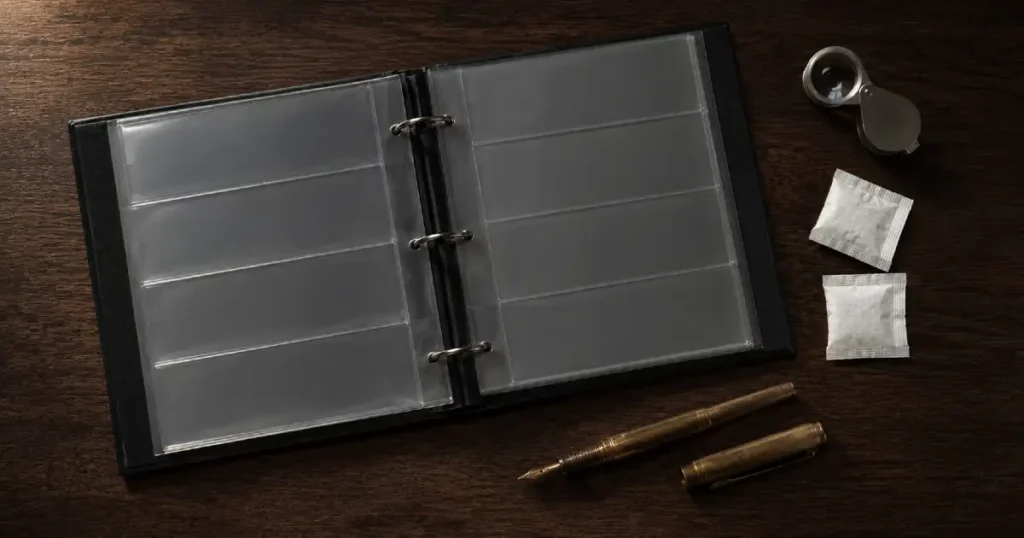
Protective sleeves and holders are among the most important preservation accessories a collector can own. They provide a physical barrier between the banknote and the outside environment, reducing exposure to fingerprints, dust, moisture, and accidental damage.
Individual holders are particularly useful for banknotes that are frequently examined or displayed, while sleeves offer an economical solution for larger collections. Regardless of the format chosen, collectors should prioritize archival-quality, PVC-free products designed specifically for long-term preservation.
For most collections, protective sleeves represent the first and most important line of defence against everyday wear.
Albums and Storage Binders
Albums and binders allow collectors to organize and view their banknotes while keeping them protected. They are especially useful for collections arranged by country, historical period, denomination, or theme.
A quality album should hold banknotes securely without placing stress on the paper or exposing it to harmful materials. Collectors should avoid inexpensive albums with unidentified plastics and instead choose products specifically designed for archival storage.
Well-organized albums not only improve preservation but also make collections easier to enjoy, manage, and expand over time.
Storage Boxes and Cases
For collectors with larger collections, storage boxes and protective cases provide an additional layer of security. These accessories help shield banknotes from dust, light exposure, and accidental physical damage while keeping collections organized.
Archival storage boxes are particularly useful for notes stored in individual holders, while hard-shell cases may be appropriate for especially important pieces that require additional protection.
When selecting storage boxes, collectors should ensure that the materials are acid-free and suitable for long-term preservation.
Magnifiers and Inspection Tools
A quality magnifier can be a surprisingly useful preservation accessory. Magnification allows collectors to examine design details, printing quality, serial numbers, and security features without excessive handling.
Rather than repeatedly removing a note from its holder, collectors can often perform a detailed examination while the banknote remains protected. This reduces wear and minimizes opportunities for accidental damage.
Good lighting can be equally important, helping collectors inspect banknotes comfortably and safely.
Displaying Banknotes Safely
Many collectors enjoy displaying their banknotes rather than keeping them permanently stored in albums or archival boxes. A well-presented banknote can be both an attractive decorative piece and a conversation starter. However, display introduces additional preservation risks that should be carefully managed.
The challenge is to balance visibility with protection. Without appropriate safeguards, prolonged display can expose banknotes to light damage, environmental fluctuations, dust, and accidental handling.
The Risks of Permanent Display
Unlike banknotes stored in albums or archival holders, displayed notes are continuously exposed to their surrounding environment. Over time, light, airborne pollutants, temperature changes, and humidity fluctuations can contribute to gradual deterioration.
Damage caused by display conditions often develops slowly and may not become noticeable until significant fading or discoloration has already occurred. Because this process is cumulative, prevention is far easier than correction.
Collectors should view display as a controlled preservation activity rather than simply a decorative choice.
Using UV-Protective Materials
Ultraviolet (UV) radiation is one of the most damaging forms of light exposure for paper money. Even indirect sunlight can gradually fade inks and weaken paper fibres over time.
When displaying banknotes, collectors should consider UV-protective glazing materials that help reduce harmful light exposure. These materials can provide an additional layer of protection while still allowing banknotes to be viewed clearly.
However, UV protection should be regarded as a safeguard rather than a complete solution. Limiting overall light exposure remains the most effective strategy.
Framing Banknotes Correctly
Framing can be an excellent display option when done properly. Banknotes should never be attached using tape, glue, staples, or other adhesives that may damage the paper.
Instead, collectors should use archival-quality mounting methods and materials specifically designed for paper conservation. Frames should also provide adequate separation between the banknote and the glazing material to prevent sticking, condensation, or other forms of contact damage.
Whenever possible, only archival-quality and acid-free materials should be used in the framing process.
Rotating Displayed Items
One of the simplest ways to reduce display-related damage is to rotate banknotes periodically. Rather than displaying the same note continuously for many years, collectors can alternate displayed items while keeping the remainder of their collection safely stored.
This approach reduces cumulative exposure to light and environmental factors while allowing collectors to enjoy a wider variety of banknotes over time.
For particularly important or irreplaceable banknotes, long-term storage is often a safer preservation strategy than permanent display.
Should You Clean, Press, or Repair Banknotes?
When collectors encounter stained, folded, wrinkled, or damaged banknotes, it is natural to wonder whether the note can be improved through cleaning, pressing, or repair. Unfortunately, many well-intentioned attempts to restore paper money cause more harm than good.
Unlike household items that can be repaired or refreshed, banknotes are historical artifacts. Their condition reflects their history, and any alteration may permanently change the paper, inks, security features, or surface characteristics that collectors value. For this reason, preservation experts generally recommend focusing on prevention rather than restoration.
Why Cleaning Is Usually a Bad Idea
Many collectors are tempted to remove dirt, stains, marks, or discoloration from banknotes. However, cleaning is rarely as simple as it appears.
Water, detergents, solvents, erasers, and cleaning products can all alter the paper’s original structure. Even if a note appears cleaner afterwards, the treatment may weaken paper fibres, affect printing inks, or remove important characteristics that demonstrate originality.
Professional grading services and experienced collectors often recognize signs of cleaning. In many cases, a cleaned note may be considered less desirable than an untouched note showing honest circulation wear.
For most collectors, the safest approach is to leave stains and surface imperfections exactly as they are.
The Risks of Pressing and Flattening Notes
Creases and folds are common on circulated banknotes, leading some collectors to attempt pressing, ironing, or flattening procedures in order to improve appearance.
While these techniques may temporarily reduce visible folds, they can also alter the paper’s natural texture and original characteristics. Excessive heat, pressure, or moisture may damage paper fibres, distort security features, or create unnatural surfaces that experienced collectors can easily identify.
Many banknotes originally possess distinctive paper qualities and embossing created during the printing process. Pressing may reduce or eliminate these features permanently.
As a result, pressing often creates a note that appears different, but not necessarily better.
Common Restoration Mistakes
Collectors sometimes attempt repairs using methods that can cause irreversible damage.
Common mistakes include applying tape to tears, using glue or adhesives, laminating banknotes, trimming damaged edges, washing notes with water or chemicals, and ironing notes to remove wrinkles. In most situations, leaving a damaged note untouched is safer than any amateur repair attempt.
While these methods may seem harmless, they frequently result in permanent alterations that are difficult or impossible to reverse. In many cases, the attempted repair becomes more problematic than the original damage.
When in doubt, it is usually safer to leave a damaged banknote untouched than to attempt a repair.
When Professional Conservation May Be Appropriate
There are limited situations where professional conservation may be justified, particularly for historically important, museum-quality, or exceptionally rare banknotes.
Professional paper conservators — such as those accredited by the American Institute for Conservation — use specialized techniques, materials, and scientific methods that differ significantly from amateur restoration attempts. Their objective is typically stabilization and preservation rather than cosmetic improvement.
However, conservation should be viewed as a specialized field rather than a routine collecting practice. For the vast majority of banknotes, proper storage, careful handling, and preventive banknote preservation remain the most effective strategies.
In preservation, the guiding principle is simple: first, do no harm. Once a banknote has been altered, the original condition can never be fully restored. To understand how condition affects collectibility and value, see banknote grading scale.
Banknote Preservation Mistakes to Avoid
Most banknote damage does not occur because collectors intentionally mistreat their collections. Instead, it usually results from small mistakes that seem harmless at the time but accumulate over the years. By understanding the most common banknote preservation errors, collectors can avoid many of the problems that lead to unnecessary deterioration.
The good news is that most banknote preservation mistakes are entirely preventable with a little knowledge and planning.
Using PVC Holders
One of the most damaging mistakes a collector can make is storing banknotes in holders or sleeves made from Polyvinyl Chloride (PVC). While inexpensive PVC products may appear similar to archival-quality storage materials, they can release chemical plasticizers as they age.
Over time, these chemicals may leave sticky residues, discolor paper, damage inks, and contribute to long-term deterioration. In severe cases, the resulting damage can be permanent.
Collectors should always choose archival-quality, PVC-free storage products specifically designed for paper money preservation.
Storing Notes in Damp Areas
Basements, garages, attics, and other poorly controlled environments are among the worst places to store banknotes. Excess moisture can encourage mold growth, attract pests, and weaken paper fibres.
Even when damage is not immediately visible, prolonged exposure to high humidity may gradually affect a collection. A clean, dry, and stable environment is generally the safest option for long-term storage.
Handling Notes Excessively
Every time a banknote is handled, it is exposed to potential wear. Fingerprints, oils, accidental bends, and small abrasions can accumulate over time.
While collectors naturally want to examine and enjoy their banknotes, unnecessary handling should be minimized whenever possible. Using protective holders and maintaining good handling habits can significantly reduce the risk of accidental damage.
Using Tape, Glue, or Staples
Attempting to repair a banknote with household materials is one of the most common banknote preservation mistakes. Tape may discolor and become brittle over time, adhesives can stain paper fibres, and staples can cause permanent physical damage.
Even repairs that appear neat when first applied often become more obvious and problematic as the materials age. In most situations, it is better to leave a damaged banknote untouched than to attempt a repair using non-archival materials.
Ignoring Environmental Conditions
Many collectors focus on storage products while overlooking the environment in which their collections are stored. However, even the best archival holders cannot fully compensate for excessive heat, humidity, direct sunlight, or poor air quality.
Preservation should be viewed as a combination of proper handling, suitable storage materials, and a stable storage environment. Neglecting any one of these factors can undermine the effectiveness of the others.
Waiting Until Damage Occurs
Perhaps the most common mistake of all is assuming that banknote preservation can wait until problems become visible. By the time fading, mold, discoloration, or physical deterioration appear, the damage is often difficult or impossible to reverse.
The most effective preservation strategy is proactive rather than reactive. Establishing good habits from the beginning is far easier than attempting to address problems after they have already affected a collection.
By avoiding these common mistakes, collectors can significantly improve the long-term preservation of their banknotes and ensure that their collections remain protected, organized, and enjoyable for many years to come.
Frequently Asked Questions About Banknote Preservation
Final Thoughts on Banknote Preservation
Banknote preservation is one of the most important responsibilities of every collector. The principles of banknote preservation are straightforward — but they require consistent application to be effective. Whether you own a single historical note, a collection of modern banknotes, or an extensive numismatic archive, the way you handle, store, and protect your paper money today will directly influence its condition in the future.
Fortunately, effective banknote preservation does not require complicated techniques or expensive equipment. Understanding how to store banknotes correctly, choosing archival-quality materials, and maintaining a stable environment are habits that any collector can develop regardless of budget or experience level.
The most important principle to remember is that prevention is always easier than restoration. Once a banknote has been stained, faded, torn, chemically damaged, or altered, the original condition can rarely be fully recovered. Every banknote preservation decision should therefore focus on minimizing risk and maintaining the integrity of the note rather than attempting to improve it later.
Good preservation habits also provide benefits beyond physical protection. Properly stored and organized collections are easier to manage, study, display, and enjoy. They allow collectors to appreciate the history, artistry, and craftsmanship of paper money without exposing their collections to unnecessary harm.
Ultimately, banknote preservation is not about treating every note as a museum artifact. It is about developing practical habits that safeguard your collection and ensure that these pieces of monetary history remain available for future generations. By investing a little time and care today, collectors can help ensure that their banknotes remain protected, stable, and enjoyable for many years to come.