Banknote Grading Scale
The complete 1–70 PMG grading scale and PCGS standards reference for paper money collectors
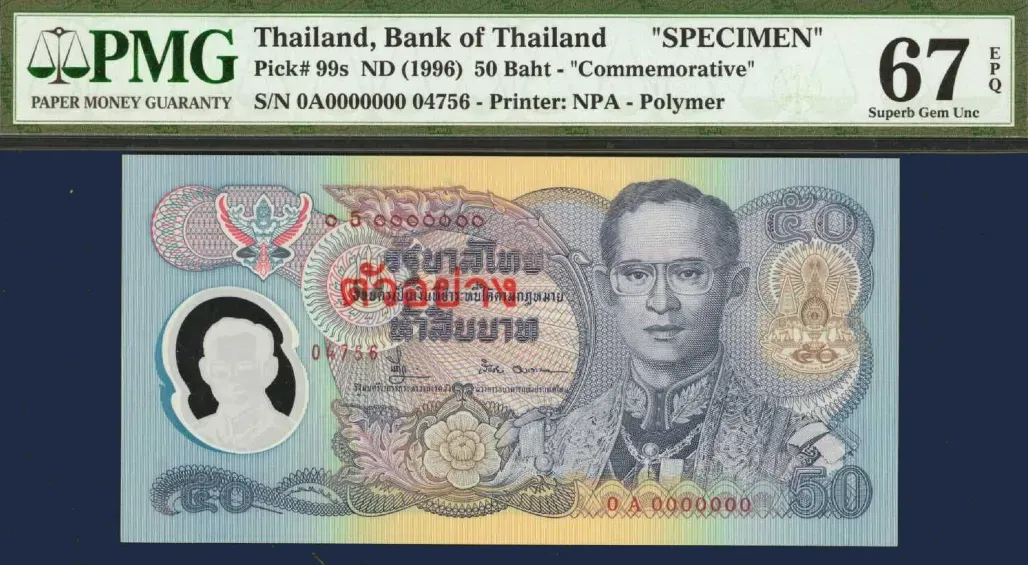
Understanding the technical, historical, and market-specific nuances of the banknote grading scale is essential for building a premium collection. This definitive reference guide to the 1–70 banknote grading scale is designed to give both novice and advanced collectors a competitive edge when sourcing and researching rare world and Asian currency.
Whether you are deciphering auction catalog descriptions, studying population census data, or verifying condition standards, mastering these precise metrics is your most valuable asset. Use this expert guide to confidently navigate the 1–70 Sheldon system and the exact requirements of the PMG grading scale and PCGS standards.
Understanding the 1–70 Banknote Grading Scale
The historical standard for evaluating paper money condition, rarity, and authenticity
The 1–70 banknote grading scale, originally developed in 1948 by Dr. William Sheldon for rare coins, was meticulously adapted for paper money to provide a universal, objective metric for physical condition. Prior to its adoption, adjectival grades like “Fine” or “Uncirculated” were highly subjective, leading to wide inconsistencies across the numismatic market.
Today, this specialized banknote grading scale is the definitive global standard. Expert third-party certification services, most notably Paper Money Guaranty (PMG) and Professional Coin Grading Service (PCGS Banknote), utilize this numerical system to rigorously verify authenticity, assign an impartial grade, and encapsulate the currency in secure, archival-quality holders.
Relying on the strict parameters of the PMG grading scale and PCGS standards provides both buyers and sellers with absolute confidence. It ensures market liquidity and guarantees that the historical preservation of the note is accurately represented before it enters a premium collection.
Banknote Grading Scale: Uncirculated Grades (60–70)
The pinnacle of the PMG grading scale, requiring strictly uncirculated paper with absolutely no folds
70 ★ Gem Uncirculated
The highest grade possible. The note must have no evidence of handling at 5x magnification. The margins and registration must appear perfectly centered to the unaided eye. The note must qualify for the EPQ designation.
69 Superb Gem Uncirculated
A virtually flawless note. The margins and registration may appear slightly off-center to the unaided eye, but there is strictly no evidence of handling. The note must qualify for the EPQ designation.
68 Superb Gem Uncirculated
The margins and registration are slightly off-center. There may be very minor handling visible. The note must qualify for the EPQ designation.
67 Superb Gem Uncirculated
A note with above-average centering and great eye appeal. It may possess very minor handling or a slightly off-center margin. The note must qualify for the EPQ designation.
66 Gem Uncirculated
A premium uncirculated note. It may have slightly off-center margins or a minor handling mark visible upon close inspection. The note must qualify for the EPQ designation.
65 Gem Uncirculated
A note with strictly no folds or creases. It may have one or two minor distractions, such as centering that is noticeably off or light handling marks. The note must qualify for the EPQ designation.
64 Choice Uncirculated
A strictly uncirculated note with no folds, but the centering is typically off on one or two sides. It may show noticeable handling marks, smudges, or minor corner issues. (Notes grading 64 and below do not automatically require an EPQ designation, though they can still earn it).
63 Choice Uncirculated
The margins are generally imperfect, and the centering is noticeably off. The note may have flaws such as handling, a pinhole, or counting smudges, but still retains no actual folds in the paper.
62 Uncirculated
A strictly uncirculated note with poor centering or diminished eye appeal. It may have multiple minor flaws such as handling, corner tip issues, or margin imperfections, but remains free of folds.
61 Uncirculated
A note with no folds, but suffering from poor centering and multiple distractions. It may feature heavy handling, counting marks, or minor smudges that significantly detract from its visual appeal.
60 Uncirculated
A note with strictly no folds or creases, but possessing heavily compromised eye appeal. It may exhibit toning, environmental staining, smudges, or drastically off-center margins that bleed into the design.
Banknote Grading Scale: Moderately Circulated (12–35)
Solid, whole notes exhibiting moderate to considerable circulation while retaining their core structural integrity
35 Choice Very Fine
A heavily handled note that still maintains a crisp appearance. It will typically have four to seven light folds or a combination of several light folds and one or two heavy creases. The note still possesses good eye appeal and firmness.
30 Very Fine
A note displaying moderate circulation. It will have multiple folds, both light and heavy, crossing the design. While the handling is obvious and the paper may have lost some of its original crispness, the note remains fully intact without major tears.
25 Very Fine
A solid, well-circulated note. It will show numerous folds and creases, slight rounding at the corners, and potentially minor smudging or light environmental wear. Despite the wear, the note is completely whole and visually presentable.
20 Very Fine
A heavily circulated note exhibiting many folds, creases, and noticeable overall wear. It may have very minor margin tears (that do not extend into the design), light staining, or pinholes, but it still maintains reasonable structural integrity.
15 Choice Fine
A note that has seen considerable circulation. It will feel relatively limp due to extensive folding and handling. Margin tears, pinholes, and rounded corners are common and expected, but the note must still be fully intact without missing pieces.
12 Fine
The lowest grade before entering the heavily damaged tiers. The note exhibits heavy circulation, limp paper, and multiple noticeable distractions such as minor stains, edge splits, or pinholes. However, it remains a whole, complete banknote.
Banknote Grading Scale: Lower Grades (1–10)
Heavily circulated notes with significant wear, loss of structural integrity, and typical damage
10 Very Good
A heavily worn note with considerable circulation. The paper is entirely limp, and the note typically features multiple heavy folds, stains, and rounded corners. Minor missing pieces, such as small corner tips, are acceptable at this grade.
8 Very Good
A heavily circulated note that is completely limp. It will exhibit significant wear, including severe fold lines that may have split. Margin tears frequently extend completely into the central design, and small pieces may be missing.
6 Good
A highly worn and fundamentally damaged note. It retains poor eye appeal and suffers from severe limpness. Extensive tears, heavy staining, fading, and missing edge pieces are common and expected.
4 Good
An extremely worn note with heavily compromised structural integrity. It will exhibit major tears, noticeable missing pieces, and severe environmental damage. The primary design elements remain just visible enough for identification.
3 About Good
A severely damaged note. While the majority of the note is present, it will typically have larger pieces missing, massive splits, or heavy tape repairs that significantly obscure the original design.
2 Fair
A note that is nearly falling apart. It exhibits massive missing pieces, severe staining, and catastrophic wear. It is generally only collectible if the note is of extreme historical rarity.
1 Poor
The absolute lowest grade on the scale. The note is barely recognizable and may be held together entirely by tape. Major portions of the design and paper are missing, and handling it risks further destruction.
Special Designations: EPQ, PPQ, and Condition Modifiers
Understanding paper quality designations and specialized terminology on the grading scale
EPQ / PPQ
The highest designation for paper originality on the PMG grading scale. PMG uses EPQ and PCGS Banknote uses PPQ. To qualify, a note must be completely unadulterated. It cannot have been physically, chemically, or materially altered (such as by pressing or washing). The paper must retain its natural embossing, brightness, and tactile crispness.
The Star (★)
Assigned exclusively by PMG to notes possessing exceptional eye appeal for their assigned numerical grade. A note must exhibit unusually strong, vibrant colors and pristine paper quality to earn this coveted modifier. All notes graded PMG 70 automatically receive a star, but it can be awarded to notes in lower grades as well.
NET / Details
When a numerical grade alone does not faithfully describe the state of a banknote due to severe damage or specific detrimental alterations (e.g., heavy tape repairs, PVC damage, extensive rust), a qualifier is used. PMG traditionally uses a “NET” grade and lists the issue on the back of the holder. PCGS Banknote utilizes a “Details” grade, noting the specific reasons on the front label. (Note: Legacy “PCGS Currency” holders frequently used the term “Apparent” for these problem notes).
Issuance Characteristics vs. Post-Issuance Alterations
Standard issuance practices, such as a “staple hole at issue” frequently encountered on classic Indian rupee notes or East African currency, do not inherently disqualify a note from receiving an EPQ designation because the paper remains in its original, officially issued state. However, post-issuance collector alterations—such as a note being “previously mounted” in an album—strip the paper of its originality and will automatically prevent the note from achieving an EPQ or PPQ status.
Anatomy of a Grading Label
Understanding the layout and specific grader remarks on third-party certification holders

PMG Label (Front)
Displays country, pick number, pedigree, and the primary numerical grade.

PCGS Label (Front)
Displays all grading data, plus specific condition remarks and “Details” explanations directly on the front.

PMG Label (Back)
The reverse side where PMG prints specific condition remarks, alterations, and “NET” justifications.
Common Label Remarks & Comments
When evaluating a note, third-party graders frequently add specific remarks to the label to note original issuance characteristics, minor damage, or major alterations. PMG typically places these comments on the back of the label, while PCGS Banknote places them on the front. Common examples you will encounter include exceptional paper quality, staple hole at issue, additional staple holes, pinholes, spindle holes, ink stamps, annotations (including printer’s annotations), previously mounted, stain, rust, and repaired or restoration work. For comprehensive definitions of exactly how these flaws impact value, please consult our Banknote Glossary.
Should You Submit Your Banknotes for Grading?
Professional certification adds value — but not for every note
Understanding the banknote grading scale is only the first step. Professional certification can provide significant benefits, but not every banknote justifies submission fees, shipping, and waiting periods. Experienced collectors treat grading as a strategic tool rather than a default step.
As a general rule, the strongest candidates for PMG or PCGS certification include high-value notes where authentication matters, exceptional uncirculated examples where condition creates a meaningful premium, specimen notes and rare varieties that are difficult for non-specialists to evaluate, and notes with low population counts where a top-certified example commands collector interest.
Common notes with modest market value, or heavily circulated examples that are readily available, rarely justify the cost of certification. The decision should always be based on rarity, condition, authenticity concerns, and your collecting goals.
Banknote Grading Scale FAQs
Common questions regarding the 1–70 paper money grading scale
The PMG grading scale is a standardized 1–70 numerical system used by Paper Money Guaranty to evaluate the physical condition of paper currency. A grade of 1 represents a heavily damaged “Poor” note, while a 70 represents a flawless “Gem Uncirculated” note. This scale is the global industry standard for determining rarity and market value.
Both Paper Money Guaranty (PMG) and PCGS Banknote are industry-leading third-party grading services that utilize the standard 1–70 Sheldon scale. The primary differences lie in their terminology and label layout. PMG uses the EPQ designation and generally lists condition remarks on the back of the label. PCGS Banknote utilizes the PPQ designation and prints specific “Details” remarks directly on the front.
It depends on its origin. If the staple hole is a recognized “issuance characteristic”—meaning it was stapled by the issuing bank prior to circulation (frequently seen on classic Indian rupee notes)—it does not inherently disqualify the note from achieving an EPQ status. However, post-issuance staple holes added later by collectors or tellers are considered damage and will negatively impact the final grade.
A Details or NET grade is assigned when a numerical grade alone cannot accurately describe a note’s condition due to severe damage or post-issuance alterations. Common reasons include heavy tape repairs, PVC environmental damage, severe rust, or trimming. The grading service will assign a numerical score based on the remaining paper, but note the specific flaw as a qualifier.
Professional certification provides absolute guarantees of authenticity and impartial condition, which creates market trust and liquidity. While grading fees must be weighed against the note’s baseline rarity, high-grade Paper Money Guaranty (PMG) or PCGS certified notes almost always command a premium at auction over raw, uncertified examples.