How to Check Banknote Value: A Beginner to Advanced Guide
Learn how to check banknote value using rarity, condition, and market data. Discover how grading and PMG population reports help determine paper money worth.
6/4/20268 min read
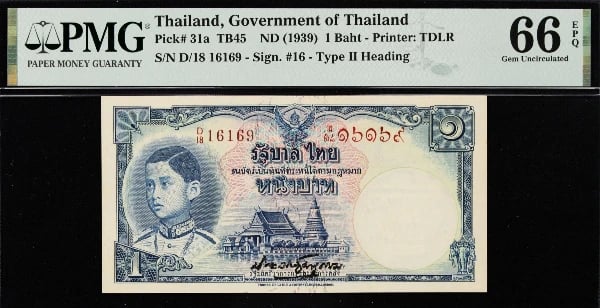
Banknote value is determined by a combination of rarity, condition, demand, and real market activity. Understanding how these factors work together is essential for collectors who want to accurately assess what a banknote is worth.
In today’s market, checking banknote value is no longer based on guesswork or age alone. Collectors use structured methods such as grading standards, auction results, and PMG population reports to evaluate how frequently a note appears and how it is distributed across different grades.
For example, a banknote may be widely available in circulated condition but significantly more valuable in higher grades due to limited survival. This difference plays a key role in determining both desirability and price.
By learning how to check banknote value using reliable methods and real market data, collectors can make more informed decisions when buying, selling, or building a collection.
What Determines Banknote Value
Banknote value is influenced by several key factors that work together rather than independently. Understanding these factors allows collectors to evaluate a note more accurately and avoid relying on assumptions such as age alone.
Rarity
Rarity reflects how many collectible examples of a banknote exist within the market. This includes both the original print run and how many notes have survived over time. In some cases, a banknote may be widely available overall but scarce in higher grades.
Certain categories, such as specimen banknotes, can also influence value due to their limited issuance and restricted distribution. In these cases, rarity is driven not by circulation or survival, but by how the notes were originally released.
Collectors can explore this concept further in how to identify rare banknotes, where rarity is explained in greater detail. Recognizing whether a note is truly scarce—or simply less commonly seen—is a fundamental step in determining value.
Demand
Demand determines how desirable a banknote is among collectors. Notes with strong historical significance, recognizable designs, or established collector interest tend to attract consistent attention.
For example, banknotes from widely collected regions such as India, Thailand, Malaya, and Burma often maintain steady demand due to their active collector bases. This is why some banknotes remain highly sought after even when they are not the rarest within a series.
Condition
Condition plays a major role in shaping value. Well-preserved banknotes are significantly less common than circulated examples, making them more desirable in the market.
Collectors rely on standardized systems explained in banknote grading fundamentals to assess condition consistently. Even small differences in preservation can result in noticeable differences in value, particularly when comparing notes within the same type.
Understanding how rarity, demand, and condition interact provides a solid foundation for checking banknote value. These factors form the basis for more advanced evaluation methods covered in the sections that follow.
How Condition Affects Banknote Value
Condition is one of the most important factors in determining banknote value. Even when two notes are identical in type, differences in preservation can significantly affect how they are valued in the market.
Banknotes are highly sensitive to handling, folding, and environmental exposure. As a result, well-preserved examples are far less common than those that have circulated extensively. Notes that retain original paper quality, sharp corners, and minimal handling are generally more desirable to collectors.
To evaluate condition consistently, collectors use standardized grading systems. These systems classify banknotes based on their level of preservation, allowing for objective comparison across the market.
The impact of condition becomes especially clear when looking at how value changes across grades. A banknote that is relatively common in average condition may become much more valuable in higher grades due to limited survival. This is often referred to as grade-based scarcity, where fewer notes exist in superior condition.
As shown in the example above, higher-grade PMG certified banknotes are often significantly more valuable due to their superior condition.
In practical terms, this means that collectors should not evaluate value based on type alone. Two examples of the same banknote can differ significantly in price depending on their condition. Understanding this distinction allows collectors to make more accurate assessments and recognize stronger-quality examples within a series.
How to Check Banknote Value Using Market Data
One of the most reliable ways to check banknote value is by observing real market activity. Unlike theoretical estimates, market data reflects what collectors are actually willing to pay for a banknote under current conditions.
Auction results are a key source of information. By reviewing recent sales, collectors can see how similar banknotes have performed in terms of price and demand. This provides a realistic benchmark, especially when the notes being compared are of similar type and condition.
Dealer listings offer another useful reference point. While asking prices may vary depending on the seller, they help establish a general range within the market. Notes that are consistently listed within a certain price range often indicate stable demand.
It is important to look at multiple sources rather than relying on a single listing. A broader view of the market allows collectors to identify patterns and understand how value is influenced by factors such as condition and availability.
By using market data in this way, collectors can move beyond estimates and base their evaluations on actual buying and selling activity.
Using PMG Population Data
In modern collecting, one of the most effective ways to check banknote value is by using grading data and population reports. These tools provide a structured view of how many notes exist and how they are distributed across different grades. This helps collectors identify which banknotes are genuinely scarce in higher grades, not just overall.
Graded banknotes offer consistency in evaluating condition. Services such as PMG assign numerical grades that reflect the level of preservation, allowing collectors to compare notes more objectively across the market. This standardization is especially important when assessing value, as small differences in grade can lead to noticeable differences in price.
Beyond grading, population reports provide deeper insight into rarity within each grade. A population report shows how many examples of a specific banknote have been graded and recorded. While the total population indicates overall availability, the distribution across grades reveals how common or scarce a note is in higher condition.
For official data, the PMG population report can be accessed here:
👉 https://www.pmgnotes.com/population-report/
By combining grading with population data, collectors gain a clearer and more precise understanding of how value is determined in the market.
Using Catalogs and Pricing Tools
Catalogs and pricing tools can provide useful reference points when checking banknote value, particularly when identifying specific varieties and understanding how different notes are classified within a series.
Publications such as The Banknote Book are widely used by collectors to confirm details such as signatures, issuing authorities, and known varieties. This ensures that the banknote being evaluated is correctly identified, which is an essential first step in determining value.
Some collectors also refer to pricing platforms such as Track & Price, which compile auction data and past sales results. These tools can provide a general overview of how similar banknotes have performed in the market over time.
However, it is important to treat catalogs and pricing tools as reference guides rather than exact indicators of value. Banknote prices can vary depending on condition, demand, and timing within the market. Two notes of the same type may still differ significantly in value based on their level of preservation.
Ultimately, these resources are most effective when used alongside real market observation and an understanding of rarity. When combined with grading and population data, they help create a more complete and reliable picture of banknote value.
Real Example: Comparing Banknote Value
Understanding banknote value becomes clearer when applied to real examples. By looking at how similar notes differ in availability and condition, collectors can see how value is determined in practice.
Consider India 1 Rupee banknotes, where multiple varieties exist within the same denomination. Some varieties may appear similar at first glance, yet differ in availability due to factors such as signatures or printings. This means that even within the same type, certain versions may be encountered less frequently.
Condition further affects how these notes are valued. A banknote that is widely available in circulated condition may become significantly more desirable when found in higher grades. This is because fewer notes survive in well-preserved condition, making stronger examples less common within the market.
When combined with population data, these differences become more visible. A variety may show a relatively high total number of graded notes, yet only a small proportion may exist in higher grades. This creates a clear distinction between general availability and high-grade scarcity.
By examining real examples in this way, collectors can move beyond theory and develop a more practical understanding of value. This approach helps identify which banknotes stand out within a series and which examples represent stronger quality and desirability.
Common Factors That Increase Banknote Value
Beyond rarity, demand, and condition, certain features can increase the desirability and value of a banknote within the collector market. These factors often make a note stand out even among similar issues.
Serial Numbers
Serial numbers can influence value when they form recognizable or unusual patterns. Notes with low numbers, repeating digits, or structured sequences are often considered more collectible due to their visual appeal.
Collectors interested in this area can explore fancy serial number banknotes, where value is influenced by numerical patterns rather than traditional rarity.
Errors and Printing Variations
Printing errors can create unique banknotes that differ from standard issues. These may include misaligned designs, missing elements, or irregular numbering. Because such notes are typically removed during quality control, surviving examples are often limited.
More details can be found in error banknotes, where different types of errors are explained.
Historical and Design Significance
Banknotes associated with important historical events or featuring notable designs can attract stronger collector interest. Notes that reflect significant periods or display distinctive artistic elements often maintain consistent demand.
These factors do not replace rarity or condition but can enhance overall desirability. When combined, they contribute to a more complete understanding of why certain banknotes carry higher value.
Beginner to Advanced Approach
Developing the ability to check banknote value is a gradual process that improves with experience. Collectors typically move from basic understanding to more refined evaluation over time.
Beginner
At the beginner level, the focus should be on learning how to identify banknotes and understand basic grading concepts. This includes recognizing different types, varieties, and general condition levels. Resources such as banknote collecting for beginners provide a solid foundation for building these skills.
Intermediate
As collectors gain experience, they begin to evaluate value more carefully by considering factors such as condition, demand, and availability. At this stage, observing market listings and understanding how similar notes are priced becomes increasingly important.
Advanced
Advanced collectors take a more structured approach, combining grading, population data, and market knowledge to assess value. Instead of focusing only on type, they evaluate how a note compares within its grade range and how it fits within the broader market.
Over time, this progression allows collectors to develop a more confident and accurate understanding of banknote value.
Conclusion
Checking banknote value requires a combination of knowledge, observation, and practical application. By understanding how rarity, demand, condition, and market data interact, collectors can evaluate value with greater accuracy and confidence.
Modern tools such as grading systems and population reports provide additional clarity, but they are most effective when used alongside real market insights. Observing how banknotes are bought and sold helps translate theory into practical understanding.
Over time, this structured approach allows collectors to identify stronger-quality notes, recognize meaningful differences in value, and make more informed decisions. Whether collecting as a hobby or with long-term goals in mind, developing this skill is essential for building a well-informed and rewarding collection.
Frequently Asked Questions About Banknote Value
How do you check the value of a banknote?
By evaluating rarity, condition, demand, and comparing recent auction results and dealer listings.
What determines the value of a banknote?
Value depends on rarity, condition, demand, and real market activity.
Does grading increase banknote value?
Grading does not change rarity but increases confidence, making high-grade notes more desirable.
Are old banknotes always valuable?
No. Some older notes are common, while certain modern issues can be more valuable due to scarcity.
What is the best way to find current market value?
Reviewing recent auction sales and dealer listings provides the most accurate indication.
Do serial numbers affect banknote value?
Yes. Unique patterns, low numbers, or repeating digits can increase desirability.
How important is condition when checking value?
Condition is critical, as higher-grade notes are less common and typically more valuable.
Can rare banknotes be low in value?
Yes. Rarity alone does not determine value—collector demand also plays a key role.
Do PMG population reports help determine value?
Yes. They show how many notes exist in each grade, helping assess rarity and scarcity.
Should beginners focus on value or rarity first?
Beginners should first understand grading and identification before focusing on value.