Fancy Serial Number Banknotes: Types and Rarity Guide
Fancy serial number banknotes explained: discover types like solid, ladder and radar notes, their rarity, and how collectors value unique paper money serials.
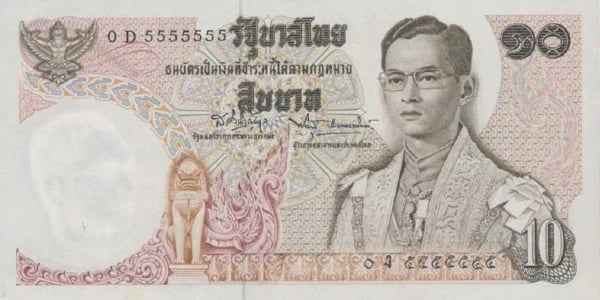
Fancy serial number banknotes are a unique and popular area of collecting, where value is influenced by distinctive number patterns rather than the banknote type alone. These notes feature unusual serial numbers such as solid digits, ladders, radars, low numbers, and other recognizable sequences that make them visually appealing and highly collectible.
Unlike traditional rarity based on print runs or survival rates, fancy serial numbers derive their desirability from pattern recognition and collector demand. Some patterns are extremely scarce, while others are widely recognized and consistently sought after within the market.
While some collectors focus on serial numbers, others explore areas such as specimen banknotes or commemorative banknotes, each offering different perspectives on rarity and desirability.
In this guide, we explore the different types of fancy serial number banknotes, how rare they are, and why certain patterns are prized by collectors.
What is a Fancy Number?
Fancy number banknotes are paper currencies that feature serial numbers with unique patterns, sequences, or arrangements. These numbers, which appear on each banknote issued, can vary widely in their configuration, leading to the categorization of certain notes as "fancy" or special. In some Asian countries, fancy number banknotes are also referred to as lucky number banknotes or golden number banknotes.
Types of Fancy Number Banknotes
There are several types of fancy number paper money, each with its unique appeal to collectors. Understanding these types can help collectors identify and appreciate the rarity and beauty of these notes. Unlike other collectible categories such as replacement or star notes, which are defined by production processes, fancy serial numbers are identified primarily by their numerical patterns.
Here are the most commonly collected or notable types of fancy number notes:
Solid Number Banknotes
Solid serial numbers consist of the same digit repeated throughout the entire sequence or just 1 unique digit. These notes are highly sought after due to their rarity and striking appearance. Solid serial numbers are particularly appealing because they are simple yet visually impactful.
For banknotes with 7-digit serial numbers (not including prefix serial numbers), a note that has serial numbers 1111111, 2222222, 3333333, 4444444, 5555555, 6666666, 7777777, 8888888, and 9999999 is considered a solid number banknote. For a 10 million note run, there will be 9 solid number banknotes.
For banknotes with 6-digit serial numbers (not including prefix serial numbers), a note that has serial numbers 111111, 222222, 333333, 444444, 555555, 666666, 777777, 888888, and 999999 is considered a solid number banknote. For a 1 million note run, there will be 9 solid number banknotes.
If the number in the prefix is the same as the remaining serial numbers then the note would be considered as a super solid number banknote. For example, banknotes with numbers 7B 7777777 or 44C 444444 are super solid serial number banknotes.
Ladder Number Banknotes
Ladder serial numbers feature digits that increment or decrement sequentially. There are two types of ladder numbers:
Ascending Ladders: These notes have a sequence that increases, such as 01234567, 1234567, 2345678, and 3456789 for 7-digit serial number notes and 0123456, 123456, 234567, 345678, and 456789 for 6-digit serial number notes. Some collectors also consider notes with numbers 4567890 and 567890 to be ascending ladder serial number banknotes.
Descending Ladders: These notes have a sequence that decreases, such as 9876543, 8765432, 7654321, and 6543210, for 7-digit serial number notes and 987654, 876543, 765432, 654321, and 543210 for 6-digit serial number notes. Some collectors also consider notes with numbers 0987654 and 098765 to be descending ladder serial number banknotes.
Ladder numbers are captivating because they represent a clear, orderly progression of digits, making them easy to recognize and highly desirable.
Low Number Banknotes
Low serial numbers are those that start with several zeros, such as 0000001, 0000002, 0000008, or 0000088. Serial numbers that are 100 or below or 1000 or below may be considered fancy. The lower the number, the more desirable the note, with the ultimate prize being a note with the serial number 00000001 or the opening serial number. Low numbers of the first prefix of a series signify the earliest notes in a series, adding to their rarity and allure.
Update (29 July 2024): In Spink & Son charity auctions in June and July 2024, King Charles's 10 pounds banknote with serial number HB01 000002 was auctioned for GBP 17,000. This is the lowest number that will be available in private hands with the number HB 01 000001 presented to King Charles himself. King Charles's 50 pounds with serial number AJ01 000003 was sold for GBP 14,000, the 20 pounds with serial number EH01 000002 was sold for GBP 7,000, and the 5 pounds with serial number CA01 000003 was sold for GBP 11,000.
High Serial Numbers
High serial numbers are those that are at the upper end of the numbering range, such as 99999998 or so forth. High numbers can symbolize the end of a prefix or sometimes even a variety, making them historically significant. Some countries that issue notes 6-digit serial numbers may also have banknotes with the serial number 10000000 (ten million) as the highest serial number. These banknotes are also very popular and highly sought after due to their rarity and the completion they represent in the sequence.
Trailing Zeros Banknotes
Trailing zeros have sequences ending in zeros. For banknotes that have 7-digit serial numbers, trailing zeroes would be million serial numbers, i.e. 1000000, 2000000, 3000000, 4000000, 5000000, 6000000, 7000000, 8000000, and 9000000. For banknotes that have 6-digit serial numbers, trailing zeroes would be hundred thousand serial numbers or lakh serial numbers, i.e. 100000, 200000, 300000, 400000, 500000, 600000, 700000, 800000, and 900000.
Radar Number Banknotes
Radar serial numbers, also known as palindrome numbers, read the same forward and backward. The serial numbers appear to be mirrored. For banknotes with 7-digit serial numbers, examples of radar serial numbers are 1234321, 5237325, 8569658, and so forth. For banknotes with 7-digit serial numbers, examples of radar serial numbers are 123321, 523325, 856658, and so forth. These symmetrical sequences are particularly popular among collectors due to their perfect balance and mirror-image quality.
The most notable radar serial numbers are referred to as super radar. They are a specific type of radar banknote where the first and last digits are the same, and all the middle four, five, or six digits (depending on the total length of the serial number) are identical. Examples are, 1222221, 644446, and so forth. They are certainly more appealing and worth more than simple radar.
Repeater Number Banknotes
Repeater serial numbers feature a repeating sequence of digits. The minimum number of digits that must be repeated is two. Repeater notes could be notes that have a two-digit sequence repeated throughout, such as 121212, 585858, and 939393, or they could have a longer repeating sequence, such as 123123, 568568, and 936936. Repeaters are fascinating because they create a rhythmic pattern that is both predictable and aesthetically pleasing.
True Binary Number Banknotes
True binary serial numbers consist of only serial numbers 0s and 1s, such as 010101, 100010, or 110011. The simplicity and pattern of these numbers make them appealing to collectors. Binary numbers are intriguing because they resemble binary code, a fundamental concept in computer science. If they contain two numbers but those two numbers are not 0 and 1, they could be regarded as binary serial numbers.
Rotator Number Banknotes
Rotator numbers are serial numbers that look the same when rotated 180 degrees, such as 069690, 818818, and 6968969. The only numbers that can be rotated are 0s, 1s, 6s, 8s, and 9s. These numbers are rare and visually interesting because of their rotational symmetry. Collectors find rotator numbers fascinating due to their playful and unique appearance.
Popularity Amongst Collectors
Fancy number banknotes have a strong following among collectors, driven by their rarity, beauty, and the thrill of the hunt. Collectors are often drawn to the challenge of finding these unique notes and the satisfaction of adding them to their collections.
Rarity and Exclusivity
The rarity of fancy number banknotes is a major factor in their appeal. Given the vast number of banknotes in circulation, the probability of encountering a note with a specific fancy serial number is extremely low. This rarity makes finding such a note an exciting and rewarding experience for collectors. This type of rarity can also be evaluated using broader methods explained in how to identify rare banknotes.
Aesthetic and Mathematical Appeal
The symmetrical and patterned nature of fancy number banknotes appeals to both the eye and the mind. Collectors appreciate the visual harmony and balance of these notes, as well as the mathematical curiosity they represent. The beauty of numbers in unique sequences can be mesmerizing and satisfying.
Investment Potential of Fancy Number Banknotes
Many collectors view fancy number banknotes as a potential investment. The rarity and desirability of these notes can lead to significant appreciation in value over time. Collectors who carefully select and preserve their notes may see a return on their investment in the future.
Exhibitions and Displays
Fancy number paper money is often showcased at currency exhibitions and shows, where collectors can admire and learn about these unique pieces. Exhibitions provide an opportunity to see rare notes up close and connect with other enthusiasts.
Popularity Among Non-Collectors
Fancy number banknotes also have appeal beyond the traditional collector community. Non-collectors may be drawn to these notes for their novelty, aesthetic value, or personal significance.
Gift Giving of Fancy Number Banknotes
Fancy number banknotes make unique and memorable gifts. Birthday or anniversary serial numbers, in particular, can be personalized and meaningful presents. Non-collectors may appreciate the thoughtfulness and rarity of these notes as gifts.
Decorative and Artistic Value
The visual appeal of fancy number banknotes makes them attractive for decorative purposes. Some individuals frame and display these notes as art pieces, appreciating their beauty and symmetry. The artistic value of these notes can make them a focal point in home or office decor.
Curiosity and Conversation Starters
Fancy number banknotes often spark curiosity and serve as conversation starters. People are naturally intrigued by unique and rare items, and fancy number notes can captivate attention and interest. Sharing stories about these notes can lead to engaging discussions and connections.
Do Fancy Serial Numbers Increase Banknote Value?
Fancy serial numbers can significantly increase the value of a banknote, even when the note itself is otherwise common. Collectors often pay premiums for visually appealing patterns such as solid numbers, ladders, radars, or low serial numbers, as these are far less frequently encountered in circulation.
Similar to areas such as error banknotes, where rarity can significantly influence price, certain fancy serial number patterns can command strong premiums when demand is high. In both cases, the appeal comes not from the base banknote alone, but from the unique feature that distinguishes it from standard issues.
However, value is influenced by demand as well as rarity. Some patterns, such as solid numbers or low serial numbers, are widely recognized and consistently sought after, making them easier to sell and more stable in value. Other patterns may appeal to more specialized collectors and can vary in desirability depending on market interest.
Condition also plays an important role. A high-grade fancy number banknote is generally more desirable than a circulated example, as it combines both visual appeal and strong preservation. Collectors often prioritize notes that offer both pattern rarity and quality.
Understanding how serial numbers affect value works best when combined with broader evaluation methods explained in how to check banknote value. This allows collectors to assess not only the uniqueness of the serial number but also how it performs within the wider market.
Conclusion
Fancy number banknotes offer a unique and captivating avenue for collectors, combining the excitement of discovering rare patterns with the aesthetic beauty of numerical symmetry. Whether you are drawn to solid numbers, radars, ladders, or other types of fancy numbers, these notes provide endless opportunities for discovery and enjoyment. Whether you are a seasoned collector or someone looking for a unique piece of currency, fancy number notes offer a fascinating and valuable addition to any collection.
Frequently Asked Questions
What are fancy number banknotes?
Fancy number banknotes are paper currency notes featuring unique, unusual, or symmetrical serial number patterns, sequences, or arrangements. These notes are highly collectible due to their rarity and aesthetic appeal, and are sometimes referred to as lucky or golden number banknotes in some Asian countries.
Why are fancy number banknotes so popular among collectors?
Their popularity stems from their rarity and exclusivity, as the probability of finding such notes is very low. Collectors are also drawn to their aesthetic and mathematical appeal (symmetry, patterns), their investment potential (can appreciate in value), and the thrill of the hunt involved in discovering these unique pieces.
What are "Solid" and "Super Solid" serial numbers?
Solid serial numbers consist of the same digit repeated throughout the entire sequence (e.g., 7777777). If the number in the prefix is also the same, the note is considered a super solid number banknote.
What are "Ladder" serial numbers?
Ladder serial numbers feature digits that increment (ascending, e.g., 1234567) or decrement (descending, e.g., 9876543) sequentially.
What distinguishes "Radar" and "Repeater" serial numbers?
Radar serial numbers (also called palindromes) read the same forward and backward (e.g., 1234321). Repeater serial numbers feature a repeating sequence of digits (e.g., 121212 or 123123). Both are popular for their distinct patterns and mathematical appeal, with "super radars" (e.g., 1222221) being particularly prized.