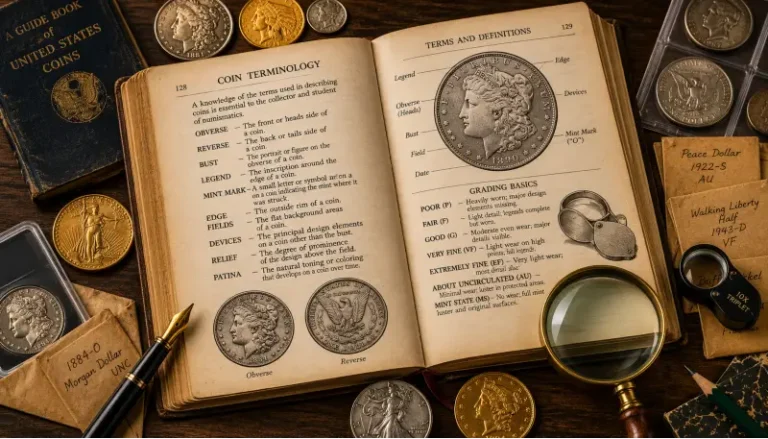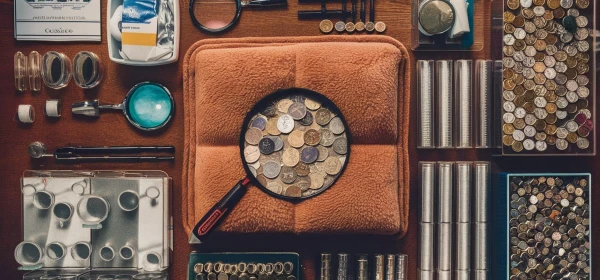
The history of coins offers a fascinating window into the evolution of human civilization, global commerce, and artistic expression. Long before the advent of digital transactions or paper currency, physical coinage served as the bedrock of sovereign empires, a tool for widespread political propaganda, and a canvas for civic identity.
This comprehensive guide traces the complete narrative of numismatic evolution. You will discover how primitive, manually struck tokens transformed over millennia into high-security milled currencies, shifting from the ancient kingdoms of Asia and the Mediterranean to the industrial mass production lines of the modern world.
Ancient Coinage: Lydian, Greek, Roman & Asian Origins
The Lydians and the First Coins
The first true coins are believed to have been minted in the kingdom of Lydia, in what is now western Turkey, around the 7th century BCE. These early coins, made of electrum (a natural alloy of gold and silver), were stamped with designs to guarantee their weight and value. King Alyattes of Lydia is often credited with issuing the first standardized coinage, which facilitated trade and economic expansion in the region.
Ancient Greek Coins
Following the Lydians, the Greeks adopted and refined coinage, making significant contributions to its development. By the 6th century BCE, Greek city-states such as Aegina, Athens, and Corinth were minting their coins. These coins not only served as currency but also as a means of asserting civic identity and pride.
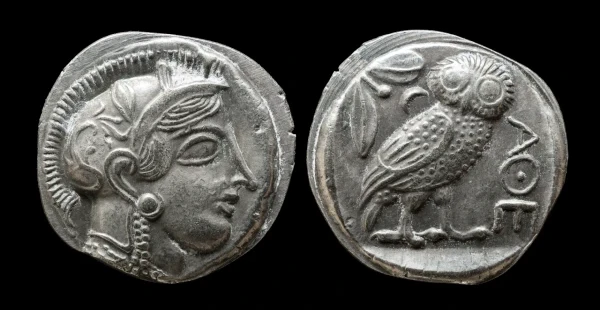
Greek coins are renowned for their artistic excellence and intricate designs. The obverse (front) typically featured a deity or symbol associated with the city-state, while the reverse (back) often depicted animals, plants, or other motifs. The Athenian “owl” tetradrachm, for example, featured the goddess Athena on one side and an owl on the other, symbolizing wisdom and the city of Athens.
Greek coinage played a crucial role in facilitating trade throughout the Mediterranean. The widespread use of standardized silver coins, such as the Athenian tetradrachm, helped to stabilize economies and promote commercial activity. Coins also served as a tool of political propaganda, showcasing the power and influence of the issuing authority.
Ancient Chinese Coins
China has one of the oldest and most continuous histories of coinage in the world. The first coins in China, known as spade money and knife money, appeared around the 7th century BCE during the Zhou Dynasty. These early coins were cast in bronze and shaped like agricultural tools, symbolizing the agrarian economy of the time.
The unification of China under the Qin Dynasty (221–206 BCE) saw the introduction of standardized coinage across the empire. The Qin standardized round coins with square holes in the center, a design that would become characteristic of Chinese coinage for centuries. The Han Dynasty (206 BCE – 220 CE) continued this tradition, producing large quantities of bronze coins known as banliang and wuzhu.
Ancient Indian Coins
India has a rich and diverse history of coinage, dating back to around the 6th century BCE. The earliest coins, known as punch-marked coins, were made of silver and bore symbols punched into the metal. These coins were used by various Mahajanapadas (ancient kingdoms) and reflect the economic activity of ancient India.
The Maurya Empire (c. 322–185 BCE) under Emperor Chandragupta and his successors issued a standardized coinage, which helped to unify the vast empire economically. The Gupta Empire (c. 320–550 CE) is renowned for its gold coins, which featured intricate designs and inscriptions that celebrated the achievements of the Gupta rulers.
Roman Coins
The Roman Republic began minting its coins around the 4th century BCE. Early Roman coinage was heavily influenced by Greek designs and techniques. The primary unit of currency was the bronze, complemented by the silver denarius and the gold aureus. Roman coins featured portraits of gods and goddesses, as well as symbols of Rome’s military and political achievements.
With the establishment of the Roman Empire under Augustus in 27 BCE, coinage underwent significant changes. The emperor’s image became a prominent feature on coins, symbolizing the centralization of power. Roman coins were minted in vast quantities and circulated throughout the empire, facilitating trade and economic integration across diverse regions.
Roman coins were not just a medium of exchange but also a means of disseminating imperial propaganda. Inscriptions and images on coins celebrated military victories, deified emperors, and reinforced the legitimacy of the ruling dynasty. The standardization of coinage and the extensive network of mints ensured a stable and reliable currency system that supported the vast Roman economy.
Ancient Minting: Hammered Methods & Techniques
The earliest method of coin minting, known as hammered coinage, involved manually striking a blank piece of metal (flan) between two engraved dies. This labor-intensive process required skilled artisans and was the standard technique for many centuries. Hammered coinage was used by ancient civilizations such as the Greeks, Romans, and various medieval European kingdoms.
Greek coins, particularly those from Athens, Corinth, and Syracuse, were renowned for their artistic quality. The designs often featured deities, animals, and mythological scenes. The Romans further refined coin production, establishing mints across their vast empire and standardizing the weight and composition of their coins. Roman coins depicted emperors, military victories, and significant events, serving both as currency and propaganda tools.
India boasts one of the world’s oldest traditions of coinage, with the first coins appearing around the 6th century BCE. Early Indian coins were typically struck from silver and featured punch-mark designs. The Mauryan Empire (322-185 BCE) produced some of the most notable ancient Indian coins, with symbols like animals, trees, and geometric patterns. These coins played a crucial role in facilitating trade across the extensive Mauryan territories.
China’s coinage history is equally ancient, dating back to around 600 BCE with the use of cowrie shells and later, bronze objects such as spades and knives. The Qin dynasty (221-206 BCE) standardized coinage with the introduction of the Ban Liang coin, a round coin with a square hole in the center, symbolizing heaven and earth. This design persisted through various Chinese dynasties, becoming a cultural icon.
Medieval Currency Systems
Byzantine Coins
The Byzantine Empire, which emerged from the eastern half of the Roman Empire, continued the tradition of coinage. Byzantine coins, such as the solidus and the follis, featured Christian imagery, including portraits of emperors holding crosses and images of Christ. Byzantine coinage influenced the development of coinage in medieval Europe and the Islamic world.
Islamic Coins
The rise of Islam in the 7th century CE brought about a new era of coinage. Islamic coins, known as dinars and dirhams, were typically made of gold and silver. These coins featured Arabic inscriptions, often quoting verses from the Quran and the names of caliphs. The introduction of Islamic coinage facilitated trade across the vast Islamic empire, which stretched from Spain to India.
European Coins
Medieval Europe saw the emergence of various coinages as feudal lords and kingdoms issued their currencies. The Carolingian Empire, under Charlemagne, introduced a standardized system of silver coinage. The British pound, French franc, and German mark all have their origins in medieval coinage. These coins often featured portraits of rulers and heraldic symbols.
Asian Coins
In medieval Asia, various empires and kingdoms continued to produce distinctive coinages. In Japan, for example, the first coins were minted in the 8th century CE during the Nara period. These early Japanese coins were heavily influenced by Chinese coinage and featured inscriptions in Chinese characters.
The Transition to Milled Coinage
Technological Innovations
The transition from hammered to milled coinage marked a significant advancement in minting technology. In the 16th century, innovations such as the screw press and the roller mill enabled the production of more uniform and finely detailed coins. Milled coins, characterized by their serrated edges and precise designs, reduced the prevalence of counterfeiting and clipping (the practice of shaving small amounts of metal from the edges of coins).
Industrial Revolution
The Industrial Revolution brought further advancements to coin minting. Steam-powered presses and automated machinery enabled mints to produce coins on a much larger scale. The British Royal Mint, for example, adopted steam-powered coin presses invented by Matthew Boulton and James Watt in the late 18th century. This technological leap allowed for the mass production of high-quality coins, setting a new standard for mints worldwide.
Milled Coinage
With the advent of milled coinage, European mints began to produce coins with intricate designs and uniform weight. This transition was crucial for the burgeoning economies of Europe, as it facilitated trade and reduced the risk of counterfeiting. Notable examples include the Spanish dollar, which became a widely accepted international currency, and the British crown, which featured detailed portraits of monarchs and national symbols.
Modern Minting & Mass Production
Renaissance and the Rebirth of Art
The Renaissance, beginning in the 14th century, saw a renewed interest in classical art and culture, which influenced coin design. Coins from this period often featured elaborate and detailed portraits, showcasing the artistic skill of the engravers. The use of coinage as a medium for art and propaganda reached new heights, with rulers commissioning coins that highlighted their power and achievements.
Chinese Coins of Ming and Qing Dynasties
In China, the Ming (1368-1644) and Qing (1644-1912) dynasties continued the tradition of casting bronze coins, while also experimenting with paper money and larger denomination silver coins. Chinese coins from this period often bore inscriptions indicating the reign period and sometimes the place of minting, reflecting a high degree of central control over the monetary system.
Coins of the New World
The discovery of the Americas in the late 15th and early 16th centuries had a profound impact on global coinage. The influx of precious metals from the New World, particularly silver from mines in Mexico and Peru, led to the widespread production of coins in Europe. Spanish silver dollars, or pieces of eight, became a global currency, facilitating trade across continents.
Rise of National Currencies in Europe
As nation-states emerged in Europe, the need for standardized national currencies grew. The 16th and 17th centuries saw the establishment of central mints and the production of coins that symbolized the unity and identity of emerging nations. For example, the British pound sterling and the French franc became prominent national currencies during this period.
Indian Mughal Coins
India, during the Mughal Empire (1526-1857), saw the issuance of some of its most exquisite coins, featuring intricate calligraphy and detailed designs. Mughal coins were often struck in gold, silver, and copper, and were used across a vast and diverse empire, facilitating trade and commerce. The Mughal monetary system influenced neighboring regions and played a crucial role in the economic history of the Indian subcontinent.
Industrial Revolution
The Industrial Revolution of the 18th and 19th centuries brought significant technological advancements to coin production. Steam-powered presses and improved minting techniques allowed for the mass production of coins with consistent quality and intricate designs. The introduction of new materials, such as nickel and aluminum, also expanded the range of coins in circulation.
Gold Standard
The 19th century saw the adoption of the gold standard, where the value of a country’s currency was directly linked to a specific amount of gold. This system facilitated international trade by providing a stable and predictable exchange rate. The gold sovereigns and eagles of the British Empire and the United States became important global currencies during this era.
Transition to Fiat Currency
The 20th century witnessed a shift from the gold standard to fiat currency, where the value of money is not based on physical commodities but on government regulation. This transition was driven by the need for more flexible monetary policies, especially during economic crises such as the Great Depression. Today, most of the world’s currencies are fiat money, with coins continuing to play a vital role in everyday transactions.
Future Trends: Coin Collecting in a Digital Age
Digital and Cryptocurrencies
The rise of digital and cryptocurrencies presents new challenges and opportunities for traditional coinage. While physical coins continue to be used, digital currencies like Bitcoin and Ethereum offer an alternative form of money that operates independently of traditional banking systems. Central banks are also exploring the development of digital currencies, which could coexist with physical coins in the future.
Sustainability and Eco-Friendly Coins
As environmental concerns grow, there is a push towards more sustainable and eco-friendly coin production. Some mints are exploring the use of recycled metals and environmentally friendly processes to reduce the carbon footprint of coin production. These efforts align with global initiatives to promote sustainability and reduce environmental impact.
Continued Innovation in Coin Security
The future of coinage will likely see continued innovation in security features to prevent counterfeiting. Advances in materials science, such as the development of new alloys and coatings, will enhance the durability and security of coins. Additionally, the integration of digital technologies, such as RFID chips and QR codes, could provide new ways to verify the authenticity of coins.
The Enduring Legacy of Numismatics
From the crude, hand-hammered electrum stamps of ancient Lydia to the automated, high-security minting facilities of the modern era, the history of coins is ultimately a story of human ingenuity and economic survival. While the global shift toward fiat currency and the rise of digital assets present a fundamentally cashless future, physical coins have successfully adapted. They have transitioned from mere instruments of daily commerce into highly prized historical artifacts, cultural anchors, and sophisticated investment vehicles.
As contemporary mints continue to innovate with sustainable, eco-friendly metals, advanced anti-counterfeiting security features, and exquisite commemorative proofs, the passion for collecting these miniature pieces of art remains stronger than ever. Coins are no longer just pocket change—they are tangible, indestructible fragments of history that bridge our ancient past with the digital frontier.