
Specimen Banknotes
Rare specimen notes, proofs, color trial banknotes, unadopted designs, and archival paper money
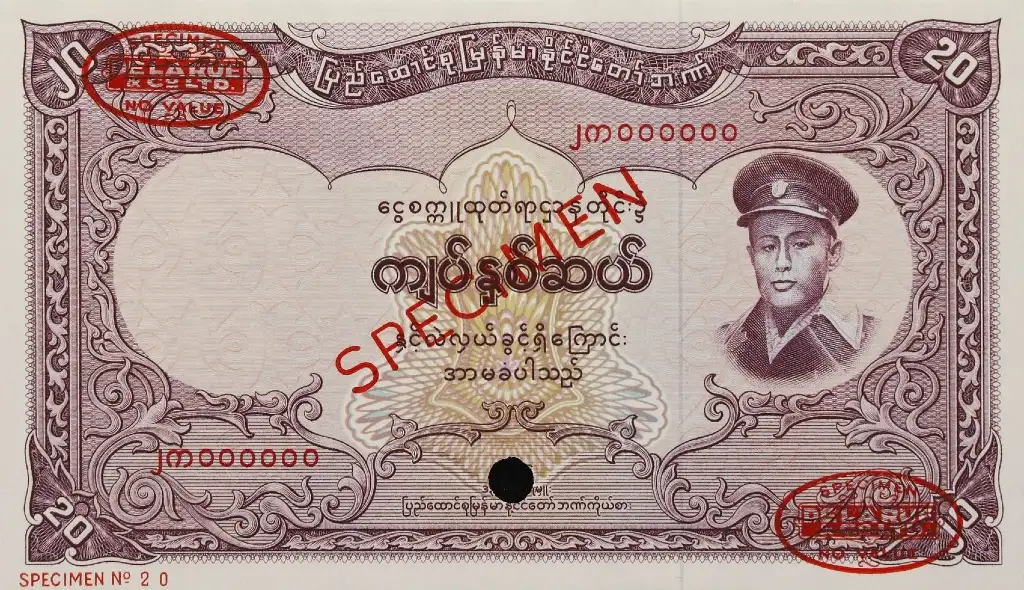
Specimen banknotes are among the most historically revealing areas of paper money collecting. Produced primarily for reference, approval, presentation, or other non-circulating purposes, they provide valuable insight into banknote design, production, and distribution.
NumisAsia specializes in rare specimen notes, proofs, unadopted designs, and color trial banknotes, with particular interest in Asian paper money and archival material associated with major security printers such as Thomas De La Rue. Our inventory also includes professionally certified examples graded by PMG and PCGS.
Featured Specimen Banknotes
Selected specimen notes, color trials, and certified paper money from Asia and beyond
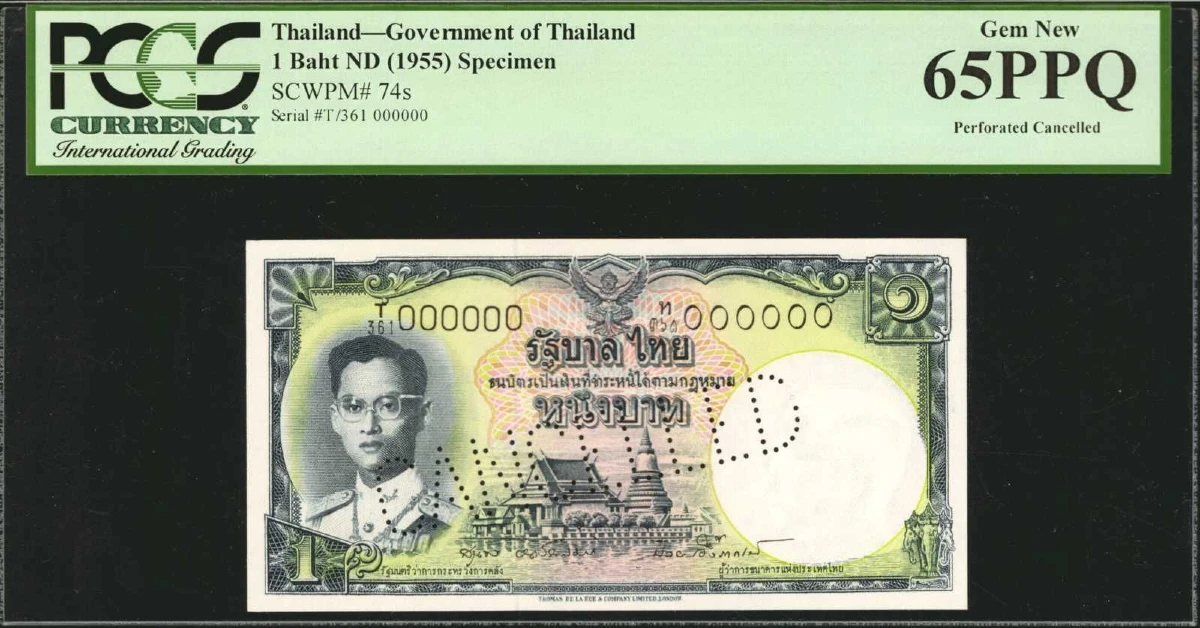
Thailand 1 Baht Specimen Pick 74s
View Details →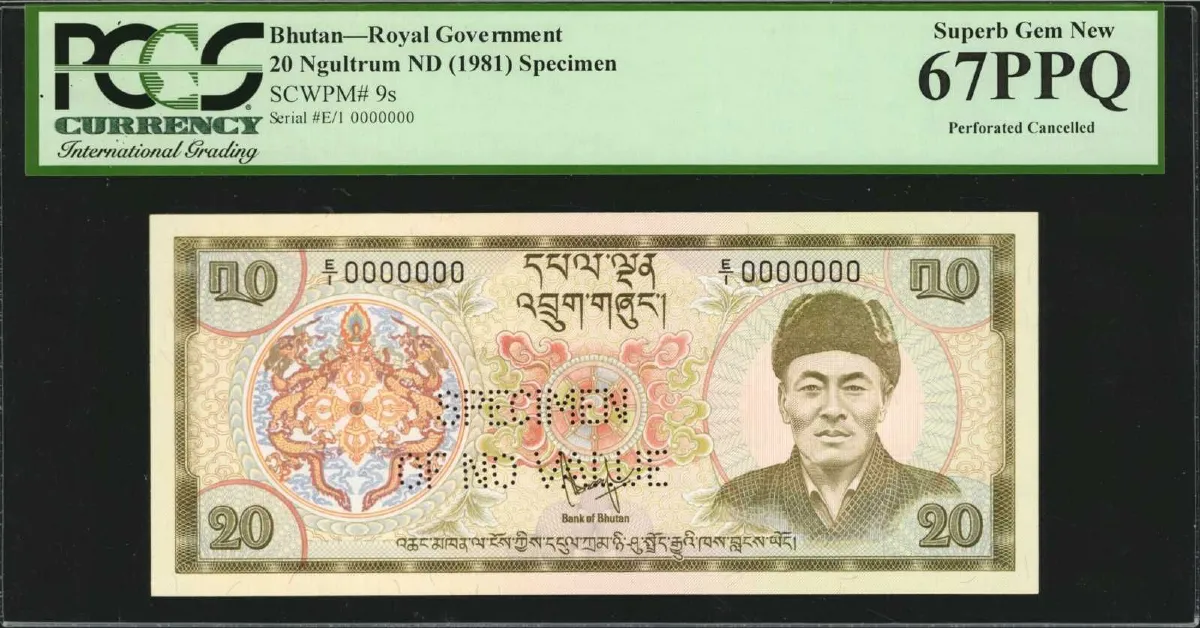
Bhutan 20 Ngultrum Specimen Pick 9s
View Details →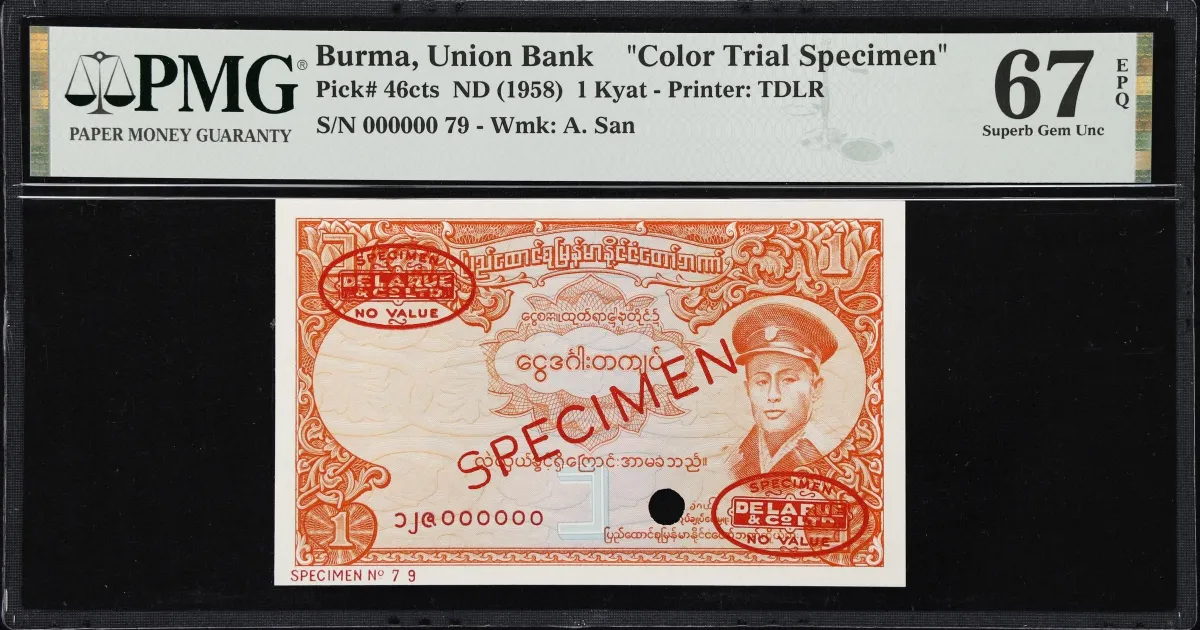
Burma 1 Kyat Color Trial Specimen Pick 46cts
View Details →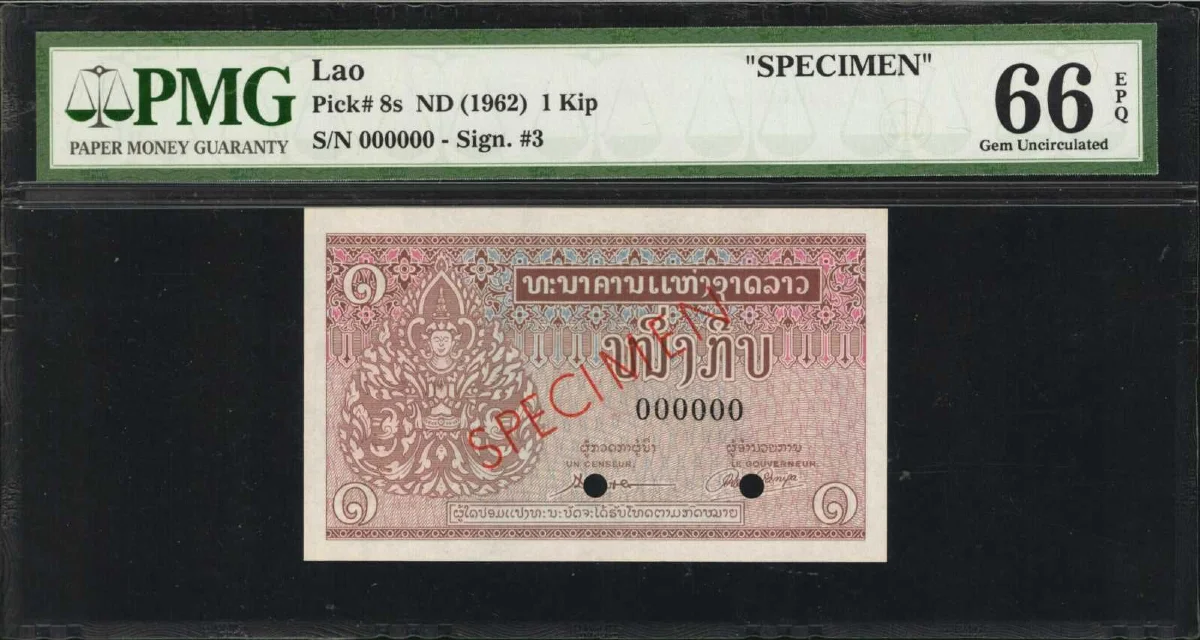
Laos 1 Kip 1962 Specimen Pick 8s
View Details →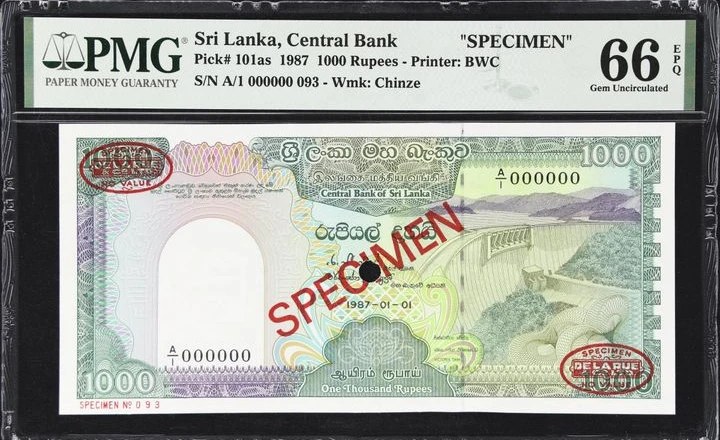
Sri Lanka 1000 Rupees Specimen Pick 101as
View Details →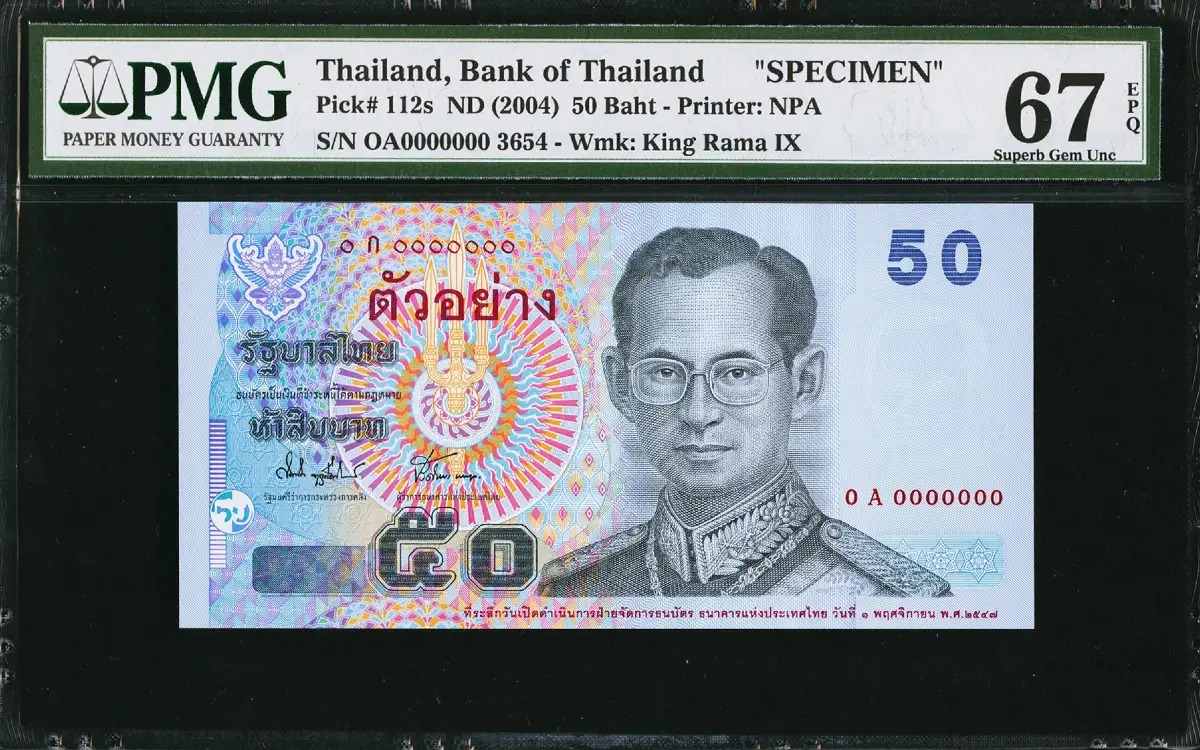
Thailand 50 Baht Specimen Pick 112s
View Details →Major Types of Specimen Banknotes
Key categories of non-circulating paper money
Standard Specimens
Reference notes marked with bold specimen overprints, perforated cancellations, and zero serial numbers.
Color Trial Banknotes
Pre-production test printings used by authorities to evaluate alternative ink colors before final approval.
Proofs & Unadopted Designs
Trial impressions, essays, and proposed unadopted designs that showcase the artistic engraving process.
Archival Specimens
Notes preserved in printer archives, including material associated with renowned firms such as De La Rue.
The Anatomy of Specimen Banknotes
Understanding reference notes, color trials, proofs, and printer archives
Unlike circulating currency, specimen banknotes were produced primarily for official reference, administrative, presentation, or exhibition purposes. They could be supplied to central banks, financial institutions, or other authorities as examples of genuine currency. Specimen notes are commonly identified by SPECIMEN overprints, perforated cancellations, special serial numbers, or combinations of these features.
Proof banknotes belong to an earlier stage of the production process. These trial impressions allow printers and issuing authorities to assess engraving, printing plates, individual design elements, and overall appearance before production is finalized. Proof material may include front or back proofs, progressive proofs, vignette proofs, essays, and proposed designs that were ultimately not adopted.
Color trial banknotes are test printings produced in alternative color schemes before a final combination is selected. Because these variants were never intended for normal circulation, surviving examples can be scarce and are particularly attractive to collectors interested in the development of a banknote’s design. They are distinct from remainders, which are unfinished or unissued notes left from regular production rather than deliberately created as reference or test material.
Another important category is material preserved in security-printer archives. Historical specimens and proofs associated with firms such as Bradbury Wilkinson & Co., Waterlow & Sons, and Thomas De La Rue can provide valuable provenance and insight into the production history of a banknote. Archival material may include finished specimens, printer annotations, proofs, and other production-related pieces.
Today, collectors seek specimen notes for their rarity, design history, provenance, and connection with the banknote production process. Professionally certified examples graded by PMG or PCGS are also popular with collectors who value independent authentication and standardized grading.
Why Collect Specimen Banknotes?
Specimen notes offer scarcity, design insight, visual appeal, and exceptional preservation
Scarcity
Produced outside circulation, many specimen issues survive in far smaller numbers than their circulating counterparts.
Design Insight
Proofs and color trials offer a unique, behind-the-scenes look at how important banknotes were created.
Visual Appeal
Bold overprints, unusual colorways, and precise perforations make specimen notes visually distinctive.
Pristine Condition
Because they were not intended for circulation, many archival specimens survive in exceptionally high grades.
Specimen Banknotes FAQs
Common questions about specimen notes, proof notes, and color trials
A specimen banknote is a non-circulating example produced for official reference, approval, presentation, or distribution to banks and other institutions. Specimen notes are commonly distinguished by SPECIMEN overprints, perforated cancellations, special serial numbers, or similar identifying features.
A specimen generally represents a completed banknote design that has been specially marked or prepared for non-circulating use. A proof is a trial impression produced during the design or printing process to evaluate engraving, plates, colors, or other production details before final manufacture.
Color trial banknotes are test printings produced in alternative color combinations before a final design is approved for production. Because these alternative colorways were not issued for normal circulation, surviving examples can be scarce and highly collectible.
Specimen banknotes often use zero serial numbers, repeated digits, or special sequences to distinguish them from notes intended for circulation. Together with SPECIMEN overprints, perforations, or other cancellations, these features clearly identify the note as a non-circulating reference example.
Thomas De La Rue is one of the world’s best-known security printers. TDLR archival specimens are notes originating from or associated with the firm’s historical reference archives. Well-documented examples are especially valued by collectors for their provenance, rarity, and preservation.
Specimen banknotes can be valuable, with prices varying considerably according to rarity, type, country, condition, provenance, and collector demand. Scarce proofs, color trials, unadopted designs, archival material, and high-grade PMG or PCGS-certified specimens can command substantial premiums.
Yes. NumisAsia actively buys rare specimen banknotes, proof notes, unissued essays, color trials, archival specimens, and PMG or PCGS-certified material. If you have individual notes or a collection to sell, please contact our specialists.
Looking for a Specific Specimen Note?
Submit your want list and our specialists will help source rare specimen notes, proofs, color trials, and professionally graded examples.
Collect Specimen Notes?
Browse specimen notes, color trials, and proofs from Asia and beyond
Browse Specimen NotesWant to Sell Banknotes?
We actively buy rare Asian banknotes, collections, and PMG/PCGS certified notes
View What We Buy